
REVIEW · FRENCH POLYNESIA WHALE WATCHING TOURS
Whale Watching Tours in Bora Bora
Whales do not follow a schedule. That is exactly what makes this 3.5-hour Bora Bora whale-watching trip so different from a standard sightseeing cruise. Tohora Bora Bora takes a small group into the open ocean, where Simon and his team search for humpback whales using experience, patience, and a directional hydrophone. I like the intimate maximum of six people, and I like that you can stay aboard rather than enter the water. The main drawback is clear: seeing whales, let alone swimming near them, is never guaranteed.
This is an active marine outing, not a gentle lagoon cruise. The boat may encounter waves and swell, and any water entry can involve swimming more than 100 meters in the open sea. You need strong fitness, confidence in the water, and the good sense to follow the guide’s instructions.
Tohora Bora Bora has more than 15 years of experience with whale observation, and Simon’s passion is a major part of the experience. The company also emphasizes strict limits on approach distances, group size, and animal behavior. That is good news for the whales, though it can frustrate anyone expecting a close encounter on demand.
Key points before you book
- Open-ocean whale watching: The trip leaves the sheltered lagoon environment and can include waves, swell, and changing sea conditions.
- Small groups of six: A limited group allows the captain and guide to manage water entries carefully and gives everyone more room aboard.
- Swimming is optional: You can remain on the boat and watch the whales, but the launch option does not guarantee a swim with them.
- Directional hydrophone: The boat carries special listening equipment that lets you hear humpback songs underwater.
- Strong swimming ability required: A possible water entry may involve swimming more than 100 meters in open sea, so this is not suited to weak or nervous swimmers.
- Wildlife remains unpredictable: Some outings produce several whale encounters and extended time in the water. Others find no whales at all.
What the Tohora Bora Bora experience is really about
The heart of this outing is not a guaranteed performance. It is the search.
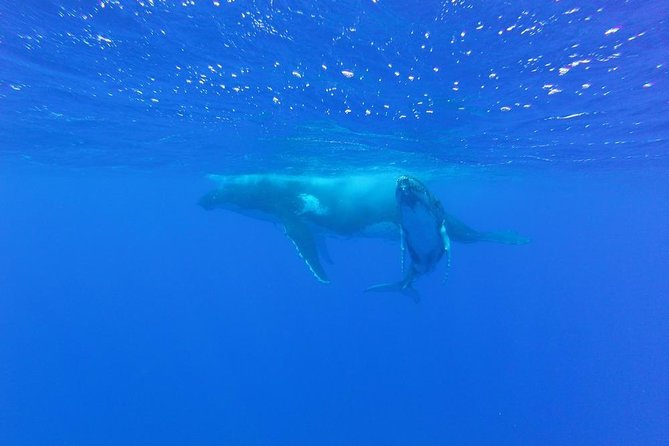
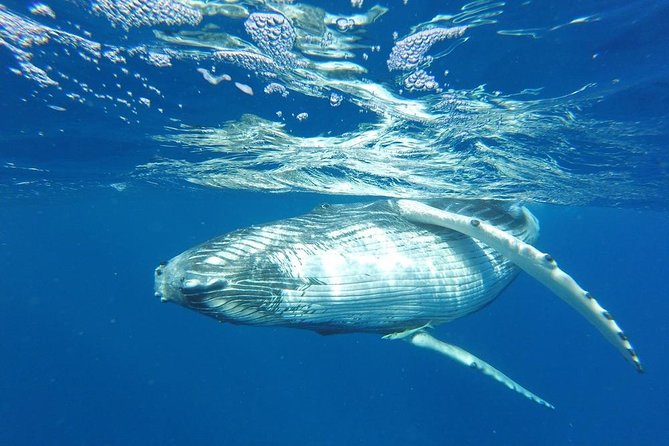
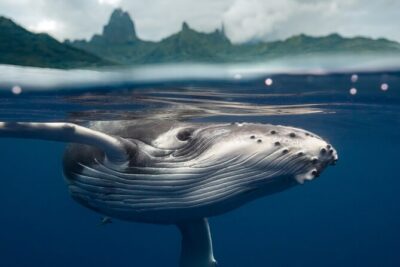
Humpback whales come to the waters around French Polynesia to give birth and reproduce. During the season, Tohora Bora Bora heads out to locate them, then watches their behavior before deciding how to proceed. That may mean following a whale from the boat, listening for its song, waiting quietly, or offering a carefully managed water entry.
I appreciate that the company treats the whales as wild animals rather than attractions in a marine park. The crew cannot control where a whale surfaces, how long it stays, or whether it accepts swimmers nearby. That makes each trip different, but it also means you need to accept a real possibility of disappointment.
The best outings can be extraordinary. One group spent around two hours swimming with whales. Another watched a whale accompany the boat and nearby swimmers for more than an hour and a half, while someone who preferred to stay aboard still enjoyed the show. Other trips produced only distant wildlife, flying fish, or dramatic waves breaking against the reef.
That spread of outcomes is important. If your only acceptable result is a close whale swim, this tour carries a financial risk. If you value time on the ocean and a responsible attempt to find wild animals, the uncertainty becomes part of the appeal.
A few more whale watching trips around French Polynesia worth a look
- Swimming with Whales in Moorea (Half Day tour)
★ 4.5 · 264 reviews - Whale Tour – Observe and swim with whales
★ 5.0 · 257 reviews - Swim with humpback whales
★ 5.0 · 224 reviews
Starting in Bora Bora with a very small group
The tour begins in Bora Bora and returns to the same general meeting point. Pickup is offered, and confirmation is sent within 48 hours of booking, subject to availability. The excursion lasts about three hours and 30 minutes, although one account indicates the crew continued beyond the planned time while trying to find whales.
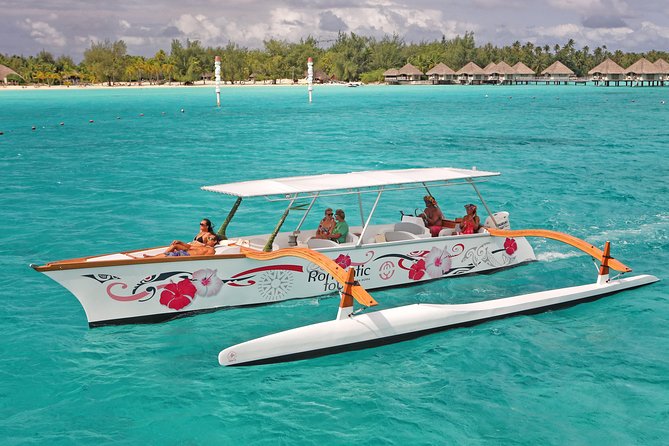
The maximum group size is six. That is one of the strongest features of the trip. A small boat group makes it easier for Simon or another crew member to explain the rules, judge sea conditions, and organize people if a whale is suitable for observation in the water.
It also matters when some people want to swim and others do not. You can remain aboard while others enter the sea, watch from a safer and steadier position, and listen to the crew explain what is happening. This arrangement makes the trip more flexible than a swim-only excursion.
Still, a small boat can feel exposed in rough water. You should expect an ocean outing, not a calm ride inside Bora Bora’s lagoon. If you are prone to seasickness, the open-water setting deserves serious thought. One person who became seasick could not enjoy a close encounter, although the crew and other people aboard offered help.
Searching for humpback whales in the open ocean
Once the boat is out, the guide and captain search for signs of whales. The crew’s experience helps, but no system can guarantee success. Weather, wind, sea state, whale behavior, and the animals’ location all affect the result.
The directional hydrophone adds a special element. Instead of only scanning the surface, you may hear the low, haunting songs of humpback whales beneath the boat. Sound can reveal that whales are nearby even when the surface gives little away, and it helps you understand that the ocean is active beyond what your eyes can see.
The crew may also point out other signs of marine life. One outing produced flying fish and a tuna jumping in the distance, along with large swells crashing against the outside of the atoll. Those sights do not replace whales, but they can make the time at sea worthwhile.
The experience is strongest when you bring patience. A whale may surface once and disappear. It may travel away from the boat. It may remain near the boat for a long time but never offer the calm conditions needed for swimmers to enter. Your guide has to balance excitement with caution.
The swimming option requires real ocean confidence
The phrase launch option can sound simple. It is not the same as stepping into shallow lagoon water for a quick snorkel.
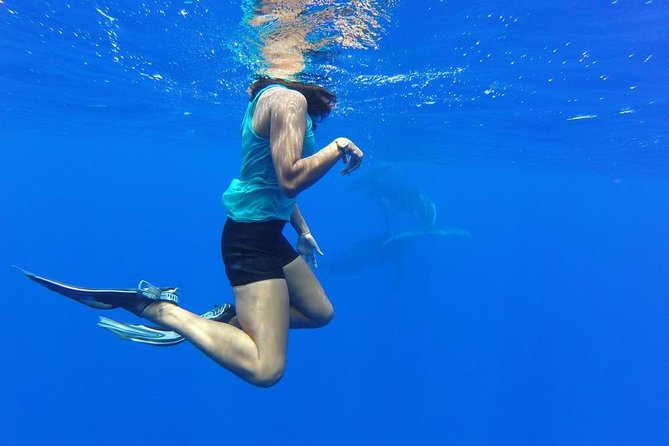
If conditions and whale behavior allow, you may enter the open sea and swim more than 100 meters. The whale may continue moving, so you could need to maintain a steady pace and stay alert while following instructions. A strong fitness level is explicitly required, and you should be comfortable with waves and swell.
The guide gives a briefing before any water entry. It covers approach rules, safety, swimming conditions, and how to avoid disturbing the whales. You are free to decide not to enter the water. Nobody is forced to swim, and staying aboard is a sensible choice if you feel uncertain.
The strict approach rules can be frustrating if you expect an instant close encounter. One negative account centered on disagreement about participation and instructions, while another described the water course as suitable mainly for highly capable swimmers. At the same time, several people praised Simon for maintaining safety and making careful decisions in the water.
My advice is simple: do not book this as an easy swim with a large animal. Book it only if you are comfortable with open-sea swimming and willing to accept that the crew may limit or cancel a water entry for good reasons.
Same water, a different way to meet them:
- Humpback whale watching and marine life in Moorea
★ 5.0 · 199 reviews - Half day whale tour 4h00
★ 4.5 · 181 reviews - Private tour observing and swimming with humpback whales in Moorea
★ 5.0 · 126 reviews - Respectful whale excursion to Tahiti in 4h30
★ 4.5 · 123 reviews
Watching from the boat is a valid choice
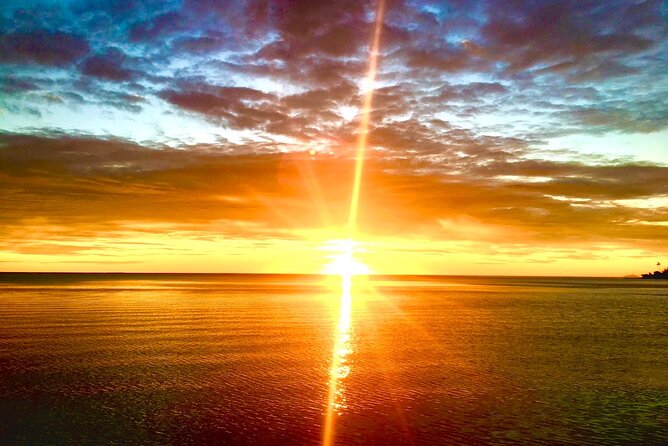
You do not have to enter the sea to enjoy this excursion. The boat provides a useful viewpoint for whale watching, especially when the animals remain near the surface or accompany the boat.
One particularly strong account came from someone who chose not to enter because the sea was rough. That person still watched a whale give a long show, including more than 90 minutes near the boat and the people in the water. This is a good reminder that staying dry does not automatically mean having a lesser experience.
In some conditions, the boat is the better place to be. You can watch without worrying about your breathing, the distance back to the boat, or the movement of the swell. You may also see a broader pattern in the whale’s behavior from above, especially if it travels around the vessel.
The compromise is that a boat-based view may be distant. You might see a back, a blow, or a tail rather than the underwater detail that makes a close encounter memorable. That is the trade-off between comfort and proximity.
Simon, Victor, and the crew’s strengths
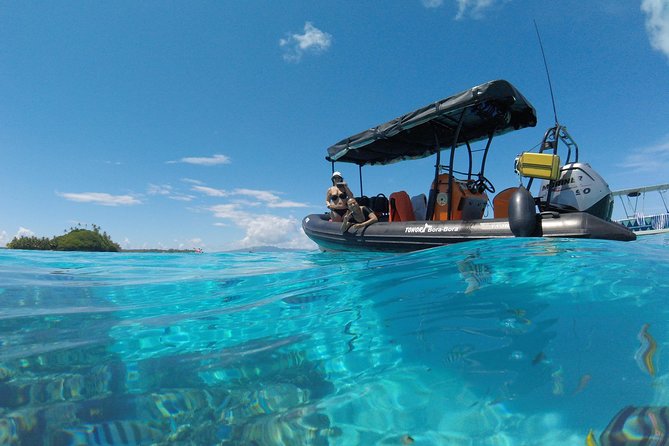
Simon is closely associated with Tohora Bora Bora and has spent more than 15 years working around these marine mammals. His strongest quality appears to be persistence. Several successful outings involved repeated attempts to find whales, careful positioning, and long periods of waiting.
People also describe him as professional, funny, and attentive, though not everyone responds well to his firm approach. That difference matters. Simon takes the rules seriously, especially the need for quiet behavior and careful whale approaches. If you want a relaxed captain who lets everyone do as they please, this may not be the right match.
Victor is also praised for looking after the group, and Maui is mentioned as part of a warm and helpful team. The exact crew may vary, but the general format includes a guide and captain rather than a large staff.
The company’s responses to disappointed customers show both sides of the operation. The crew is clear that nature cannot be controlled, and it sometimes extends the outing or works hard to locate whales. Yet the tone can be direct when people ignore the briefing or expect a guaranteed result. You should arrive ready to listen and accept firm instructions.
What the tour costs at $305.30
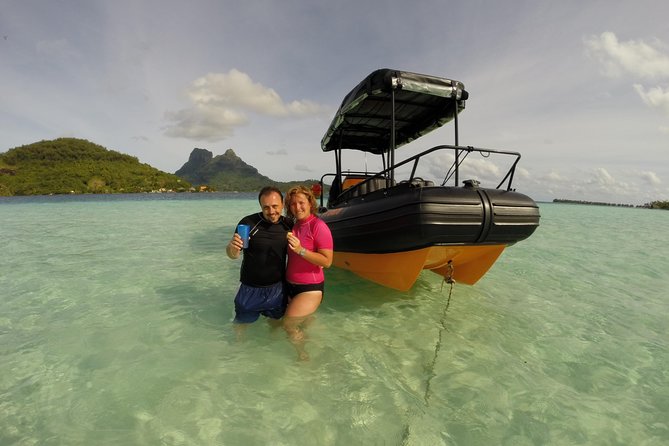
At $305.30 per person, this is an expensive three-and-a-half-hour outing. The price reflects a small group, an ocean-going boat, fuel, safety equipment, experienced staff, and the specialized work involved in finding protected wild animals.
The value depends almost entirely on your expectations. If you see this as a guaranteed swim, the cost can feel poor when whales do not appear. If you understand that you are paying for a serious search on open water, with a chance of an exceptional wildlife encounter, the price is easier to defend.
A group of six also changes the calculation. You are not paying for a crowded boat with dozens of people competing for a view. The guide can focus on a smaller number of participants, and the experience feels more personal.
Still, the company promises an attempt, not a result. A perfect-weather day can produce no whales. A rougher day can produce a remarkable encounter. That is the nature of wildlife, but you should be comfortable with that risk before paying.
The outing is often booked about 39 days ahead, so planning early makes sense if your Bora Bora dates are fixed. Confirmation arrives within 48 hours, subject to availability. The booking is non-refundable and cannot be changed for personal reasons. If poor weather cancels the trip, you are offered another date or a full refund. If the minimum number is not met, you are offered another date or experience, or a full refund.
Who should book this whale tour
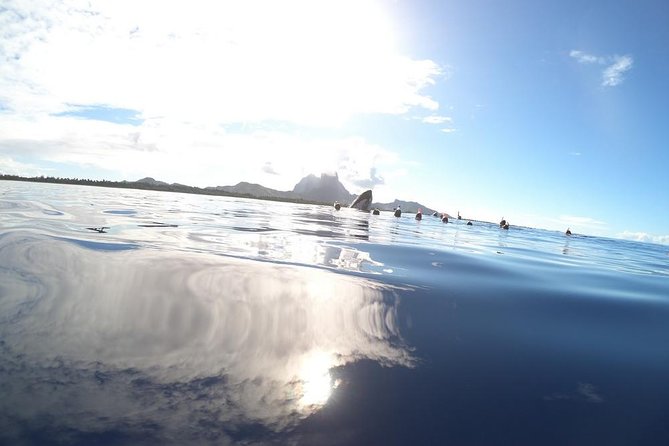
I would recommend Tohora Bora Bora to a few specific types of visitors:
- Strong swimmers who are comfortable in open water and want the possibility of a carefully managed whale encounter.
- Wildlife enthusiasts who understand that animals do not perform on command.
- Couples or small groups who prefer a personal trip over a crowded boat.
- People who enjoy the search itself, including listening for whales and watching changing ocean conditions.
- Anyone happy to stay aboard if the sea is rough or a water entry is not appropriate.
I would hesitate to recommend it to anyone seeking a calm, guaranteed activity. It is also a poor choice if you are uncomfortable with waves, cannot swim confidently for a long distance, or would consider the trip a failure without an underwater encounter.
The tour has earned a strong overall rating of 4.7, with 92 percent recommendation, but the mixed experiences are worth taking seriously. Some people describe it as a once-in-a-lifetime day. Others saw no whales, found the swim too demanding, or felt communication around schedule changes was poor. Both outcomes are possible.
Practical ways to improve your chances of enjoying it
Go in with the right mental picture. You are joining a marine wildlife search, not visiting an aquarium.
Wear what you need for a long period on the ocean and be ready for changing conditions. Most important, assess your swimming honestly before you book. The stated requirement for strong fitness is not decorative wording.
Listen closely during the briefing. Quiet behavior, correct distances, and controlled approaches protect both you and the whales. If the guide tells you to remain aboard, wait, or stop approaching, follow that direction.
Treat the hydrophone as part of the attraction. Even if the whales stay underwater or out of sight, hearing their songs gives you a rare sense of the world beneath the boat.
Finally, leave room in your schedule if possible. The company may change the departure time because of weather, sea conditions, group numbers, or operating decisions. A flexible plan will make that less stressful.
Should you book Tohora Bora Bora?
Book this tour if you want a small-group, open-ocean search led by a crew that takes whale protection and water safety seriously. The best possible outcome is extraordinary: several whales, repeated water entries, and long periods near these animals. Even from the boat, the hydrophone, open sea, and chance sightings can create a memorable morning or afternoon.
Skip it if you need certainty, calm water, or an easy swim. At more than $300, the risk is too high for anyone who would be angry after three and a half hours without a whale sighting.
For the right person, Tohora Bora Bora offers something honest and rare: a chance to meet wild humpback whales without pretending they are waiting for a scheduled show.
FAQ
How long is the whale-watching tour?
The excursion lasts approximately 3 hours and 30 minutes and ends back at the meeting point in Bora Bora.
Is pickup available?
Yes. Pickup is offered, and the activity begins and ends in Bora Bora, French Polynesia.
Can I stay on the boat instead of swimming?
Yes. The water entry is optional. You can remain on the boat and watch the whales from there.
How far might I need to swim?
If conditions and whale behavior allow a water entry, you may need to swim more than 100 meters in the open sea.
Is seeing or swimming with whales guaranteed?
No. Whale sightings and swimming opportunities depend on the animals, weather, and maritime conditions. The launch option does not guarantee a swim.
What happens if bad weather cancels the tour?
If poor weather causes cancellation, you will be offered another date or a full refund.
Just added around French Polynesia
- Whale Watching Activity★ 5.0 · 8 reviews
- Tahiti, land of whales: a unique experience!★ 5.0 · 11 reviews
- Observe and Swim with Whales in Tahiti★ 4.5 · 14 reviews
- Whale watching DE Tahiti Peninsula★ 5.0 · 12 reviews
- Whale watching in the calm of the peninsula with Tātahi tours★ 5.0 · 6 reviews
- Half Day Whale Watching in a Small Shared Group★ 5.0 · 33 reviews
- Whale watching DE Humpback West Coast of Tahiti★ 5.0 · 3 reviews
- 4 Hours of Humpback Whale Watching in Tahiti★ 5.0 · 36 reviews
French Polynesia Whale Watching Tours, compared.
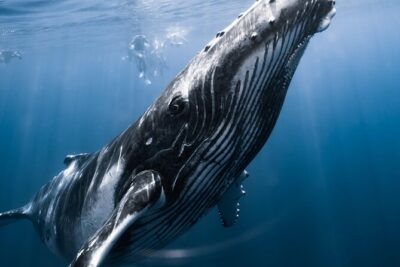
Swimming with Whales in Moorea (Half Day tour)
Read our review →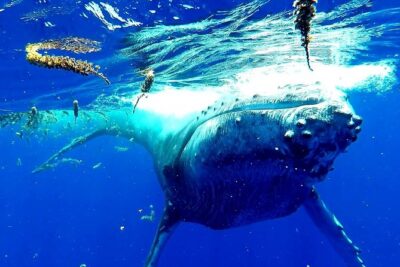
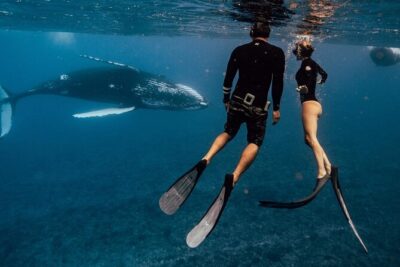
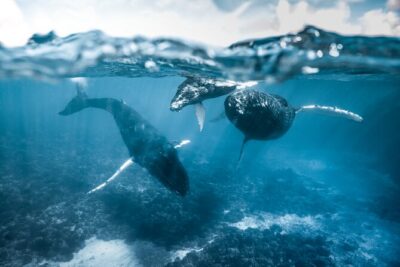
Humpback whale watching and marine life in Moorea
Read our review →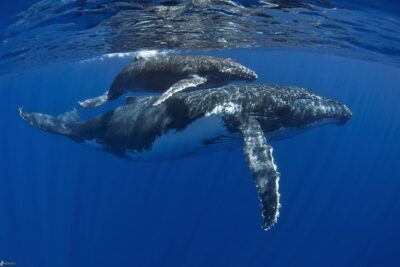
Private tour observing and swimming with humpback whales in Moorea
Read our review →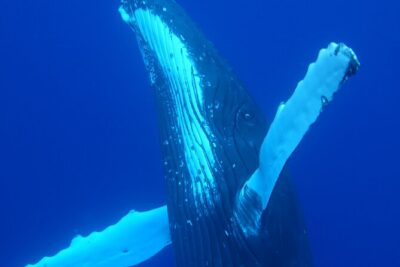
Browse the lists this tour appears in