
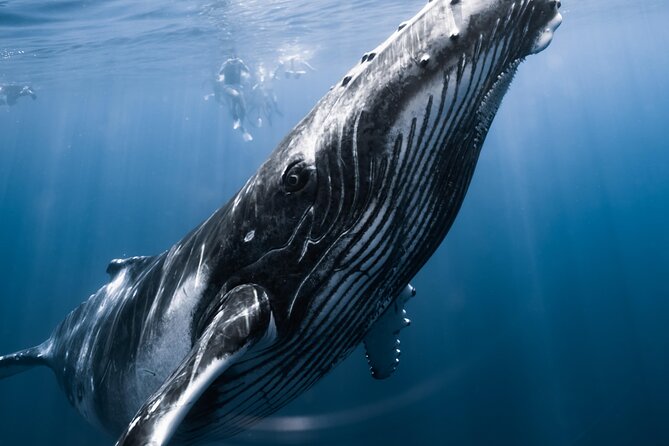
REVIEW · MOOREA WHALE WATCHING TOURS
Swimming with Whales in Moorea (Half Day tour)
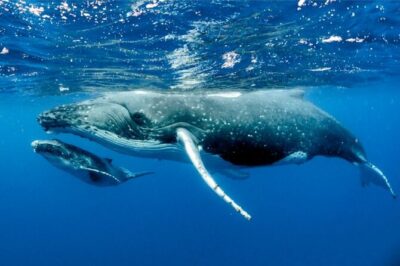
The ocean decides what you see. That is part of the appeal of Moorea Expedition’s four-hour outing, where you search for humpback whales and may also encounter dolphins, stingrays, sharks, or turtles. I like the small six-person limit and the crew’s clear focus on protecting both people and animals. I also like that non-swimmers can remain on the boat, but you should know that entering the water requires strong swimming skills, snorkeling experience, and comfort in open ocean.
The best whale season runs from July through late November, with the strongest experiences depending on weather, sea conditions, and animal behavior. Some outings produce several water entries with mothers and calves nearby. Others bring rough seas and no whales at all, although dolphins or other sea life may still save the morning. That uncertainty is real, so book this for the wild encounter, not a guaranteed photo opportunity.
Key points to know before you book
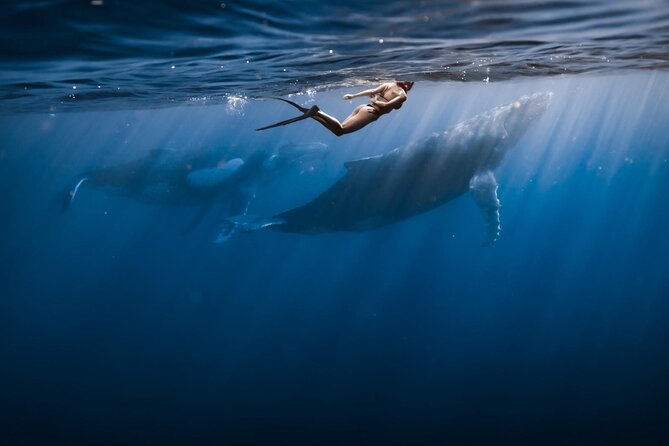
- Only six people may swim with humpback whales: New 2025 regulations limit the number of swimmers per boat.
- The whale season runs from July to late November: Sightings and water entries depend on conditions and animal behavior.
- Strong open-water swimming skills are required: This is not a gentle reef float for beginners.
- A wetsuit can replace the required life jacket: French law requires a life jacket unless you wear a shorty or full neoprene suit.
- The boat trip may include more than whales: Dolphins, sharks, stingrays, and turtles have all appeared on outings.
- Bring your own towel, sun protection, and camera: Snorkeling gear and bottled water are supplied, but sunblock and towels are not.
Setting out from Moorea for the whale search
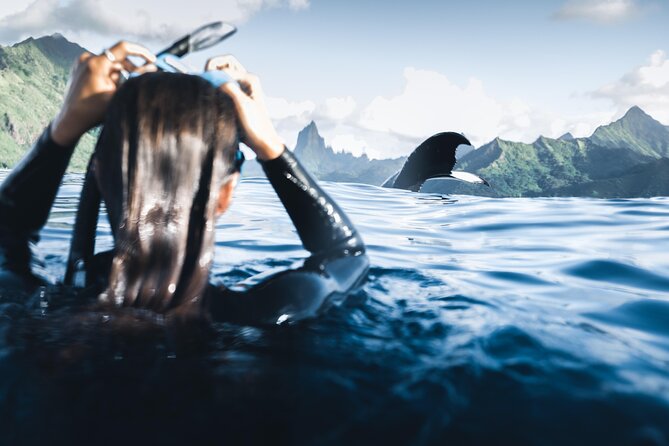
The trip begins and ends at the Moorea Expedition meeting point in French Polynesia. Pickup is offered, which can make the morning easier if you are staying at a resort and do not want to arrange your own transport. The tour lasts about four hours, a useful half-day length that leaves time for another activity or a relaxed afternoon.
Once aboard, expect a search rather than a fixed route. The crew looks for signs of humpback whales in the surrounding waters, then works out how to approach without putting pressure on the animals. That may mean patience between sightings. You could spend time watching the sea from the boat before the captain positions you for a possible entry.
This is one reason the small group matters. With no more than six people, the crew can give clearer instructions and keep track of everyone in the water. A smaller boat also makes it easier to move from one sighting to another, although it offers less shelter when the sea turns rough.
More Swim-with-Whales Trips in Moorea:
- Whale Tour – Observe and swim with whales
★ 5.0 · 257 reviews - Swim with humpback whales
★ 5.0 · 224 reviews - Private tour observing and swimming with humpback whales in Moorea
★ 5.0 · 126 reviews
July through November is the key season
Humpback whales are present in Moorea’s waters between July and late November, and swimming with them is the main aim of the expedition. Late in the season can still be worthwhile. One outing in mid-November produced a mother and calf, and another reached whales on the final day of the season.
The timing is never a promise. Even during whale season, you may see no whales, or you may spot them from the boat without getting into the water. Ocean conditions and whale behavior control the day. A whale may be resting, traveling, or moving too quickly for a safe approach.
I would treat the season dates as your best opportunity, not a guarantee. If swimming with humpbacks is the main reason for your visit, plan your Moorea stay with some flexibility. A poor-weather cancellation can lead to a new date or a full refund, but a calm day still cannot force wild animals to appear.
What happens when whales are found
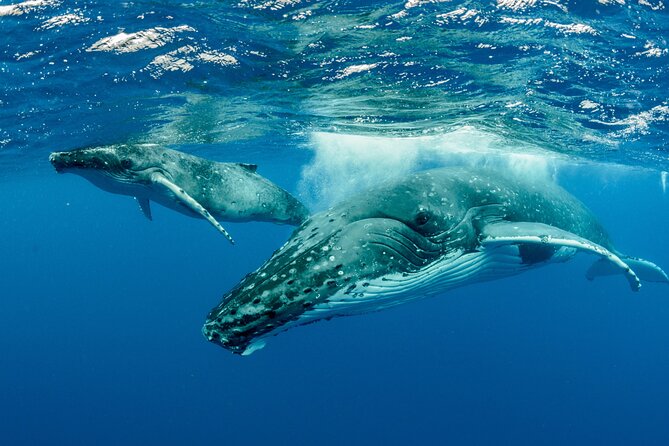
The strongest outings follow a clear pattern. The captain locates whales from the boat, the guide explains what is happening, and the group waits for a suitable moment to enter the water. You may make one entry, or you may return to the boat and try again.
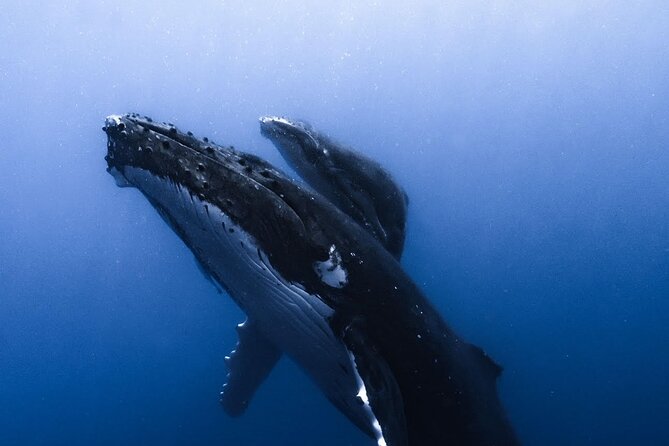
Several outings included two or three water entries. These included sightings of mothers and calves, pairs resting below the swimmers, and whales passing close by before heading back into the blue. One especially memorable pattern was a mother with two calves, followed by another encounter with the same family group.
You are not simply dropped into the sea and left to figure things out. Guides give instructions about where to swim and how to behave around the whales. The crew’s best role is not to tow you toward an animal, but to place the group where everyone can observe safely while allowing the whales room to move.
The experience can be brief and quiet. A whale may appear below you, pass in front of you, then vanish. That fleeting quality is part of what makes it special, but it also means you need patience. Keep your attention on the water instead of staring at your camera screen.
Swimming ability matters more than confidence alone
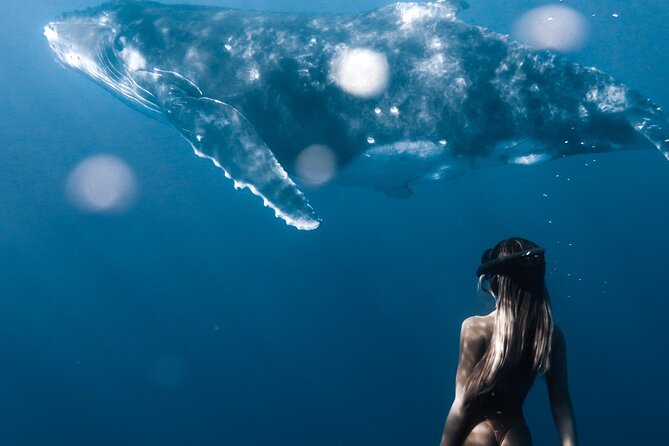
The operator describes the effort as easy to moderate on many days, but conditions can make it harder. You need to be comfortable using a mask and snorkel, swimming in open water, and keeping up with the group when instructed.
A few details matter here:
- You should have strong swimming ability and a good physical fitness level.
- Snorkeling experience is required if you plan to enter the water with whales.
- Rough sea conditions can make swimming tiring.
- You need to remain aware of boats, animals, other swimmers, and changing water conditions.
- If you cannot swim with the whales, you can watch from the boat instead.
That last option is useful, but it does not make the tour suitable for everyone. A non-swimmer can enjoy the views and see animals from the boat, yet the main advertised activity is still an open-water swim. If you are uneasy with snorkeling or tire quickly in the sea, choose the non-swimming tour instead.
One person described falling behind during the first entry and staying aboard afterward. The practical lesson is simple: do not overestimate your ability because the water looks calm from shore. You need enough strength to swim steadily without relying on the guide to carry you.
A few more whale watching trips around Moorea worth a look
- Humpback whale watching and marine life in Moorea
★ 5.0 · 199 reviews - Half day whale tour 4h00
★ 4.5 · 181 reviews - Half Day Small Group Whale Watching
★ 5.0 · 88 reviews - Whale watching and snorkelling in Moorea
★ 5.0 · 64 reviews
Life jackets, wetsuits, and what to bring
French law requires life jackets for whale-swimming tours. You may avoid that requirement by wearing a neoprene wetsuit, either a shorty or a full suit. Life jackets are available aboard, while wetsuits can be rented through a third party. Contact the operator ahead of time if you need to arrange one.
A wetsuit has another benefit besides the legal exemption. It can provide warmth and flotation, which may make it easier to stay relaxed while watching the whales. Still, it does not replace swimming ability.
Snorkeling equipment and flotation devices are included, along with bottled water. You need to bring:
- Sunblock
- A towel
- Any personal camera or waterproof phone equipment
A GoPro was useful for one outing, including underwater recordings of whale song. But you should not assume that a photographer will provide a full set of professional images. One account specifically advised bringing your own way to capture the moment rather than relying on the operator.
Take seasickness seriously. Choppy water has made some outings uncomfortable, and taking a seasickness pill before departure was suggested by one participant. If you know you are prone to motion sickness, prepare before boarding rather than waiting until the boat is already moving.
Dolphins, sharks, rays, and turtles can fill the gaps
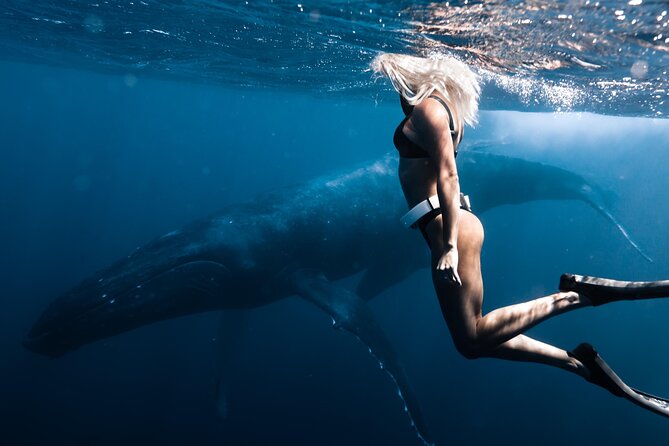
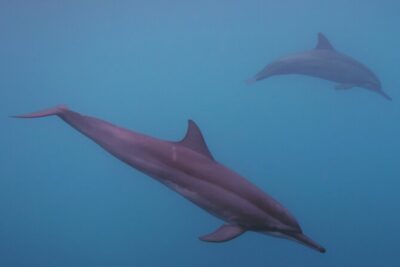
Whales are the headline, but Moorea’s water can offer a wider marine-life show. Dolphins have replaced whales as the main encounter on at least one rough-weather outing. Other trips included blacktip sharks, stingrays, and turtles.
These sightings add value when whales remain out of reach, but they are not guaranteed either. You might see several kinds of animals, or you might spend most of the time searching. The crew’s job is to read the conditions and find what the sea is offering that day.
The variety also makes the tour worthwhile for someone who values marine life beyond a single species. Still, do not book it expecting a standard reef snorkeling session. The main objective is to find humpback whales, and the search can take up much of the morning.
A crew that puts safety first
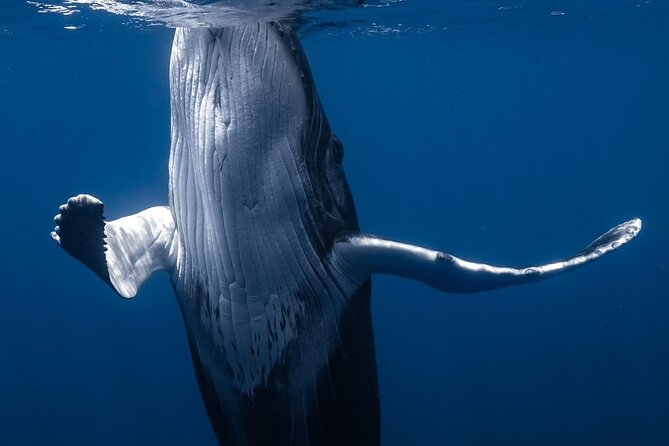
The most praised part of the experience is the crew’s handling of safety and animal behavior. Guides have been described as calm, clear, and careful about not stressing the whales. They explain how to approach and keep the group at a respectful distance while still giving you a close view.
Guides named Johnny, Joe, Grace, and Laura have all received warm personal praise on different outings. Johnny was especially appreciated for explaining the activity in both French and English. Joe and Laura were praised for their knowledge of the water and for helping the group feel secure during the swim.
The captain’s skill matters just as much. Finding whales is not only a matter of luck. The boat must be placed well, and the crew needs to understand how the animals are moving. One account described watching the captain and guide adjust their position as two groups of whales met.
Communication has not been perfect for everyone. One English-speaking participant felt left out when much of the casual conversation happened in French. Instructions were provided, but the social side of the trip was less inclusive than expected. If you do not speak French, confirm how the crew handles bilingual communication when booking.
The four-hour format and small-group value
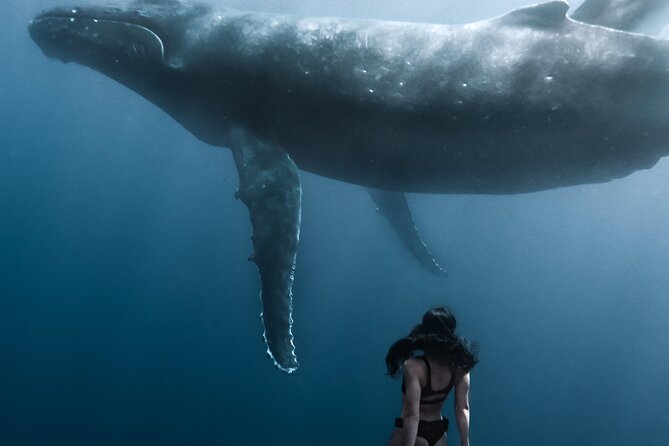
At $305.30 per person, this is a costly half-day. You are paying for a specialized boat outing, a small group, equipment, bottled water, and the chance to enter the sea with large wild animals under the direction of a trained crew.
The price makes more sense if you value the small group and the possibility of several water entries. Six people gives everyone more room than a crowded boat, and the guide can watch the group more closely. It also gives you a better chance of seeing what is happening rather than swimming behind a large cluster of people.
The price feels harder to justify if you expect a guaranteed whale encounter, professional photographs, or a long period in the water. You may see whales only from the boat, or you may get unlucky with weather and animal movement. You also pay separately for a wetsuit rental if you need one.
The strongest value comes on a calm day when the crew finds a mother and calf, then gives you two or three safe chances to watch them underwater. That can become one of the defining experiences of a French Polynesia trip. But the risk of an ordinary wildlife day is built into the cost.
How the encounter feels in the water
Swimming near a humpback is not an amusement-park performance. The animal may pass below you, surface nearby, or remain out of sight for long stretches. The most powerful moments described were simple ones: a mother and calf moving past, a whale rising from below, or two animals resting under the swimmers.
You may hear whale song through your camera or snorkel equipment. You may see a whale close enough to notice its size and movement, then watch it disappear almost at once. The guide’s restraint matters here. A good encounter leaves space for the whale to choose what happens next.
Follow every instruction about where to position yourself and when to return to the boat. Do not chase an animal or assume a close pass will happen again. The best photographs often come when you stop trying to get the perfect shot and keep your head in the water.
Who should book this Moorea tour?
I would recommend it to strong swimmers, confident snorkelers, and nature lovers who accept that wildlife does not follow a schedule. It suits people willing to wait, tolerate some motion on the sea, and respect strict rules around the animals.
It is also a good fit if you want a focused half-day rather than a full-day cruise. The boat can provide a memorable experience even when whales do not cooperate, especially if dolphins, rays, sharks, or turtles appear.
I would not choose it for a first-ever snorkeling attempt, a person who is uncomfortable in open water, or anyone who needs a guaranteed itinerary. Non-swimmers can stay aboard, but the tour’s greatest reward requires getting into the sea.
Cancellation is free up to 24 hours before the start time. Changes or cancellations inside that window are not refunded, and poor weather or an insufficient number of bookings can lead to a new date, another experience, or a full refund.
Should you book Swimming with Whales in Moorea?
Book it if swimming beside a wild humpback is high on your Moorea wish list and you are prepared for nature’s rules. The small group, careful crew, and repeated reports of safe, close encounters give this outing strong appeal.
Before paying, be honest about your swimming ability, ask about wetsuit rental, and pack sunblock, a towel, and your own waterproof camera. If the thought of choppy water or waiting without a whale makes you anxious, choose a boat-watching option instead.
For the right person, this can be a remarkable four hours. For everyone else, the same price may buy a more predictable day on the water.
FAQ
What is included in the Moorea whale-swimming tour?
Snorkeling equipment, flotation devices, and bottled water are included. Sunblock and towels are not included.
How many people can join the boat?
The activity has a maximum of six travelers. From 2025, government rules allow only six people per boat to swim with humpback whales.
When can I swim with humpback whales in Moorea?
The main whale season runs from July through late November. Seeing whales or entering the water depends on weather, ocean conditions, and whale behavior.
Do I need to be a strong swimmer?
Yes. You need strong swimming skills, snorkeling experience, and a good level of physical fitness to enter the water with whales. Non-swimmers can remain on the boat.
Do I have to wear a life jacket?
French law requires a life jacket for whale-swimming tours unless you wear a neoprene wetsuit. A shorty or full wetsuit qualifies for the exemption. Life jackets are available aboard.
What happens if bad weather cancels the tour?
You can be offered a different date or a full refund if the experience is canceled because of poor weather. A full refund is also available if the minimum number of participants is not reached.
Just added around Moorea
- Whale watching and snorkelling in Moorea★ 5.0 · 64 reviews
- WHALE TOUR – Watching and Swimming with Whales★ 5.0 · 52 reviews
- Whale watching 6 people half day★ 5.0 · 38 reviews
- Whale Watching Moorea (non-swimming)★ 4.0 · 12 reviews
- Snorkeling Lagoon Cruise and Whale Watching in Moorea★ 5.0 · 2 reviews
- Watch and Swim with Humpback Whales in Moorea★ 5.0 · 3 reviews
- Shared Whale Expedition★ 5.0 · 34 reviews
- Sacred Experience Swimming with a Whale in Moorea★ 5.0 · 46 reviews
Moorea Whale Watching Tours, compared.
Humpback whale watching and marine life in Moorea
Read our review →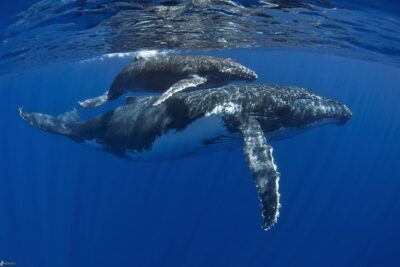
Private tour observing and swimming with humpback whales in Moorea
Read our review →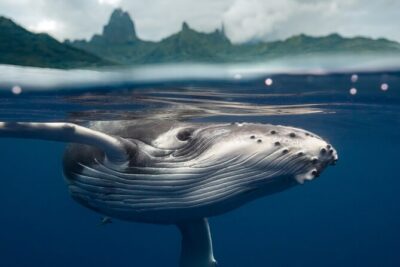
Browse the lists this tour appears in