
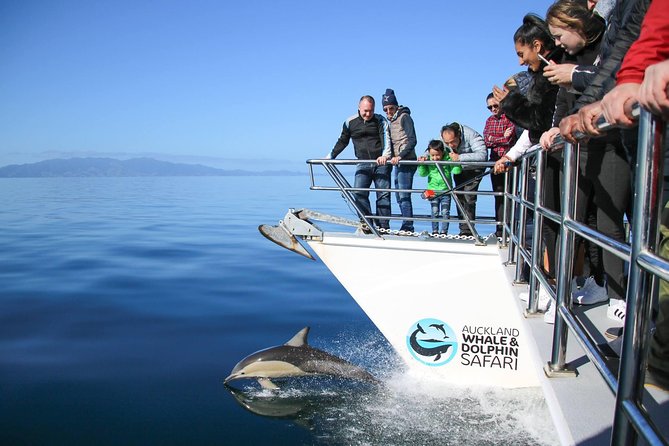
REVIEW · NEW ZEALAND WHALE WATCHING TOURS
Auckland Dolphin and Whale Watching Eco-Safari Cruise
Wildlife makes the schedule. Auckland’s 4.5-hour eco-safari takes you from Viaduct Harbour into the Hauraki Gulf Marine Park, where you might see dolphins, Bryde’s whales, seals, blue penguins, sharks, and rare seabirds. I like the marine research focus and the chance to cruise among Auckland’s islands rather than simply circle the harbor. I also like the free return trip offered when no marine mammals appear. The catch is simple: wild animals do not follow a timetable, and some trips produce only a few dolphins or no whales at all.
This is a strong choice if you want a full half-day on the water with a purpose beyond sightseeing. The crew shares information about ongoing research, and each ticket supports marine mammal conservation. Still, bring patience, warm layers, and realistic expectations. A calm sea can make the trip wonderful. Rough water, a crowded boat, or quiet wildlife can make the same four-and-a-half hours feel long.
Key points before you book
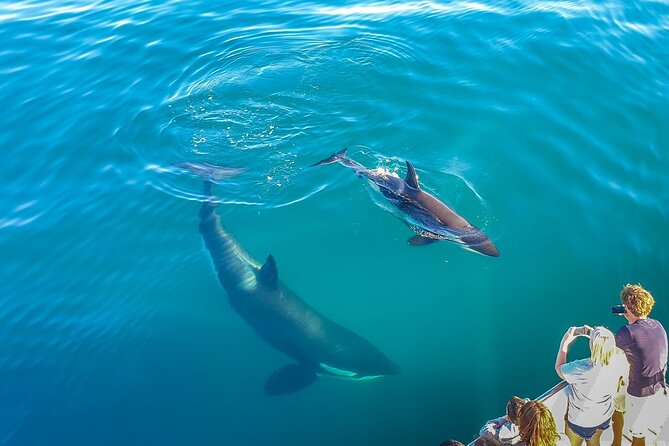
- Dolphins are the most dependable highlight: Pods may swim beside the catamaran, sometimes for nearly half an hour, with babies among them.
- Whales are possible, not promised: Bryde’s whales and up to six whale types may be found, but some departures see none.
- The research work adds real value: Marine research scientists explain the animals, collect data, and discuss conservation partnerships.
- You stay near Auckland: The cruise leaves from Viaduct Harbour and includes views of Rangitoto, Motutapu, Motuihe, and other Gulf islands.
- The boat can carry up to 99 people: That gives you several viewing areas, but popular summer departures may feel crowded at the rail.
- Pack for changing conditions: Wear warm layers and weatherproof clothing, with sunscreen, a secure hat, sunglasses, and flat-soled shoes.
Leaving Viaduct Harbour on a research-minded catamaran
Your meeting point is at the Eastern Viaduct, beside the New Zealand Maritime Museum in downtown Auckland. This is convenient if you are staying in the central city or already visiting the waterfront. There is no hotel pickup, so plan to reach the pier on your own.
Check-in closes 15 minutes before departure. Take that seriously. Late arrivals risk losing their allocated seats, which matters on a busy sailing.
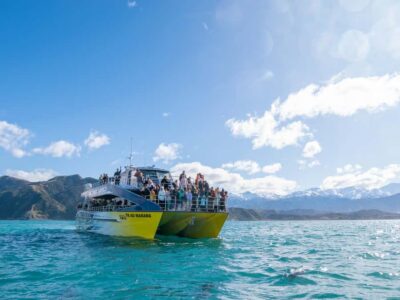
The boat is a custom-built 65-foot, or 20-meter, catamaran. It has indoor and outdoor viewing areas, toilets, and a shop selling snacks and drinks. The twin-hull design is described as stable, but stability is not the same as stillness. Several departures have had choppy conditions, and the front deck can be windy and wet.
I would arrive early enough to settle into a viewing position without rushing. The front offers an exciting view while the boat is underway, but it is also the place most exposed to spray and wind. The back of the boat can be a calmer place to sit, especially if you want to watch the water for long stretches.
The stated maximum is 99 passengers. That is not an intimate little boat. On a full summer sailing, the rail can become three people deep when dolphins appear. Crew members ask people to rotate so everyone gets a look, but you should expect some friendly competition for the best photo position.
More Whale and Dolphin Watching Tours in New Zealand:
- Auckland: Whale and Dolphin Watching Half-Day Eco Cruise
★ 4.5 · 1,072 reviews - Auckland: Tikapa Moana Whales, Dolphins and Islands Cruise
★ 3.9 · 292 reviews - Auckland: Tikapa Moana Dolphin, Whale and Island Cruise
★ 4.0 · 17 reviews
Viaduct Harbour, the bridge, and the first harbor views
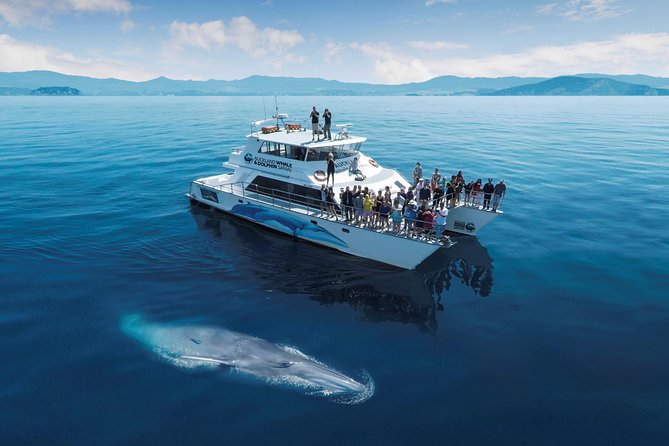
The first part of the trip gives you a useful Auckland orientation from the water. You leave Viaduct Harbour and pass beneath or near the Auckland Harbour Bridge, with the city behind you and open water ahead.
Waitemata Harbour is a pleasant opening act. It lets you watch the city recede while the commentary introduces Auckland’s waterfront and the wider Hauraki Gulf Marine Park. The views are worthwhile even if the animals remain hidden.
This section is also a reminder that the cruise is not only a whale chase. The route itself is part sightseeing trip, part wildlife search, and part floating classroom. If you need constant action, the first stretch may feel slow. If you enjoy boats, islands, and changing sea views, it helps fill the time well.
Rangitoto and the island-framed Hauraki Gulf
Rangitoto Island is one of the defining sights on this route. Its volcanic form gives the cruise a strong sense of place, and the island views make the journey feel distinctly Auckland rather than like a generic wildlife outing.
The boat then reaches the wider Hauraki Gulf Marine Park, an extensive protected area with five marine preserves and around 23 marine species. The guides explain how these waters support whales, dolphins, seals, penguins, and seabirds.
You will not be getting off at Rangitoto, Motuihe, Motutapu, or the other islands listed along the route. They are scenic points and wildlife habitat viewed from the boat. That is important when planning your day. This cruise offers water access and island scenery, not island walks or beach time.
Searching for dolphins, Bryde’s whales, and seals
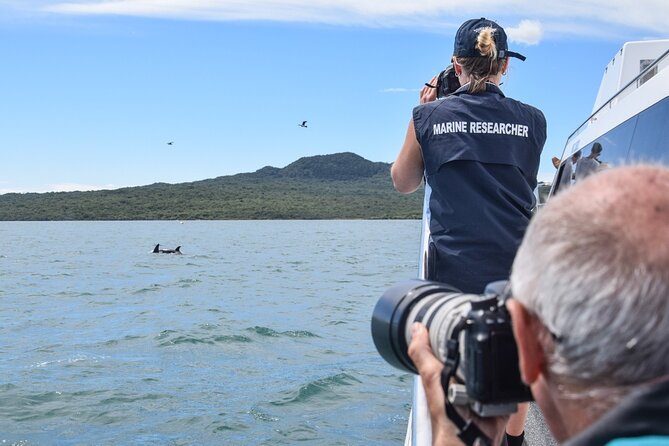
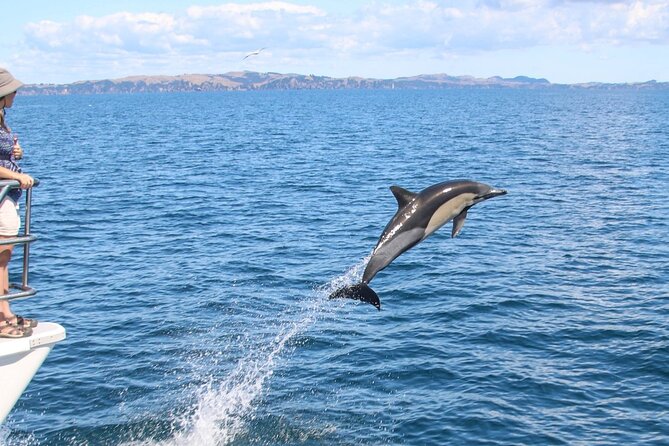
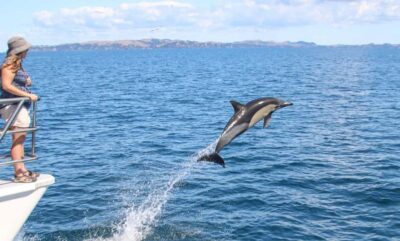
The animal sightings are the heart of the outing, and they can change dramatically from one departure to the next. Bottlenose dolphins are often found in pods, and some encounters last long enough for the animals to swim and play near the boat.
The strongest dolphin experiences can be spectacular. A pod may appear beside the bow, with repeated glimpses as the animals surface and move through the water. Baby dolphins have been seen with larger nursery pods, which adds a particularly memorable touch.
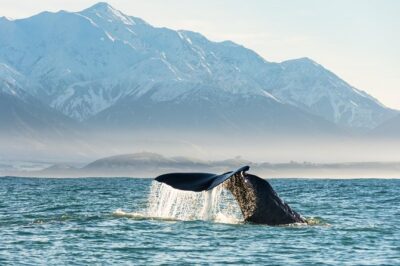
Bryde’s whales are native to New Zealand and are among the species the crew tracks. The company may also look for up to six types of whales in the Gulf. On a fortunate trip, you could see several whales along with dolphins. On another day, you might get only a brief sighting or none at all.
That uncertainty is not a flaw unique to this cruise. A whale cannot be summoned because the boat has a departure time. The crew may change course or spend extra time searching, but there is no honest way to guarantee a whale encounter.
The policy helps soften the risk. If you see no marine mammals during your trip, you can return on another day at no extra charge. That is useful for people staying in Auckland for several days. It is much less useful if you are visiting New Zealand briefly and will not be able to use the voucher.
Seals, sharks, and blue penguins are possible bonuses rather than the main promise. Seabirds may be easier to spot, especially if you have binoculars. Keep your camera ready, but do not spend the entire cruise staring at a screen. Wildlife can appear on any side of the boat.
More Whale Watching Cruises in New Zealand:
- Kaikoura: Whale Watching Cruise
★ 4.6 · 3,089 reviews - Reykjavík: Whale Watching and Marine Life Cruise
★ 4.6 · 9,838 reviews - Funchal: Dolphin and Whale Watching Catamaran Cruise
★ 4.5 · 5,697 reviews - Costa Adeje: Whale & Dolphin Eco-Cruise with Snacks & Drinks
★ 4.6 · 5,096 reviews
Why the science and conservation work matter
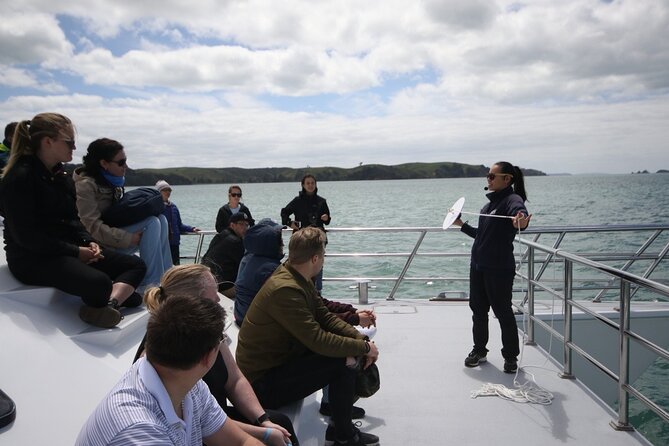
The best feature of this experience is the sense of purpose behind it. Marine research scientists and the crew explain the work being done with local researchers, including which whale populations are being tracked.
That information changes the mood of the trip. You are not simply being driven around until something large surfaces. You learn how researchers observe marine mammals and why careful boat handling matters. The crew aims to give animals space and allow them to decide how close they come.
Every ticket purchased contributes directly to marine mammal conservation. That does not guarantee a sighting, but it gives the cost more substance. Part of what you pay supports the protection and study of the same marine environment you are visiting.
The conservation message is also practical. You see why respectful viewing matters, especially when several dozen people crowd toward one side of the vessel. The crew’s job is to give you a good look without turning the animals into a forced performance.
Motuihe, Motutapu, and Tiritiri Matangi from the water
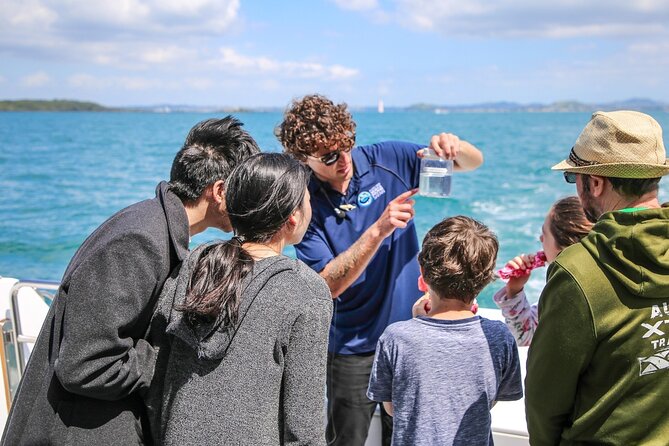
Motuihe Island and Motutapu Island add variety to the route. Their shorelines and surrounding waters provide more scenic backdrops as the boat searches for animals.
Tiritiri Matangi Island is another named point on the itinerary. The cruise does not present itself as a landing excursion, so think of it as part of the Gulf setting rather than a stop for exploring on foot.
These island passages make the trip more than a narrow whale-watching run. You get a broad view of the marine park and a better sense of how close Auckland is to protected natural areas. The tradeoff is time. The boat must travel between search areas, so you may spend periods simply watching islands and open water.
I consider that a fair trade for this kind of outing. You are paying for a sustained search through a large marine area, not a guaranteed sequence of animal encounters. Still, anyone who dislikes long boat rides should think carefully before booking.
North Head and the return to the city
North Head Historic Reserve is one of the final route points before the boat returns toward Auckland. From the water, it adds another layer to the city’s harbor setting and gives you a last chance for coastal views.
The cruise ends back at the same Viaduct Harbour meeting point. The scheduled length is about four hours and 30 minutes, though the exact return can be affected by conditions and the search for wildlife. One departure stayed out about 10 minutes longer while the crew continued looking for a whale.
That extra effort is encouraging, but it can also affect your plans. Do not schedule a tight restaurant booking, museum entry, or airport transfer immediately afterward.
Is $135.91 a fair price?
At $135.91 per person, this is not a cheap harbor cruise. It is a substantial half-day activity, and the value depends heavily on what you want from it.
If your main goal is a guaranteed whale sighting, the price may feel risky. A trip with no whales and only a few dolphins can leave you feeling that you paid for a promise the ocean could not keep.
If you value the full package, the calculation looks better. You receive a long cruise through the Hauraki Gulf, trained commentary, access to marine research information, island scenery, and a conservation contribution. A strong dolphin encounter can make the price feel very reasonable, especially when the animals stay near the boat for an extended period.
The free return policy improves the value for people with flexible Auckland plans. It does not fully solve the problem for short-stay visitors, but it shows that the operator recognizes the risk involved in wildlife watching.
What to wear and what to bring
The weather can shift quickly on the Gulf. I would wear several warm layers and bring weatherproof outer clothing, even if the morning looks sunny from the city.
Pack these useful items:
- A sun hat with a chin strap
- Sunscreen and sunglasses
- A camera
- Binoculars
- Flat-soled, sturdy shoes
- Personal snacks or money for food and drinks from the onboard shop
Sunscreen matters even on a cool day. Wind and cloud can make you forget how much time you are spending outside.
If you are prone to motion sickness, the supplied information does not state that medication is available or that the water will be calm. The sensible approach is to prepare according to your own needs and accept that conditions may be choppy.
Who will enjoy this cruise most?
I would recommend it to families, couples, photographers, birdwatchers, and anyone who enjoys marine science. Children may especially like dolphins, penguins, and seabirds, though a four-and-a-half-hour trip requires some patience.
It also suits visitors who want to support conservation while sightseeing. The research connection gives the trip more meaning than a simple ride around the harbor.
I would be more cautious if you have only one free morning in Auckland and need a guaranteed result. I would also think twice if you dislike open water, crowded viewing areas, or long stretches without an animal sighting.
Most people can participate, and service animals are allowed. The boat is near public transportation, which makes the central-city departure practical.
Final verdict: should you book it?
Book this eco-safari if you want a serious search for marine life, not a staged show. The best parts are the dolphin encounters, the island scenery, the marine research commentary, and the care taken around wildlife.
Go in with a clear bargain: you may see whales, but you may not. If you can accept that, the cruise offers a worthwhile way to experience Auckland’s Gulf and support conservation at the same time.
I would book it when I had enough time in Auckland to use the return-trip offer if needed. I would arrive early, dress for wind, and treat the science and scenery as part of the experience, not as filler between sightings.
FAQ
Where does the Auckland Dolphin and Whale Watching Eco-Safari Cruise depart?
It departs from the Eastern Viaduct in Auckland Central, near the New Zealand Maritime Museum at Viaduct Harbour.
How long does the cruise last?
The cruise lasts approximately 4 hours and 30 minutes.
Are whale and dolphin sightings guaranteed?
No. Wildlife sightings cannot be guaranteed. Dolphins and whales are often found in these waters, but some trips see few or no marine mammals.
What happens if no marine mammals are seen?
You can take the cruise again on another day at no extra charge if no marine mammals are seen during your trip.
Is food included?
No. Food and drinks are not included, but they are available to purchase onboard.
How many people can join the cruise?
The maximum group size is 99 travelers. Busy summer departures may feel crowded around the viewing rails.
What should I wear?
Wear warm layers and weatherproof clothing. Flat-soled shoes are recommended, and a sun hat with a chin strap, sunscreen, and sunglasses are also useful.
What is the cancellation policy?
You can cancel at least 24 hours before the start time for a full refund. Cancellations or changes made less than 24 hours before departure are not accepted for a refund. If poor weather or insufficient bookings cancel the trip, you will be offered another date, another experience, or a full refund.
More Safaris in New Zealand
- Kaikoura Whale Watching – 45 Minute Ocean Safari
★ 5.0 · 39 reviews - Los Cristianos Respectful No-Chase Whale and Dolphin Safari
★ 4.6 · 12,782 reviews - Tromsø Whale Safari with MS Gabriele
★ 4.3 · 1,937 reviews - From Tromsø: All-Inclusive Whale & Orca Safari
★ 4.5 · 1,221 reviews
Just added around New Zealand
- Kaikōura Whale Watching and Scenic Landing – 1hr Premier Tour★ 5.0 · 24 reviews
- Kaikoura Whale Watch Day Tour from Christchurch★ 4.5 · 170 reviews
- Kaikoura Whale Watching – 45 Minute Ocean Safari★ 5.0 · 39 reviews
- Kaikōura Whale Watching – 1hr 20min Ultimate Adventure★ 5.0 · 8 reviews
- Whale Watching in Kaikoura – Ultimate Experience★ 4.5 · 199 reviews
- Kaikoura Helicopters Top n Tail Whale Watch flight★ 5.0 · 7 reviews
- Kaikoura Helicopters Extended Whale Watch★ 4.5 · 15 reviews
- Kaikoura: Whale Watching Flight★ 5.0 · 100 reviews
New Zealand Whale Watching Tours, compared.
Auckland: Whale and Dolphin Watching Half-Day Eco Cruise
Read our review →
Kaikoura: Whale Watching Flight with Commentary
Read our review →
Auckland: Tikapa Moana Whales, Dolphins and Islands Cruise
Read our review →
From Christchurch: Kaikōura Day Tour with Whale Watching
Read our review →
Kaikōura Whale Watching Scenic Flight (40 Minutes)
Read our review →
Kaikoura: Whale Watching Flight with Guided Commentary
Read our review →Browse the lists this tour appears in