
REVIEW · NEW ZEALAND WHALE WATCHING TOURS
Auckland: Whale and Dolphin Watching Half-Day Eco Cruise
Wildlife can appear beside Auckland. This 4.5-hour Hauraki Gulf eco-cruise combines city views, marine research, and the chance to see dolphins, whales, orcas, seabirds, and penguins from a 65-foot catamaran. I especially like the close viewing style and the crew’s genuine care for the animals. The main catch is simple: nature sets the schedule, so whale sightings are never guaranteed.
I also like how easy this trip is to fit into an Auckland visit. The boat leaves from the city center, passes North Head, Devonport, and Rangitoto Island, and gives you a second cruise if no marine mammals appear. The ride can be windy or rough, though, and the $130 price feels best when you value the research and conservation work as much as the wildlife.
Key points to know before boarding
- Auckland departure: Board at Berth 9, Eastern Viaduct Marina, opposite the Maritime Museum.
- A working research vessel: The crew may collect samples and explain ongoing marine science during the trip.
- Wildlife is never promised: Dolphins are common in the reports, while whales and orcas are possible but less certain.
- Strong conservation angle: One dollar from every ticket supports the Hauraki Gulf Guardians fund.
- Comfortable but exposed: The 65-foot catamaran offers good viewing space, but you should bring warm layers and a showerproof jacket.
- A no-sighting safety net: If you see no marine mammals, you receive another cruise at no extra charge.
Leaving Auckland from the Eastern Viaduct
The meeting point is unusually convenient. You walk to Berth 9 at Eastern Viaduct Marina, reached from the western end of Quay Street and directly opposite the Maritime Museum. Check in at the top of the boarding ramp 30 minutes before departure. Check-in closes 15 minutes before sailing, so do not treat this like a casual last-minute harbor stroll.
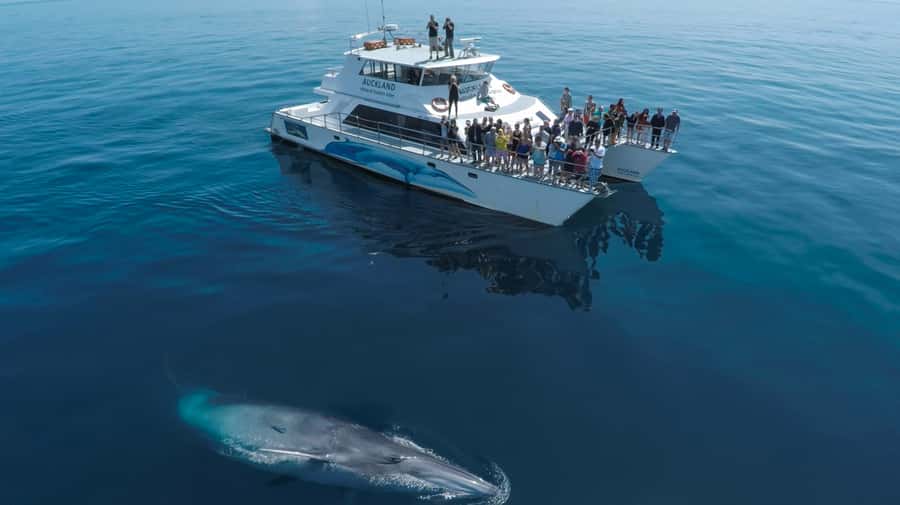
The Dolphin Explorer is a 65-foot luxury catamaran. That size gives the trip a useful balance: it is substantial enough to feel stable, yet not so large that you lose sight of the water or spend the day peering around a crowd. Several people specifically appreciated the seating choices and the fact that most passengers could find a clear view over the side.
You will want to move around during the cruise. Keep your camera and binoculars ready, but do not expect perfect conditions for photography. Wind, spray, changing light, and moving animals are all part of the deal. A camera with a wrist strap is a sensible choice.
The boat has toilets and sells a small selection of snacks, hot food, and drinks, including beer and wine. Food is not included, and you should not count on a full meal. Bring personal medication if needed, and take seasickness medicine before departure rather than waiting until the boat starts rolling.
More Whale and Dolphin Watching Tours in New Zealand:
- Auckland Dolphin and Whale Watching Eco-Safari Cruise
★ 4.5 · 1,790 reviews - Auckland: Tikapa Moana Whales, Dolphins and Islands Cruise
★ 3.9 · 292 reviews - Auckland: Tikapa Moana Dolphin, Whale and Island Cruise
★ 4.0 · 17 reviews
North Head, Devonport, and Rangitoto from the water
The opening run gives you a quick change of viewpoint. Auckland looks different from the Hauraki Gulf, with the waterfront, North Head, Devonport, and Rangitoto Island passing across the horizon. These sights are not separate shore excursions, but they make the journey feel like more than a single-minded search for whales.
Rangitoto is especially striking from the water. The volcanic island provides a clear sense of place while the crew explains the gulf and its wildlife. If you have already toured Auckland by road, this short harbor passage helps connect the city to the marine park around it.
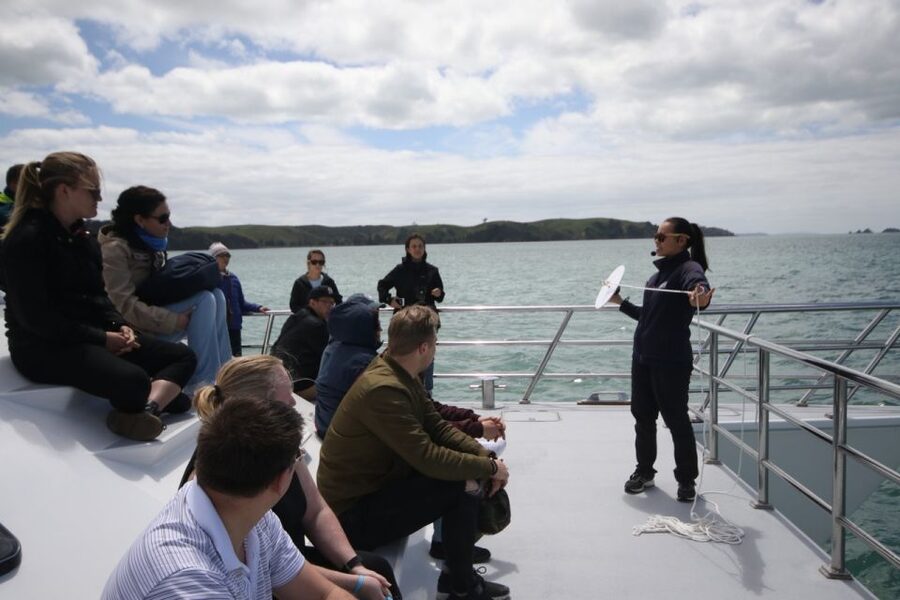
The early part of the trip also gives the crew time to explain how sightings work. They may follow seabird activity, feeding groups, or what the crew calls workups, where birds and marine animals gather around available food. This is useful context because the boat is not simply driving to a fixed viewing platform. The crew is reading the water and looking for signs.
That also explains why the itinerary can change. A marine safari does not run like a museum tour with a guaranteed exhibit at 2 p.m. You may spend time searching, then suddenly find dolphins beside the boat or birds gathering over the water.
Searching the Hauraki Gulf Marine Park
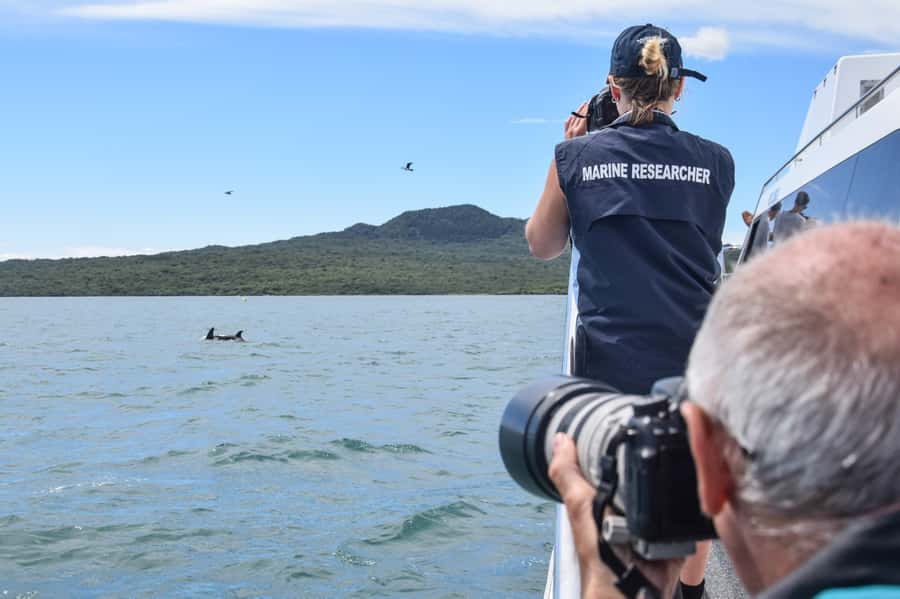
The main portion of the cruise takes place in the Hauraki Gulf Marine Park. The stated targets are orcas and bottlenose dolphins, but the range of possible sightings is wider. Reports from different trips include common dolphins, Bryde’s whales, blue penguins, Australasian gannets, shearwaters, sharks, and other seabirds.
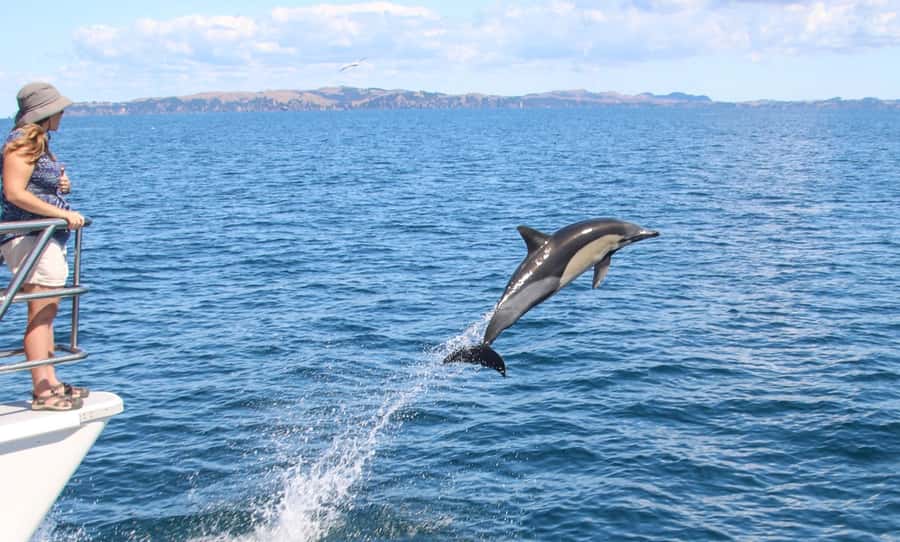
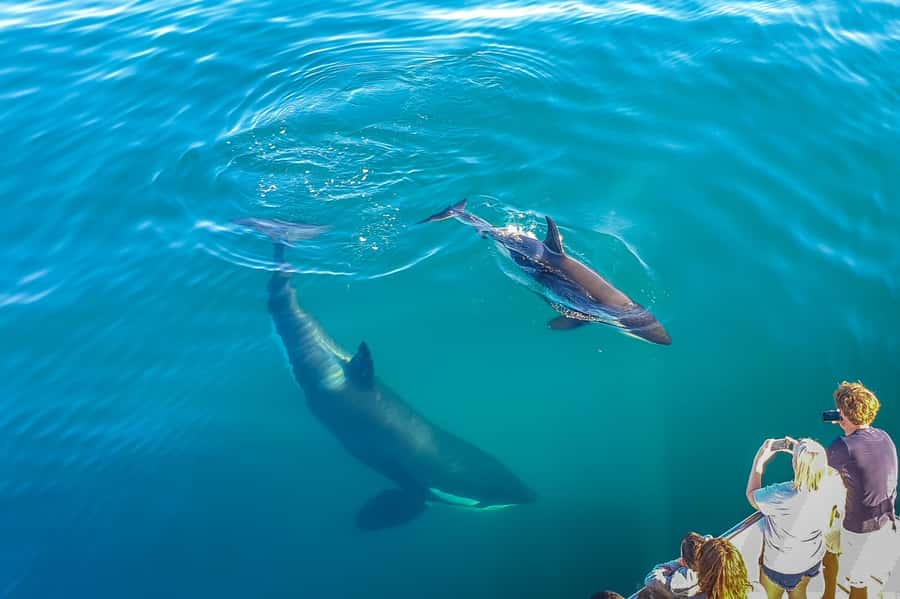
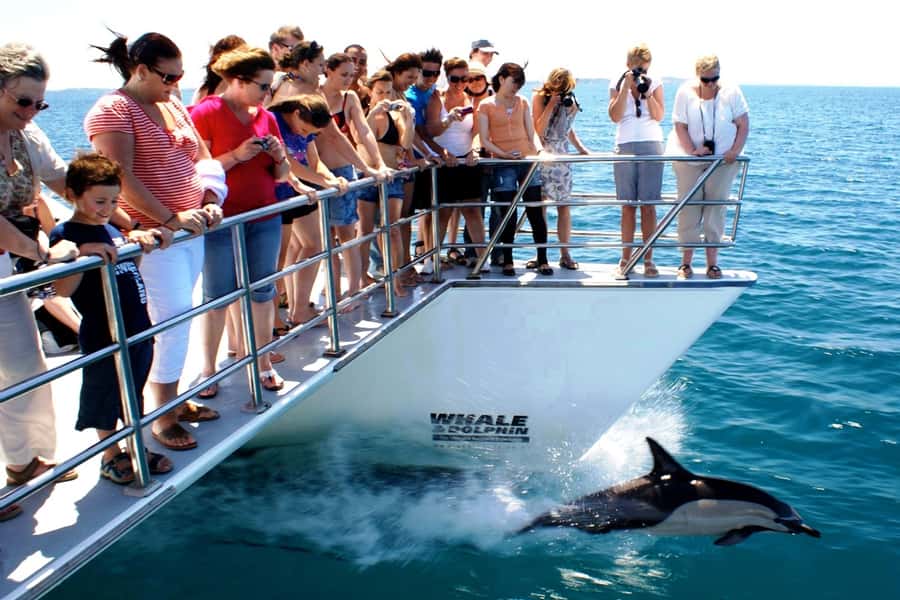
Dolphins seem to be the most dependable reward. People have seen small groups, large pods, mothers with young, and animals swimming directly beside or beneath the boat. One trip produced more than 100 dolphins, while another watched a pod for around 30 minutes. Those are memorable encounters, but you should treat them as lucky conditions rather than a promise.
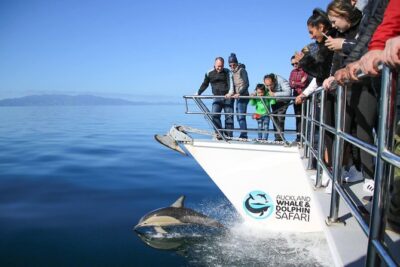
The viewing style is one of the cruise’s strongest features. The vessel can approach more closely than some whale-watching operations, while the crew maintains respectful distances and avoids chasing animals aggressively. The best moments may be brief: a fin, a splash, a baby dolphin surfacing, or a group changing direction beneath the catamaran.
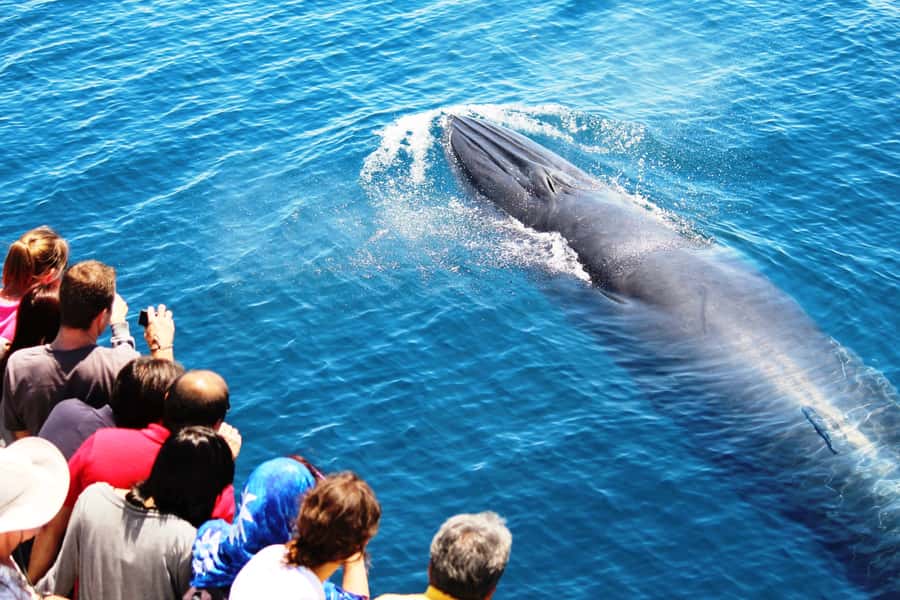
Whales are less predictable. Bryde’s whales appear in several accounts, along with sightings of multiple whales in a single trip. Other outings found dolphins and birds but no whale at all. The boat sometimes sees whales at a distance, which can be exciting but less satisfying than a close encounter.
Orcas are part of the experience’s headline promise, yet they are not a regular guarantee. If seeing orcas is your only reason for booking, you may be disappointed. If you view the cruise as a chance to observe the whole gulf ecosystem, the outing makes more sense.
Gannets, penguins, and the rest of the gulf
The birds help keep the trip interesting when whales stay out of sight. Australasian gannets are a regular highlight, especially when they gather above a feeding area and plunge toward the water. The sight and sound of many birds working together can reveal where fish are concentrated.
Blue penguins have also been seen from the boat. They are small and easy to miss, so a guide pointing them out makes a real difference. Shearwaters and other seabirds add variety, and the crew may connect their behavior to the larger food chain.
Sharks have appeared too, including blue sharks and a hammerhead shark. Again, these are possible sightings rather than scheduled parts of the cruise. The value is in learning to notice the less obvious signs of life around the boat, not just waiting for a whale’s back to break the surface.
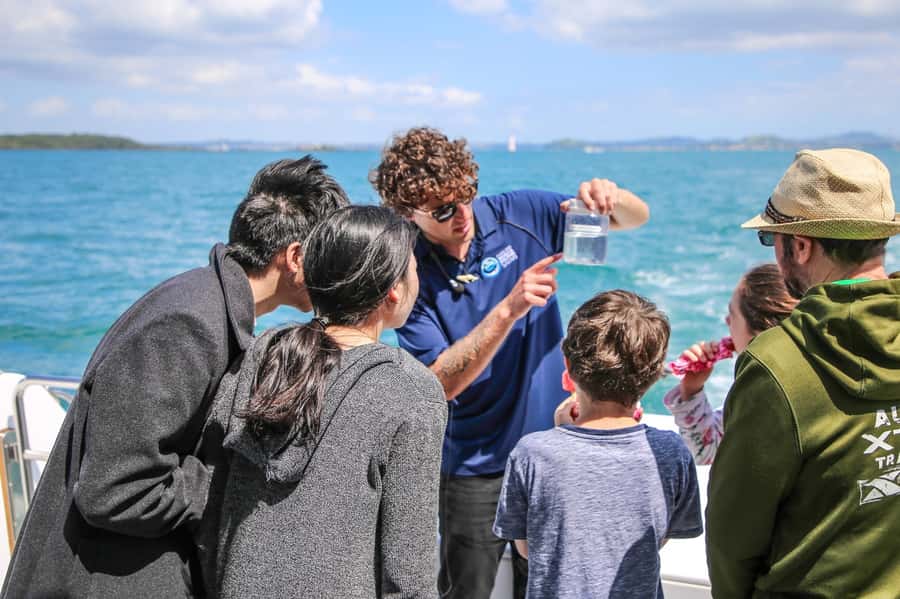
One especially good feature is the blend of wildlife watching and science. The boat is also used as a research vessel, and the crew may stop to collect plankton or other samples. You are not merely being told that conservation matters. You can see a small part of the research process and learn how scientists gather information in the gulf.
More Whale Watching Cruises in New Zealand:
- Kaikoura: Whale Watching Cruise
★ 4.6 · 3,089 reviews - Reykjavík: Whale Watching and Marine Life Cruise
★ 4.6 · 9,838 reviews - Funchal: Dolphin and Whale Watching Catamaran Cruise
★ 4.5 · 5,697 reviews - Costa Adeje: Whale & Dolphin Eco-Cruise with Snacks & Drinks
★ 4.6 · 5,096 reviews
The crew makes the difference
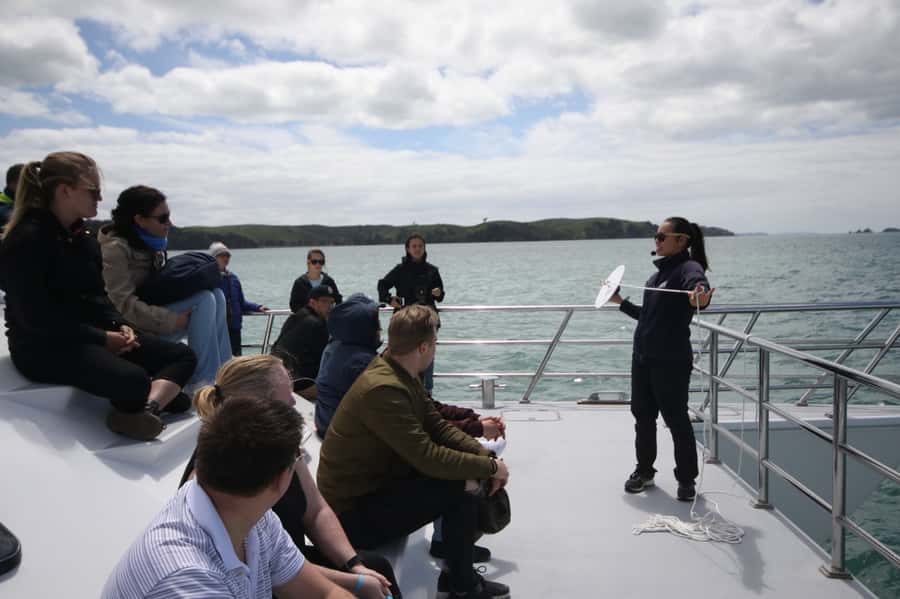
The most consistently praised part of this experience is the crew. Guides, skippers, and marine scientists explain animal behavior, local geography, seabirds, plankton, and the marine environment throughout the journey. The tone is enthusiastic without treating the animals like performers.
Named crew members praised in recent trips include Emily, Sanaa, John, Joseph, George, Toni, Brittany, Jo, and Jess. That does not mean every person will be working on your departure, but it gives you an idea of the team’s style. John, for example, was remembered for mixing useful updates with light humor, while several passengers singled out Emily, Sanaa, and the wider crew for their energy and care.
The commentary continues even during a quiet search. One trip with no marine mammal sightings still felt worthwhile because the crew discussed marine science, geography, birds, and the surrounding water. That matters because a failed search does not have to mean four empty hours.
The crew also watches passenger comfort and safety. On a rough or windy day, they provide updates and may offer a refund or a new date if conditions are poor. The operator can cancel a cruise because of wind, weather, or sea conditions, which is frustrating if your schedule is tight but sensible for a small marine operation.
What the $130 price really covers
At $130 per person, this is not the cheapest way to spend a morning or afternoon in Auckland. You are paying for a 270-minute guided cruise, a luxury catamaran, marine interpretation, wildlife searching, and access to a research-based operation.
The price feels fair if you care about the conservation work. One dollar from every ticket goes to the Hauraki Gulf Guardians fund, and the boat supports marine research. The science element gives the outing more substance than a simple sightseeing ride.
The value also depends on your expectations. If you need a guaranteed whale photograph, no wildlife cruise can deliver that. If you want a comfortable day on the water with a real chance of dolphins, plus views of Rangitoto and Auckland, the price is easier to justify.
The free second cruise is an important part of the value. If no marine mammals are seen, you can take the trip again. Some departures have offered vouchers even after a brief or unsatisfying sighting, but you should confirm the exact arrangement with the crew on your day.
Timing, comfort, and who should book
The cruise lasts 4.5 hours, so leave room in your Auckland plans for the full outing. It is long enough for the boat to search beyond the immediate harbor, but short enough to fit into a day of sightseeing if you plan carefully.
Wear warm clothes even in sunny weather. Add a showerproof jacket, sun hat, sunscreen, and sturdy shoes. The gulf can feel much cooler than the city, and spray or rain may arrive before the boat returns.
This trip suits adults, families with closely supervised children, photographers, birdwatchers, and anyone who enjoys learning about marine life. Children under five are allowed only when closely supervised by a parent or guardian, and unaccompanied minors are not permitted.
The vessel is not wheelchair accessible because of stairs and narrow doorways. It is also not suitable for heavily pregnant women. If you are prone to seasickness, take medication before boarding and choose a calm-weather date when possible.
The boat is not silent, private, or guaranteed to be calm. Children may be noisy, and on one departure some passengers found it hard to hear every word over excited young voices. That is a family outing at sea, not a quiet lecture hall.
Should you book the Auckland whale and dolphin cruise?
I would book this if you want an easy Auckland activity that combines wildlife, scenery, and useful marine science. The crew’s care, the research work, the conservation contribution, and the chance to see dolphins close to the boat give it more weight than a basic harbor cruise.
I would not book it if you need a guaranteed whale or orca sighting, dislike wind and boat movement, or have limited mobility. For the best chance of a rewarding trip, bring warm gear, accept that nature may say no, and value the birds, views, research, and dolphins as much as the whales.
The strongest reason to choose this cruise is the attitude toward wildlife. The crew aims to give you a close look without treating the animals as a show. When the sea cooperates, you may see dolphins, whales, penguins, sharks, and gannets in one memorable outing. When it does not, you still have a capable crew, a beautiful stretch of gulf, and a second-chance policy.
FAQ
Where does the cruise depart from?
The boat departs from Berth 9 at Eastern Viaduct Marina in Auckland. The marina is accessed from the western end of Quay Street and is opposite the Maritime Museum.
How early should I arrive?
You should arrive 30 minutes before departure to check in at the top of the boarding ramp. Check-in closes 15 minutes before the scheduled departure time.
How long is the cruise?
The eco-cruise lasts 270 minutes, or 4.5 hours.
What animals might I see?
Possible sightings include orcas, bottlenose dolphins, common dolphins, whales, blue penguins, Australasian gannets, shearwaters, and sharks. Sightings depend on conditions and animal behavior.
What happens if no marine mammals appear?
You can take the cruise again for free if no marine mammals are seen. The crew may provide a voucher for another trip.
What should I bring?
Bring warm clothes, a showerproof jacket, a sun hat, sunscreen, a camera, binoculars, personal medication if required, and seasickness medicine to take before the trip.
Is the boat wheelchair accessible?
No. The vessel has stairs and narrow doorways, so it is not wheelchair accessible.
More Half-Day Trips in New Zealand
- Vancouver Half-Day Whale Watching Adventure with Free Photos
★ 5.0 · 5,000 reviews - Victoria Half-Day Whale Watching Adventure with Free Photos
★ 5.0 · 2,259 reviews - Seattle: Half-Day Wildlife and Whale Watching Cruise
★ 4.3 · 378 reviews - Small-Group Half-Day Whale-Watching Tour in Puerto Vallarta
★ 5.0 · 334 reviews
Just added around New Zealand
- Kaikōura Whale Watching and Scenic Landing – 1hr Premier Tour★ 5.0 · 24 reviews
- Kaikoura Whale Watch Day Tour from Christchurch★ 4.5 · 170 reviews
- Kaikoura Whale Watching – 45 Minute Ocean Safari★ 5.0 · 39 reviews
- Kaikōura Whale Watching – 1hr 20min Ultimate Adventure★ 5.0 · 8 reviews
- Whale Watching in Kaikoura – Ultimate Experience★ 4.5 · 199 reviews
- Kaikoura Helicopters Top n Tail Whale Watch flight★ 5.0 · 7 reviews
- Kaikoura Helicopters Extended Whale Watch★ 4.5 · 15 reviews
- Kaikoura: Whale Watching Flight★ 5.0 · 100 reviews
New Zealand Whale Watching Tours, compared.
Auckland Dolphin and Whale Watching Eco-Safari Cruise
Read our review →
Kaikoura: Whale Watching Flight with Commentary
Read our review →
Auckland: Tikapa Moana Whales, Dolphins and Islands Cruise
Read our review →
From Christchurch: Kaikōura Day Tour with Whale Watching
Read our review →
Kaikōura Whale Watching Scenic Flight (40 Minutes)
Read our review →
Kaikoura: Whale Watching Flight with Guided Commentary
Read our review →Browse the lists this tour appears in