
REVIEW · KAIKOURA WHALE WATCHING TOURS
Kaikoura: Whale Watching Cruise
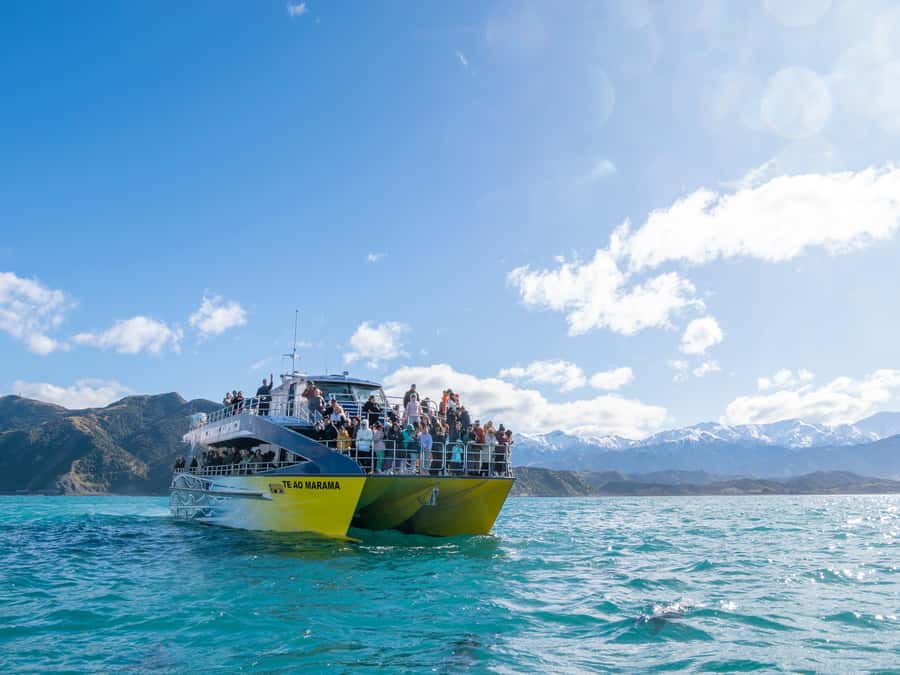
Whales make you wait, then reward you. This 210-minute cruise gives you a strong chance to see giant sperm whales off Kaikoura, with dolphins, fur seals, albatross, and mountain views adding plenty to the outing. I especially like the expert commentary and the spacious catamaran, which gives you room to watch from outside or warm up inside. The main caution is rough water: seasickness can be serious, and whale sightings are never guaranteed.
I also like the care given to marine life, including quieter engines, onboard scientific information, and Māori knowledge connected with the area. At $104 per person, it is not a cheap boat ride, but the long time on the water, polished organization, and chance to see several kinds of wildlife make it a fair splurge. Allow more than the advertised cruise time, since check-in, transfers, and the safety briefing bring the full outing to about 3 hours and 15 minutes.
Key points before you book
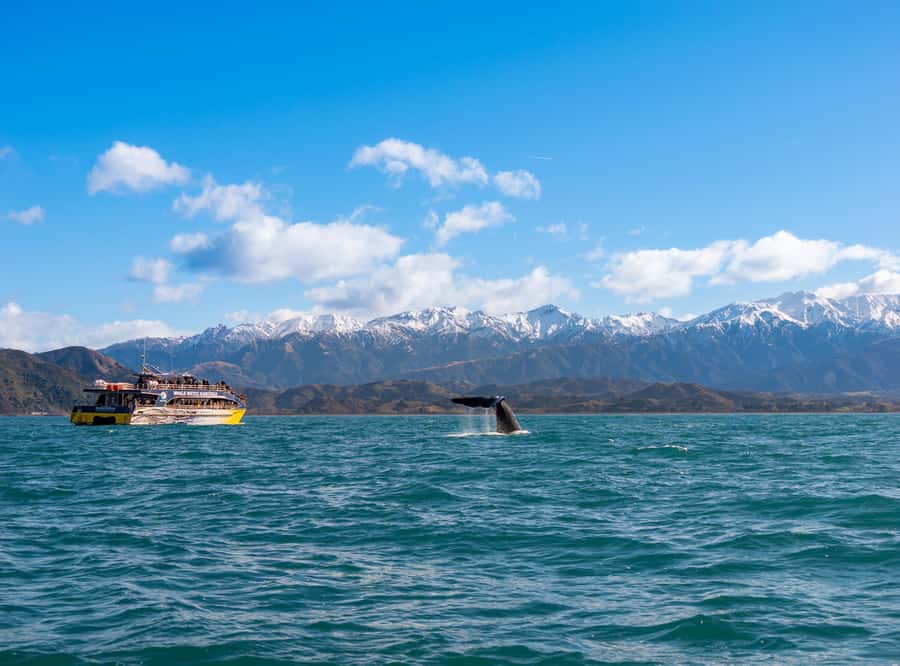
- Giant sperm whales are the main event: These huge toothed whales often surface, breathe for several minutes, and then show their distinctive tail before heading below the surface.
- Wildlife can fill the gaps: Dusky dolphins, fur seals, orcas, pilot whales, blue whales, albatross, Cape petrels, and penguins have all been seen on different outings.
- The catamaran gives you choices: Use the large outdoor decks for fresh air and photos, or sit inside in air-conditioned comfort with screens showing marine animations.
- Sea conditions matter: The cruise can be choppy, and motion sickness medicine is available at the office. Take precautions before arrival if you are prone to nausea.
- The service is carefully organized: A short bus transfer takes you from the Whale Watch Kaikōura office to the boat, with staff handling weather changes and rescheduling.
- Your time is not guaranteed to produce a whale: If conditions are poor or no whale is found, the experience changes considerably, though one reported outing received an 80 percent refund after no whale was located.
Why Kaikoura is such a good whale watching base
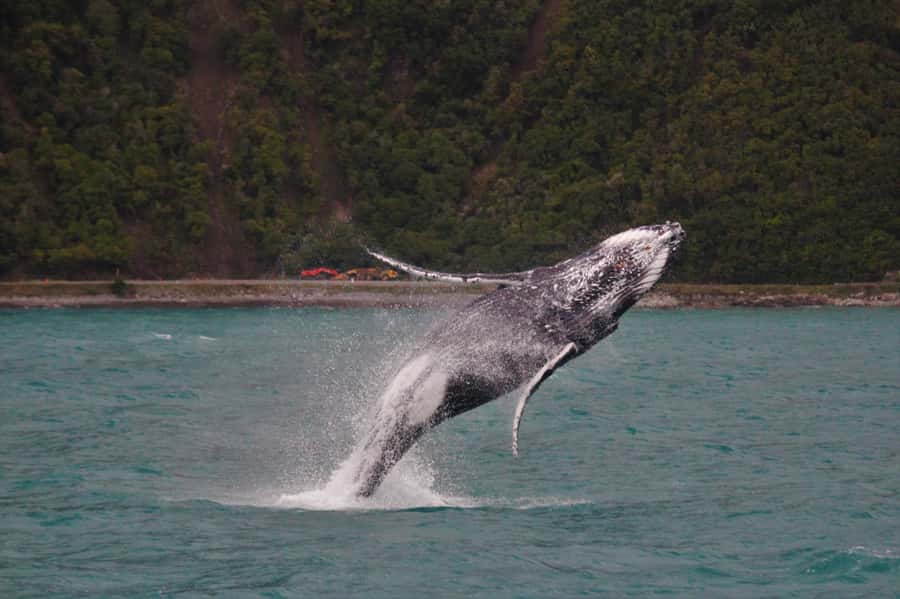
Kaikoura is one of New Zealand’s best places for a marine wildlife outing because the coast drops quickly into deep water. That gives large whales access to feeding areas not far from shore, which helps keep the boat ride practical rather than turning it into an all-day expedition.
The setting is part of the reward. As you leave the coast, the mountains rise behind Kaikoura, creating a striking backdrop for a trip that could otherwise become a long wait on open water. On a clear day, you can shift your attention between the sea ahead and the rugged coastline behind you.
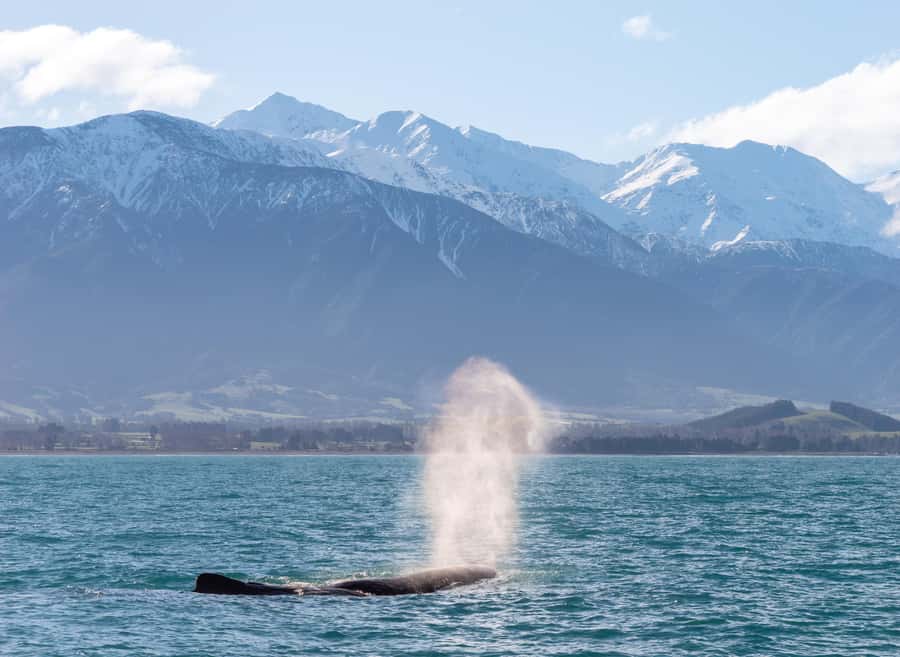
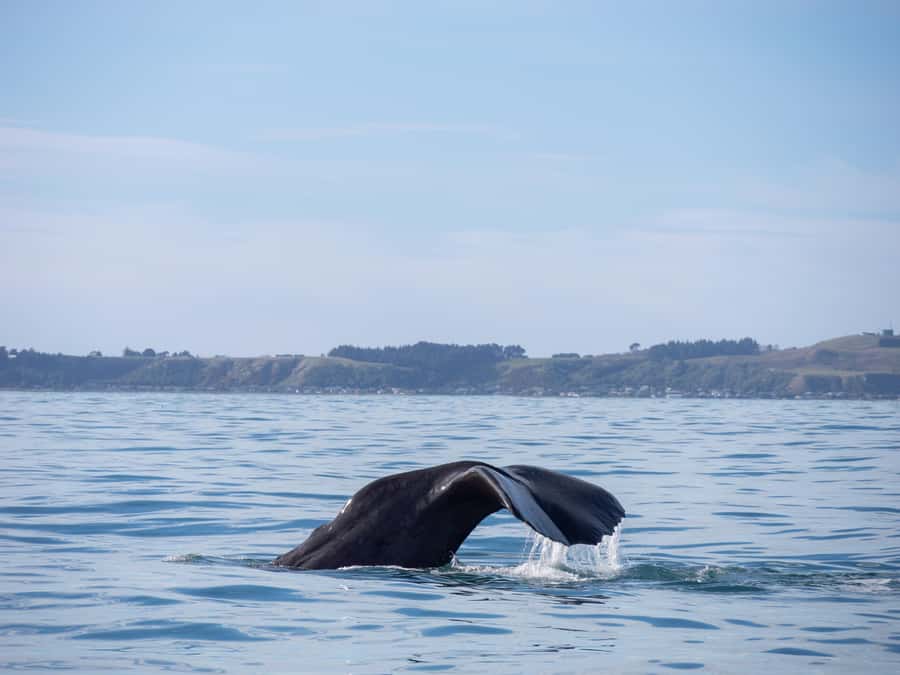
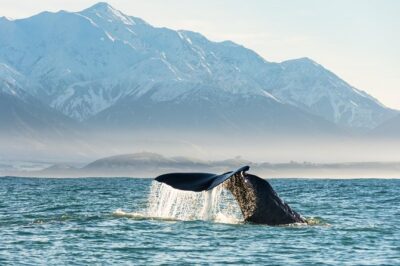
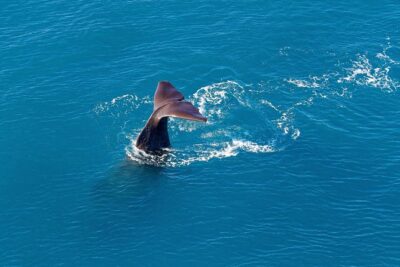
The giant sperm whale is the target species. It is the largest toothed predator in the world, and watching one surface is a patient process. You may first see a low back, then the blow, followed by several minutes of breathing. When the whale is ready to leave the surface, its tail may lift clear of the water. That final moment is often the picture everyone hopes to capture.
Keep your expectations sensible. A whale watching cruise is a search for wild animals, not a scheduled performance. Some outings produce multiple sperm whales and large dolphin groups. Others may bring only distant whale sightings, and an occasional trip may not locate a whale at all.
More Whale Watching Cruises in Kaikoura:
- Reykjavík: Whale Watching and Marine Life Cruise
★ 4.6 · 9,838 reviews - Funchal: Dolphin and Whale Watching Catamaran Cruise
★ 4.5 · 5,697 reviews - Costa Adeje: Whale & Dolphin Eco-Cruise with Snacks & Drinks
★ 4.6 · 5,096 reviews
Check-in, transfer, and the first part of the cruise
Your meeting point is the Whale Watch Kaikōura office. The overall operation is designed to move you from check-in to the harbor without much fuss, and the short coach transfer is part of the normal process. Clear directions and helpful check-in staff have been praised, which matters when you have a fixed sailing time and limited room for delay.
The full activity lasts 210 minutes, but only a little over two hours is spent on the water. Plan on about 3 hours and 15 minutes from arrival through the safety briefing, transfer, cruise, and return. I would avoid scheduling another important activity immediately afterward, particularly if the sea is rough or the cruise is delayed by weather.
Before boarding, listen closely to the sea conditions. The minimum age is three, although the operator can change that decision based on the ocean and weather at check-in. Children under three cannot join.
The tour is conducted in English, and the crew provides live narration. That commentary is more than filler during the run out to the whale watching area. It covers marine science, local habitat, animal behavior, and indigenous knowledge, helping you understand what you are looking at instead of simply scanning the horizon.
A modern catamaran with room to move
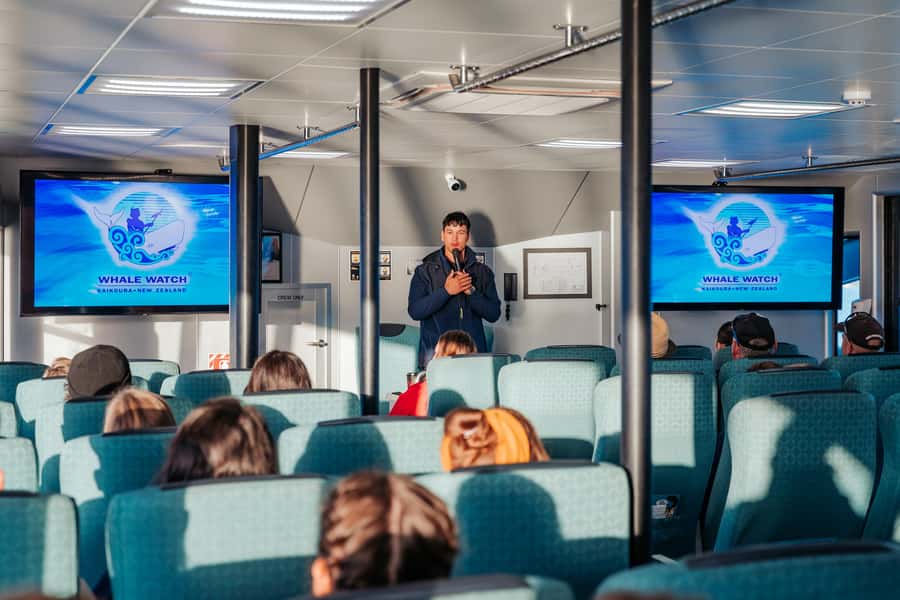
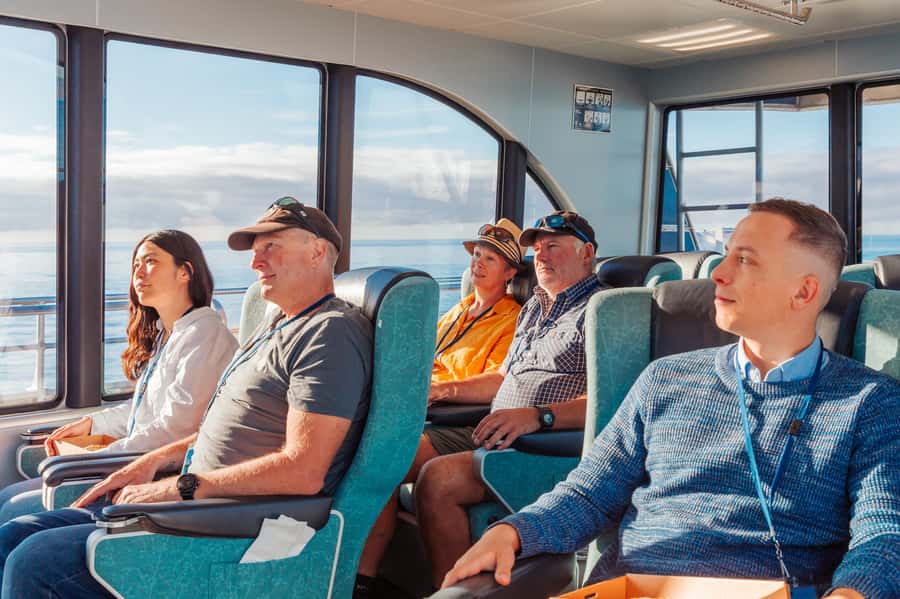
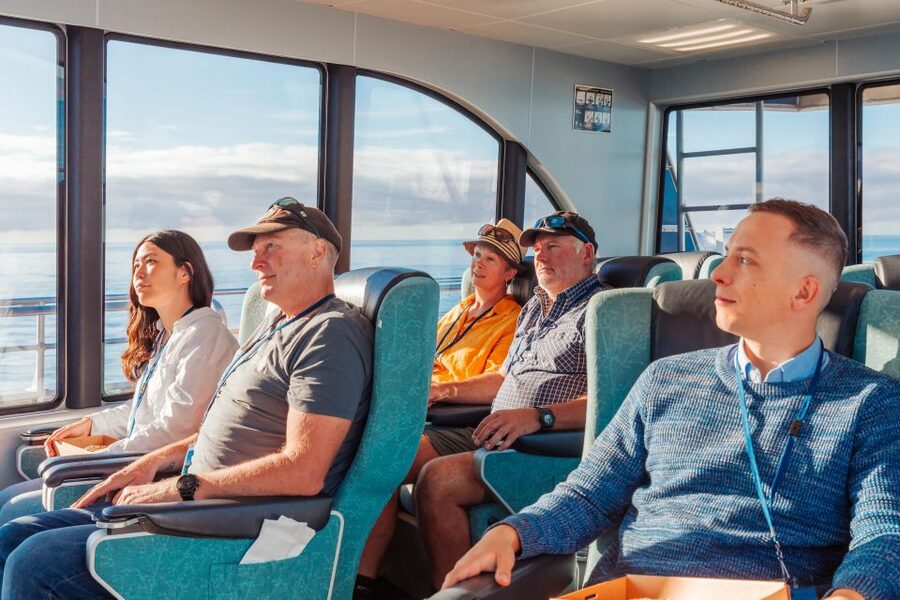
The vessel is a strong part of the experience. It is a catamaran with large outside viewing decks, comfortable inside seating, air conditioning, and plasma screens showing award-winning marine animations. The boat is designed to carry more people than are usually booked, so the cruise does not have to feel packed even when demand is high.
Outside is where you will want to be when a whale surfaces. Open decks give you a better chance to see in several directions and leave room for photography. The drawback is exposure to wind, spray, and rolling water, so bring suitable layers even if the weather looks calm at the office.
Inside, you get shelter and a more stable place to follow the presentation. The screens and animations are useful during the ride between sightings, especially for children or anyone who wants a break from the wind. You should not expect food or drinks to be supplied, so plan ahead before boarding.
The vessel also uses engines intended to reduce underwater noise and has toilets designed not to pollute the sea. Those details matter on a wildlife trip. The purpose is not simply to get close to animals, but to limit the disturbance caused by the boat.
Finding the sperm whales
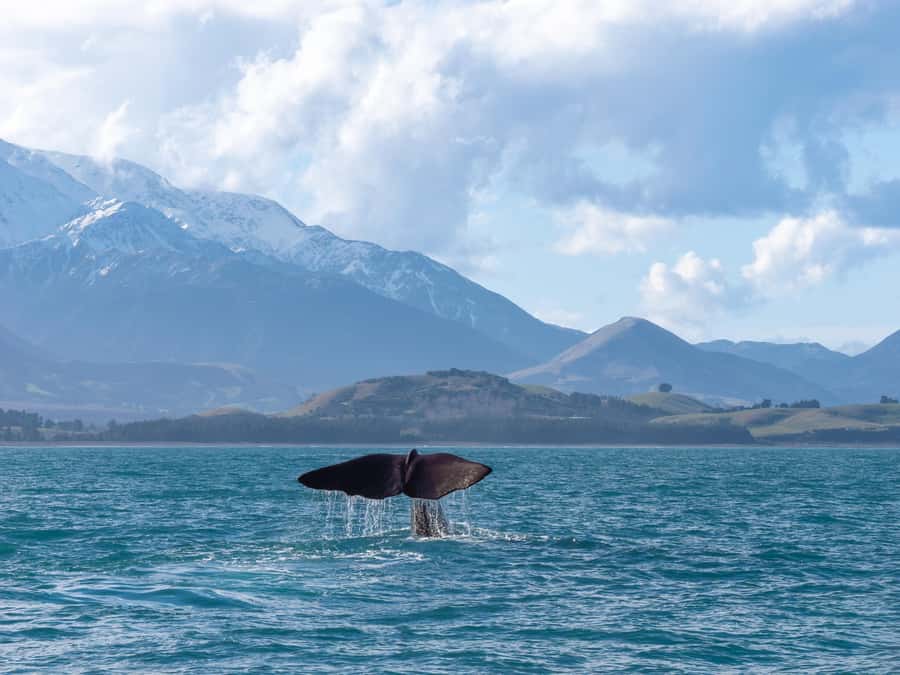
The crew uses marine tracking and sound information to locate whales. One report describes a hydrophone being used so passengers could hear whale clicks, while another mentions a sonar-based announcement before a whale moved below the surface. These tools add a welcome sense of purpose to the search.
The process can involve several stops. You might cruise steadily for a while, then slow near a possible location as the crew searches for signs of a whale. When a sperm whale appears, the guide helps you understand what is happening and warns you when the animal is about to leave the surface.
That warning is genuinely useful. Without it, you may spend the whole sighting trying to find the whale through other people’s cameras. With a little notice, you can watch the breathing pattern, prepare for the tail, and then put the phone down for a moment.
The best sightings described on this outing included one whale breathing for around ten minutes before showing its tail, two separate sperm whales, and even three whales on a single cruise. Several experiences included whales seen more than once, though a repeat sighting depends entirely on animal behavior and location.
Do not assume close means guaranteed. One outing produced two sperm whales at a considerable distance, with dolphins becoming the highlight instead. That is still a wildlife experience, but it is worth remembering that the boat cannot control how near an animal comes or how long it remains at the surface.
A few more whale watching trips around Kaikoura worth a look
- Whale Watching in Kaikoura by Boat
★ 4.5 · 2,906 reviews - Kaikoura: Whale Watching Flight with Commentary
★ 4.6 · 823 reviews - Kaikōura Whale Watching Scenic Flight (40 Minutes)
★ 5.0 · 221 reviews - Kaikoura: Whale Watching Flight with Guided Commentary
★ 4.5 · 216 reviews
Dolphins, seals, birds, and surprise sightings
The supporting cast can be excellent. Dusky dolphins are often the most energetic addition, and large pods have been seen swimming beside the boat and making acrobatic leaps. One outing encountered around 300 dolphins and watched them for 15 to 20 minutes. Another included roughly 100 dolphins moving alongside the vessel.
Fur seals are another common sight, sometimes close enough to make a clear impression even when the whales remain distant. The cruise may also bring sightings of wandering albatross, other albatross species, Cape petrels, and additional seabirds. These birds are not decorative extras. They are part of the same productive marine system that brings whales close to Kaikoura.
Less predictable sightings can include orcas, pilot whales, blue whales, humpback whales, sharks, and blue penguins. They are not promised, but the range of possible animals gives the trip more value than a single-species search.
The best approach is to keep scanning. The crew may point out a whale, but you can also find yourself watching birds over the water or a dolphin pod suddenly appearing beside the boat. If you only keep your camera aimed at the first location, you may miss the action elsewhere.
The guides, commentary, and Māori connection
The crew receives especially strong praise for clear explanations, good animal spotting, and a friendly manner. Guides named in individual experiences include Caolan and Mikayla, while Captain Jack was singled out for handling the whale encounters effectively. Crew members may change, but the standard of live explanation is a major part of what you are paying for.
The narration covers the whales themselves, local ecology, and the behavior of the other animals. It also brings in Māori knowledge and the connection between the sea, whales, and the Ngāi Tahu iwi. The operation is owned by Ngāi Tahu, so this cultural element is not a token paragraph added to a script. It helps place the outing in the living traditions of the region.
The information is strongest when tied to what is happening in front of you. Hearing about whale clicks and then learning how the crew tracks them gives the search a clear scientific purpose. Learning when the whale will show its tail turns a fleeting moment into something you can actually follow.
There is one small criticism to keep in mind. Commentary can feel repetitive during the return trip, particularly if the ride back is long. Most of the time, though, the guides keep passengers involved with useful facts and light humor.
Seasickness is the real practical concern
This is the point I would take most seriously. The open ocean can be rough, and some outings have been very choppy. Passengers have described needing sick bags, and one particularly rough trip left many people too ill to enjoy the animals.
If you are prone to motion sickness, take precautions before arriving at the office. Tablets are available for purchase there, but do not wait until you are already feeling unwell. Once nausea begins, it can be hard to recover while the boat is moving.
The catamaran is powerful and stable enough to handle wind and waves well, but that does not mean the ride will feel calm. Large outdoor decks, a fast vessel, and open-water conditions are useful for wildlife viewing, yet they cannot remove the natural motion of the sea.
Parents should consider the age and temperament of children carefully. The official minimum age is three, but the final decision depends on conditions. A child who struggles on boats may not enjoy a long trip in rough water, even if the wildlife is excellent.
Is $104 good value?
At $104 per person, this sits firmly in the special-outing category. You are paying for a modern boat, a long period on the water, trained crew, transfers, commentary, marine animations, and the chance to see animals in their natural habitat. Food and drinks are not included, so this is not an all-inclusive excursion.
I think the price is reasonable if a sperm whale is high on your New Zealand wish list. The cruise is also good value for anyone who appreciates birds, dolphins, seals, and coastal scenery, since the whale is not the only possible payoff.
The value becomes less clear if you need a guaranteed close encounter. Nature may offer a distant whale or no whale at all. The operator has shown some fairness in that situation, with one no-whale outing receiving an 80 percent refund, but you should not book on the assumption that compensation will always apply in the same way.
The flexible booking terms help. You can cancel up to 24 hours ahead for a full refund, and the reserve-now, pay-later option lets you hold a place without paying immediately. Weather can change the sailing time, and the exact time may be adjusted after booking, so keep your schedule flexible around this activity.
Who should book this cruise?
I would recommend it to anyone with a real interest in marine life, especially if you want a guided experience rather than a simple scenic boat ride. It suits photographers, families with children aged three or older, bird watchers, and anyone who wants to understand how whale researchers and boat crews locate animals.
It is also a good match for visitors with limited time in Kaikoura. The outing takes most of a morning or afternoon, rather than requiring a full day, and the mountain views make the transfer out to sea worthwhile even between sightings.
I would be more cautious if you are highly susceptible to seasickness, need a guaranteed attraction, or dislike waiting in exposed conditions. You can reduce the risk with medicine and sensible clothing, but you cannot control the ocean or the whales.
The boat is wheelchair accessible, which makes this a more practical choice for many people than smaller wildlife vessels. Smoking is not allowed.
Final verdict: book it for the whole marine picture
Yes, I would book this cruise if I had time in Kaikoura and could accept the uncertainty of wild animals. The sperm whale encounters can be extraordinary, but the full experience also includes dolphins, seals, seabirds, mountain views, good interpretation, and a well-run transfer system.
Book it when your schedule has room to move in case weather changes the departure time. Take motion sickness precautions, bring layers, and do not judge the outing only by the distance of the whale. If the sea gives you a sperm whale, a pod of dusky dolphins, and an albatross overhead, $104 feels well spent. If it gives you only a distant sighting, the cruise is still worthwhile for some people, but the decision comes down to how much uncertainty you are willing to accept.
FAQ
How long does the Kaikoura whale watching cruise last?
The full experience lasts 210 minutes, or about 3 hours and 15 minutes. Time includes check-in, the safety briefing, bus transfers, and a little over two hours on the water.
How much does the cruise cost?
The listed price is $104 per person.
What animals might I see?
The main target is the giant sperm whale. Other possible sightings include fur seals, dolphins, wandering albatross, other seabirds, orcas, pilot whales, blue whales, humpback whales, sharks, and blue penguins.
Is the whale sighting guaranteed?
No. The cruise operates in the animals’ natural environment, so sightings and distances vary. On one outing, no whale was found and an 80 percent refund was provided.
Where is the meeting point?
You meet at the Whale Watch Kaikōura office. A bus transfer takes you from the office to the boat.
Is the cruise suitable for children?
The minimum age is three years old, but this can depend on sea and weather conditions at check-in. Children under three are not suitable for the cruise.
What should I do if I get seasick?
Take precautions before arriving. Motion sickness tablets are available for purchase at the office, and the boat can experience rough or choppy conditions.
Is the cruise wheelchair accessible?
Yes, the experience is listed as wheelchair accessible.
What is included in the price?
The price includes the cruise, expert crew narration, and award-winning marine animations. Food and drinks are not included.
Just added around Kaikoura
- Kaikōura Whale Watching and Scenic Landing – 1hr Premier Tour★ 5.0 · 24 reviews
- Kaikoura Whale Watch Day Tour from Christchurch★ 4.5 · 170 reviews
- Kaikoura Whale Watching – 45 Minute Ocean Safari★ 5.0 · 39 reviews
- Kaikōura Whale Watching – 1hr 20min Ultimate Adventure★ 5.0 · 8 reviews
- Kaikoura Helicopters Top n Tail Whale Watch flight★ 5.0 · 7 reviews
- Whale Watching in Kaikoura – Ultimate Experience★ 4.5 · 199 reviews
- Kaikoura Helicopters Extended Whale Watch★ 4.5 · 15 reviews
- Kaikoura: Whale Watching Flight★ 5.0 · 100 reviews
Kaikoura Whale Watching Tours, compared.
Kaikoura: Whale Watching Flight with Commentary
Read our review →
Kaikōura Whale Watching Scenic Flight (40 Minutes)
Read our review →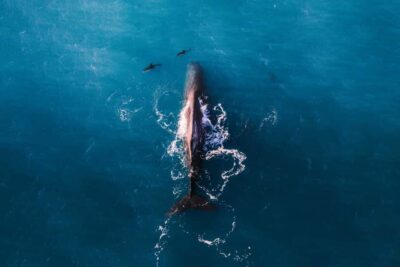
Kaikoura: Whale Watching Flight with Guided Commentary
Read our review →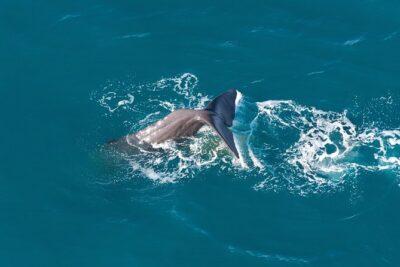
Whale Watching in Kaikoura – Ultimate Experience
Read our review →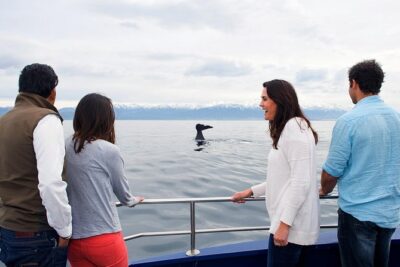
Kaikoura Whale Watch Day Tour from Christchurch
Read our review →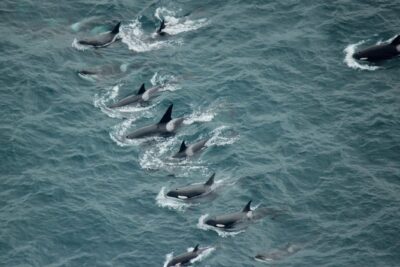
Browse the lists this tour appears in