
REVIEW · GOLD COAST WHALE WATCHING TOURS
Gold Coast/Coolangatta: Whale Watching with Marine Biologist
Whales make the Gold Coast feel wonderfully wild. This 2.5-hour trip aboard Big Blue combines close whale watching with live underwater song and clear commentary from marine biologist Jill. I like the small group, capped at about 20 people, and the chance to see dolphins, turtles, and migratory birds along the way. The main catch is the open-water ride, which may not suit anyone prone to seasickness or back trouble.
I also like the sensible no-whale safety net: you can join another tour free if no whales appear. The boat is fast and stable, but weather, tide, and sea conditions control the schedule, so your departure time may change. A small sign at the jetty would also make arrival easier, particularly if you are unfamiliar with the park and fire station nearby.
Key points at a glance
- Hear whale song underwater: An onboard hydrophone lets you listen to humpback calls, not just watch them surface.
- Small boat, broad views: Big Blue carries up to 21 people, giving you a more personal setting than a large cruise vessel.
- Jill leads the commentary: Her explanations cover whale behavior and other sea life, including dolphins, turtles, and seabirds.
- Best season is May through November: More than 30,000 humpback whales pass the region during their migration.
- The meeting point is near Coolangatta: Departures leave from the Public Jetty at 1A Minjungbal Drive, Tweed Heads South.
- Open-water conditions matter: Trips can change or cancel because of weather, tide, or sea conditions.
Big Blue from Tweed Heads: a close-up whale trip
This tour leaves from Tweed Heads South in New South Wales, about five minutes from Coolangatta and Gold Coast Airport. That makes it a handy choice if you are staying around Coolangatta, southern Gold Coast, or the airport rather than central Surfers Paradise.
The meeting point is the public jetty in the park across from the fire station at 1A Minjungbal Drive. Roadside parking is available close by. Allow a few extra minutes to find the exact departure spot, since the jetty does not have a large, obvious tour sign. That small bit of preparation can save you the uneasy question of Am I in the right place?
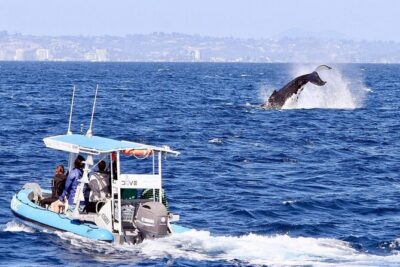
Big Blue is a rigid inflatable boat built for speed and stability. The design matters here. A smaller craft can reach the whale area quickly and gives you open views around the boat, without a high row of windows or a large crowd blocking your sightline.
The trade-off is simple: this is not a slow, sheltered harbor cruise. You are riding on the ocean in an inflatable vessel, so bring a jacket and warm clothing even on a sunny day. The speed and open seating are part of the appeal, but they also make seasickness a real concern for some people.
More Whale Watching with a Marine Biologist in Gold Coast:
- Azores: Whale Watching & Islet Boat Tour w/ Marine Biologist
★ 4.7 · 2,945 reviews - São Miguel: Whale-Watching Cruise with Marine Biologist
★ 4.6 · 1,311 reviews - SMALL GROUP Whale Watch | Cabo San Lucas | Biologist | FREE Pics
★ 5.0 · 1,106 reviews
Why May through November is whale season
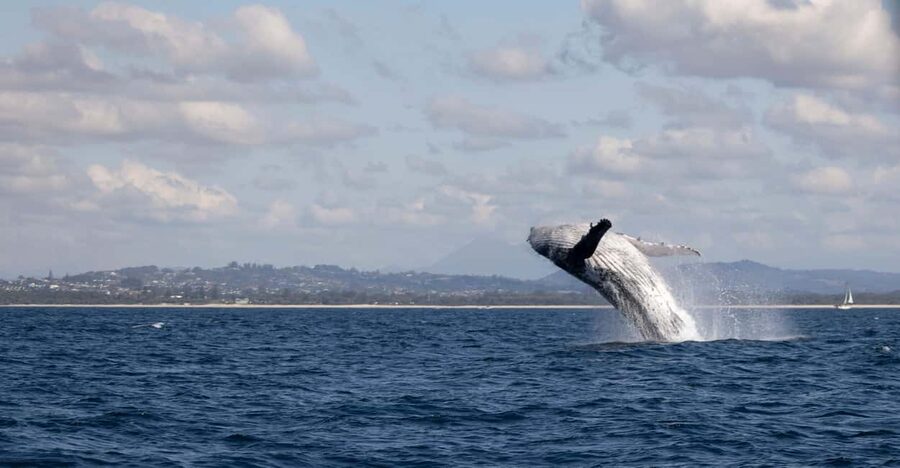
Each year, more than 30,000 humpback whales travel from Antarctic waters toward warmer tropical waters and the Great Barrier Reef. They pass the Tweed and Gold Coast coast close to shore, making this stretch of coast a strong place to look for them without a long offshore journey.
The migration gives the tour a useful advantage, but it does not turn wildlife watching into a fixed schedule. A whale may surface beside the boat, appear at a distance, or stay below the surface for a while. The crew can take you to the area where sightings are likely, but nature decides what happens next.
That uncertainty is part of the experience you should accept before booking. The operator offers a free place on another available trip if no whales are sighted, which gives the $85 price more protection than a standard sightseeing cruise with no backup option.
The sighting guarantee does not mean every trip will feature breaching whales beside the boat. It means you have a chance to return if the main animal you came to see does not appear. If you have only one morning in the area, check the cancellation and rescheduling terms carefully before you commit.
The first stretch: leaving the public jetty
After boarding at the public jetty, Big Blue heads out from the Tweed area toward the open water. The exact route and timing depend on conditions and on where whale activity is reported, so you should not expect a rigid sequence of named stops.
This early part of the trip is useful for getting comfortable with the boat and listening to the guide. Jill, the onboard marine biologist, explains what to watch for and helps turn a quick glimpse into a more meaningful sighting.
Keep your camera ready, but do not spend the whole trip looking through a screen. Whales can surface without warning, and a short burst of activity may be over before you frame the perfect shot. A camera is welcome, but warm layers, sunscreen, and a hat are just as practical.
There is no food or drink included. Bring a reusable water bottle and eat before departure if you tend to feel unwell on boats. The information provided does not mention onboard food service, so plan this as a focused wildlife trip rather than a meal outing.
The main event: watching humpback whales
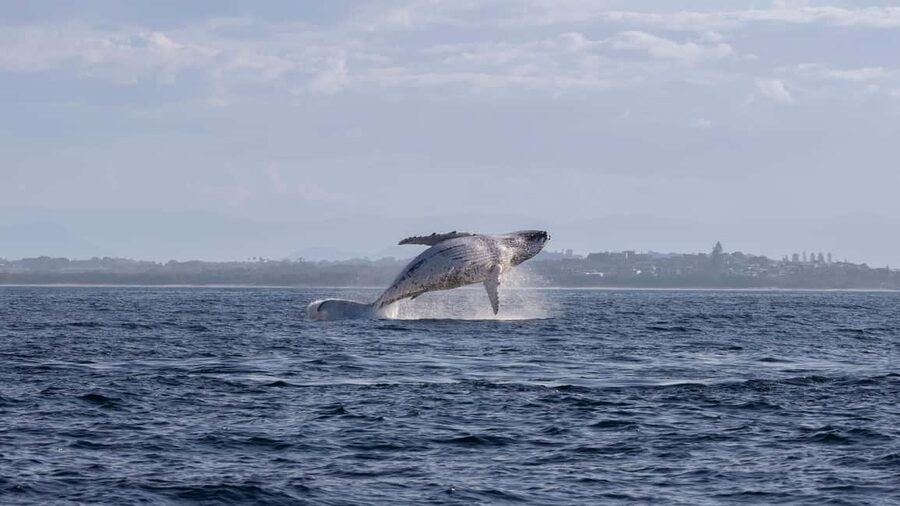
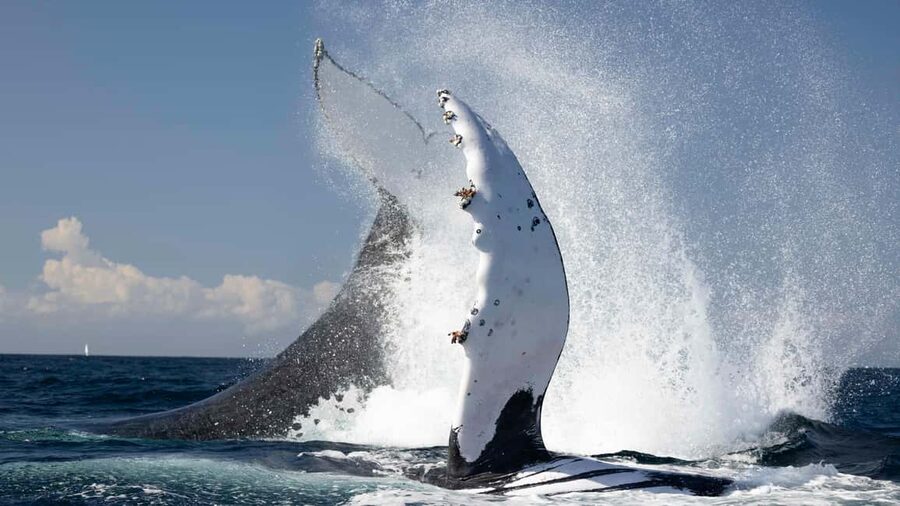
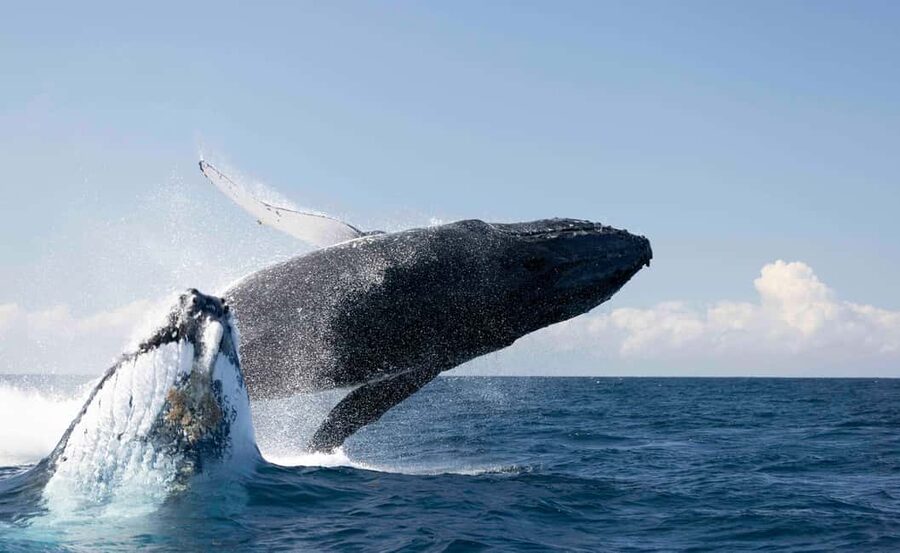
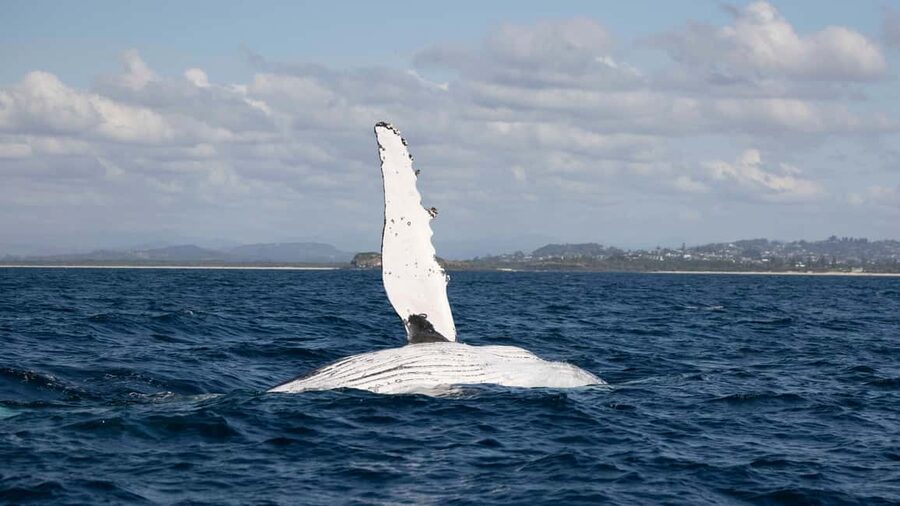
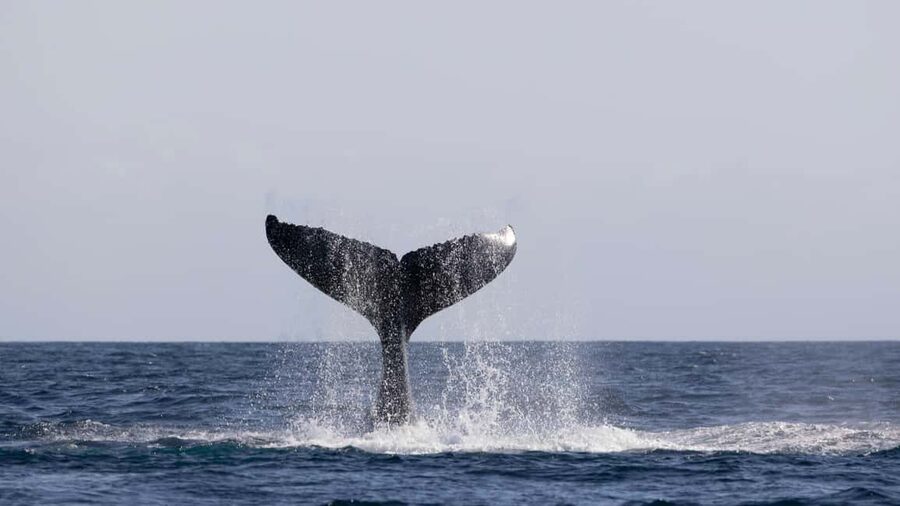
When Big Blue reaches the whale area, the crew watches for blows, backs, tails, and the larger movements that can signal a whale is about to surface. The small boat works well for this kind of viewing because you can look in several directions instead of waiting for everyone on one side of a large vessel to clear the view.
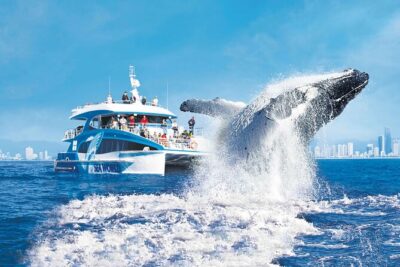
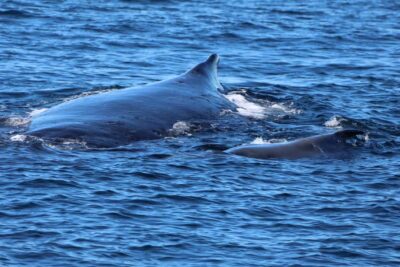
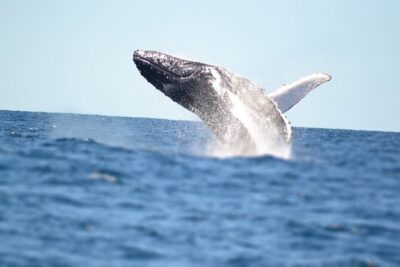
The best sightings can include whales swimming beside the boat or breaching nearby. Those moments are thrilling, but the more common behavior may be quieter: a blow, a back rolling through the water, or a tail lifting before the whale disappears.
That is where Jill’s commentary adds real value. Rather than simply pointing and naming the animal, she explains humpback behavior and gives you a better sense of what you are seeing. Her role also extends beyond whales, so the time between sightings does not become empty boat time.
One particularly good feature is the hydrophone. It lets you hear whale song underwater, bringing a second sense into the experience. You are not only scanning the surface for a fin or breach. You can also listen to the calls beneath the boat, which gives the encounter a stronger sense of the animals’ presence.
The hydrophone is useful even when the whales are not performing for the camera. A silent surface can still hide an active underwater world, and the live sound helps you pay attention to what is happening below.
A few more whale watching trips around Gold Coast worth a look
- Whale Watching Tour with Spirit of Gold Coast
★ 4.5 · 884 reviews - Spirit of Gold Coast 2.5-Hour Whale Watching Tour
★ 4.2 · 703 reviews - Gold Coast Whale Watching Cruise
★ 5.0 · 342 reviews - Whale Watching by Sea World Cruises
★ 5.0 · 316 reviews
Dolphins, turtles, and birds along the way
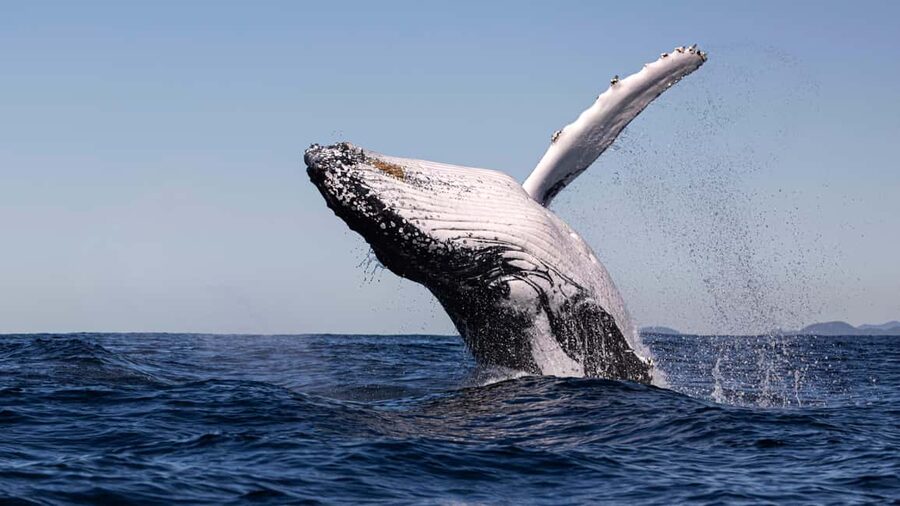
Humpbacks are the headline act, but the surrounding wildlife can add plenty to the trip. The operator often encounters dolphins, turtles, and migratory seabirds, though all sightings depend on conditions and chance.
Dolphins can change the mood of the ride quickly, particularly if they appear near the boat. Turtles may be harder to spot, while seabirds give you another reason to scan the water and sky between whale sightings.
I like this wider focus because it makes the trip less dependent on one dramatic breach. You are going out for humpback whales, but the crew keeps you aware of the broader marine environment. That is especially helpful for children old enough to enjoy the boat ride and wildlife search, though children under five cannot join.
Do not book this expecting a guaranteed checklist. The information promises possible encounters, not fixed sightings. A wildlife trip rewards patience and attention more than a strict demand for a particular animal.
What the small group changes
Big Blue has seating for 21 people, with the experience described as limited to about 20 guests. That is a much more intimate scale than a large sightseeing boat, and it affects both the view and the feel of the commentary.
You are less likely to feel separated from the marine biologist. The smaller group also makes it easier to turn your head, change your viewing angle, and follow activity around the boat. One recent departure was praised for giving clear views all around, which is exactly the advantage of this layout.
The boat’s size has limits, too. There is less room to wander than on a large vessel, and the open-water ride can feel lively. If you need a broad deck, sheltered indoor seating, or a gentler pace, a larger whale-watching cruise may fit you better.
The military and police-style rigid inflatable design suggests a craft built for stability and movement, not luxury. Think practical seating, quick travel, and direct access to the sea. The value comes from the wildlife viewing and expert attention, not from lounge areas or onboard dining.
Jill’s marine biology commentary
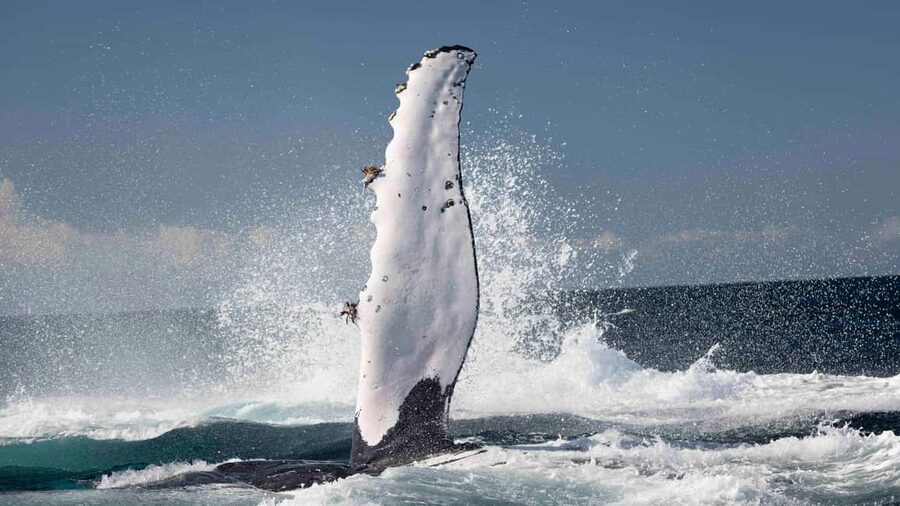
The guide can make or break a wildlife trip, and Jill receives especially strong praise for her explanations of sea creatures. Her job is not simply to help find whales. She helps you understand behavior, listen for song, and notice other forms of life along the route.
That matters because whale watching can involve long pauses. A guide who explains what may happen next gives those pauses purpose and helps you stay alert without feeling as if nothing is happening.
The commentary is in English. If you enjoy learning as you go, this is one of the strongest reasons to choose the tour over a basic boat ride. If you mainly want a quiet private outing, the live narration may feel like more structure than you need.
The trip has an overall rating of 4.4 from eight reviews, with strong praise for the crew’s professionalism, Jill’s explanations, and close whale sightings. One short low-rated response provides no useful detail about a specific problem, so it does not point to a clear pattern. I would place more weight on the repeated practical positives, while still remembering that wildlife results vary.
Is $85 a fair price?
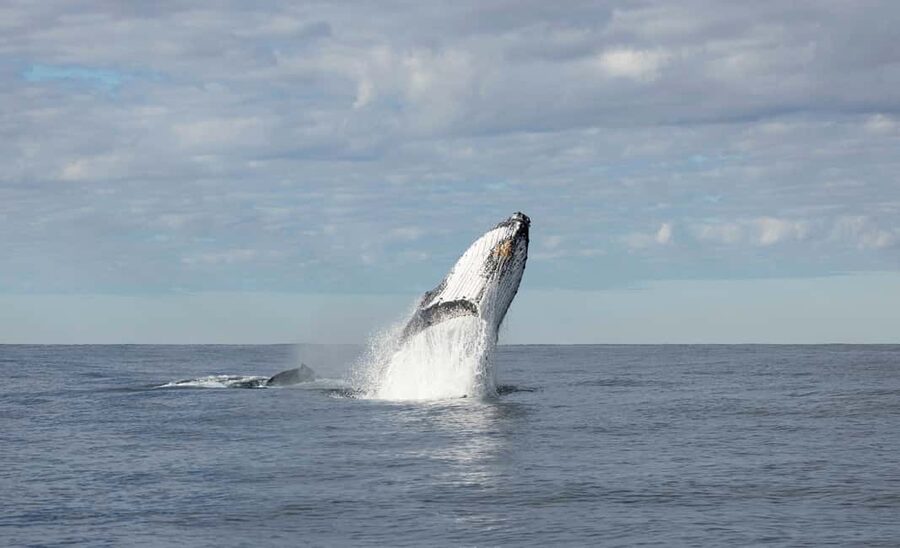
At $85 per person, this sits in a reasonable range for a 2.5-hour wildlife trip, particularly because it uses a small boat and includes a marine biologist and hydrophone. You are paying for access to the migration route, the boat, crew time, and the chance to hear live whale song, not simply for transportation.
The price is strongest if you value an intimate experience. A large boat may offer more facilities, but Big Blue gives you fewer people and a closer connection to the guide. If the whales cooperate, the small craft can make the encounter feel much more personal.
The value is weaker if your main goal is guaranteed action. No operator can control whale behavior, and this trip does not promise a breach or a whale beside the boat on every departure. The free return trip if no whales are seen helps, but it may not help if your holiday schedule is tight.
I would also factor in the lack of food and drinks. At 2.5 hours, that is not a serious problem, but you should bring water and eat before boarding. Sunscreen, a hat, warm clothes, and a jacket cover the changing conditions better than relying on the forecast alone.
Weather changes and practical planning
Trips run daily when weather, tide, and sea conditions allow. The schedule may change when a different departure time offers safer or better conditions. One departure was moved because of expected bad weather, and the new timing worked out well, with the group kept informed.
That is a good reminder to keep some flexibility in your day. Avoid booking this immediately before an airport transfer, a fixed dinner, or another activity that cannot move. The operator may cancel a trip in unsuitable conditions and offer a later tour or a voucher to rebook.
For ordinary booking changes or cancellations, the published information gives two different time frames: free cancellation up to 24 hours in advance for a full refund, while changes or cancellations are also said to require at least 48 hours notice or the ticket may be forfeited. Because those terms do not fully match, check the current conditions when booking and ask the operator if your plans are uncertain.
The trip is not suitable for children under five, pregnant women, people with back problems, or people prone to seasickness. Those restrictions make sense for a fast, open-water rigid inflatable boat. If you are unsure about the ride, choose a more sheltered cruise rather than hoping the sea will be calm.
Who should book Big Blue?
I would recommend this tour to you if you want a focused wildlife outing rather than a general sightseeing cruise. It fits couples, solo visitors, families with older children, and anyone who values expert commentary and a small group.
It is also a good choice if you are staying near Coolangatta or the Gold Coast airport. The Tweed Heads departure is close, and the available morning and afternoon departures make it easier to fit around a wider day plan, subject to the weather.
You should think twice if you get seasick, need protected indoor seating, have back problems, or want a relaxed boat ride with food included. Big Blue is about being out on the water, moving quickly, and watching for wildlife. It is not designed as a luxury cruise.
Should you book this whale-watching trip?
Book it if the hydrophone, marine biologist, and small boat appeal to you as much as the whales themselves. The combination gives the $85 fare solid value, especially during the May to November migration when humpbacks pass the coast in large numbers.
I would leave room in your schedule for weather changes and arrive early enough to find the public jetty. Bring layers, water, sunscreen, and a camera, but keep your expectations realistic: a close breach is possible, not promised.
For a personal wildlife experience near Coolangatta, Big Blue is a strong pick. For maximum comfort, indoor shelter, or a completely steady ride, choose a larger boat instead.
FAQ
Where does the whale-watching tour depart from?
It departs from the Public Jetty at 1A Minjungbal Drive, Tweed Heads South, New South Wales 2486. The jetty is in the park across from the fire station.
How far is the meeting point from Coolangatta and Gold Coast Airport?
The departure point is about five minutes from Coolangatta and Gold Coast Airport.
How long does the whale-watching trip last?
The trip lasts 2.5 hours.
What months are best for seeing humpback whales?
The migration season runs from May through November, when more than 30,000 humpbacks travel from Antarctica toward warmer tropical waters and the Great Barrier Reef.
How many people can ride on Big Blue?
Big Blue has seating for 21 people, and the experience is designed for a small group of about 20 guests.
Will I hear whale song during the tour?
The boat carries a hydrophone that can transmit underwater whale song, allowing you to listen to the whales as well as watch for them at the surface.
What happens if no whales are seen?
If no whales are sighted, you can join another tour free of charge, subject to the next available space.
Can the tour be cancelled because of weather?
Yes. Departures depend on weather, tide, and sea conditions. If conditions are unsuitable, you may be offered a later tour or a voucher to rebook.
What should I bring?
Bring warm clothing, a jacket, a hat, sunscreen, a camera, and a reusable water bottle. Food and drinks are not included.
Just added around Gold Coast
- Tweed Heads: Whale Watching Boat Tour★ 4.7 · 30 reviews
- Swim with Whales Gold Coast★ 5.0 · 44 reviews
- Small Boat Whale Watching Tour in Gold Coast★ 5.0 · 68 reviews
- Whale Watching Gold Coast★ 5.0 · 65 reviews
- Swim with Whales in Gold Coast★ 4.5 · 71 reviews
- Gold Coast: Whale Watching★ 5.0 · 5 reviews
- Gold Coast Whale Experience★ 4.9 · 80 reviews
- Gold Coast: Whale Watching Cruise & Sea World Entry★ 3.1 · 5 reviews
Gold Coast Whale Watching Tours, compared.
Spirit of Gold Coast 2.5-Hour Whale Watching Tour
Read our review →
Browse the lists this tour appears in