
REVIEW · WHALE WATCHING CRUISES IN PORTUGAL
São Miguel: Whale-Watching Cruise with Marine Biologist
The Atlantic has a few surprises. This three-hour cruise from Ponta Delgada gives you a strong chance to see whales and dolphins in open water, with a marine biologist explaining what you are seeing. I especially like the 98% reported sighting success rate and the use of coastal lookouts instead of sonar. The main drawback is the sea itself: a zodiac speedboat can be wet and bumpy, and this outing is not suitable for people with back or heart problems.
I also like the respectful approach to wildlife. The crew keeps a safe distance and allows animals to come toward the boat rather than chasing them. Guides such as Mark, Sarah, Bia, Raquel, and Mateo have been praised for clear explanations and real enthusiasm, though the exact guide depends on the day.
This is a serious wildlife trip, not a guaranteed whale performance. You may see several whale and dolphin species, or you may find a large dolphin pod and no whales at all. The full-refund or free rebooking policy if no whales or dolphins appear takes some of the gamble out of the price.
Key points before you book
- Marine biologists lead the trip: You get explanations about cetaceans, behavior, and the local sea rather than a simple boat ride.
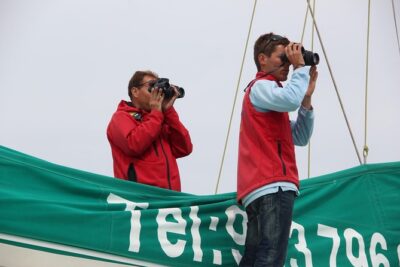
- Lookouts guide the search: Spotters on São Miguel’s coast use powerful binoculars and radio the boat with animal positions.
- Two boat styles change the experience: A zodiac is fast, exciting, and rougher, while a catamaran offers more shelter and a bathroom.
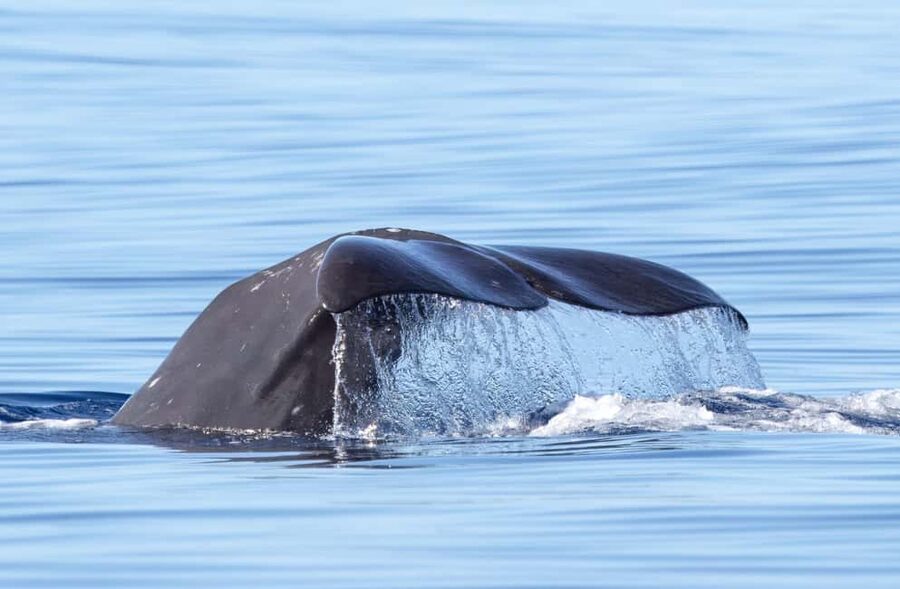
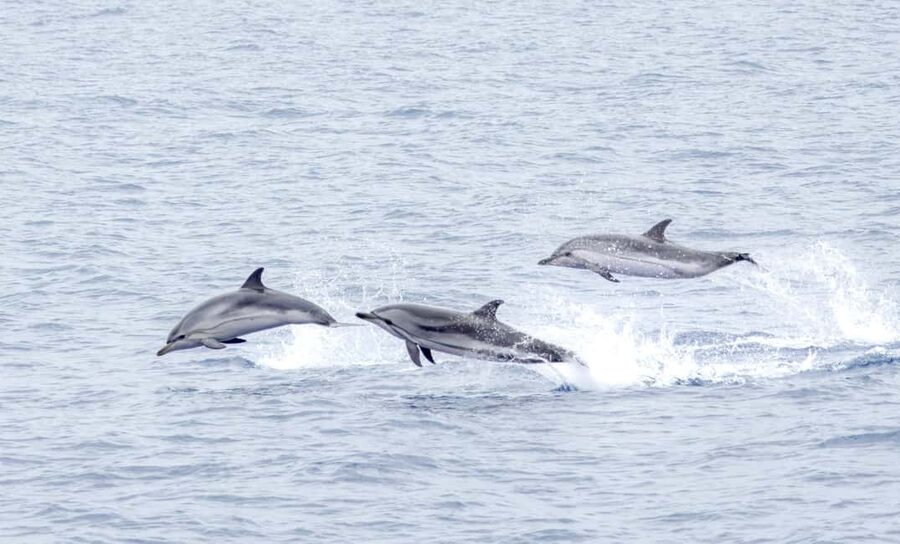
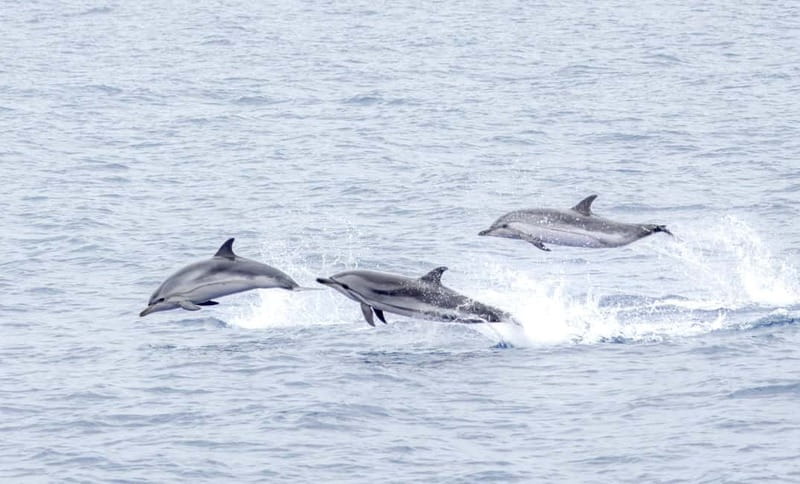
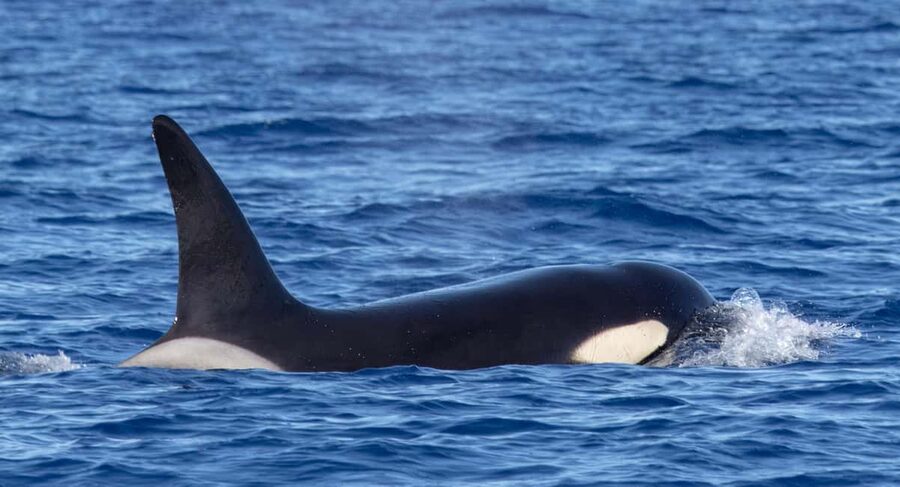
- Wildlife can be varied: Sightings have included sperm whales, sei whales, bottlenose dolphins, Atlantic spotted dolphins, striped dolphins, turtles, and seabirds.
- The guarantee matters: If no whale or dolphin is seen, you can receive a full refund or take the trip again for free.
- The ride needs respect: Closed shoes, warm layers, and a willingness to get wet are part of the deal.
Why São Miguel is a strong place for whale watching
The Azores sit far out in the Atlantic, where deep ocean water comes close to the islands. That setting attracts several kinds of whales and dolphins, making São Miguel one of the world’s better places for sightings.
This is not a zoo-like encounter. You leave the marina and search a broad stretch of ocean, often with no animal visible at first. That uncertainty is part of the experience. When a fin or blow finally appears, the sighting feels earned.
The crew uses lookouts positioned at strategic points along the coast. These spotters scan the sea with military-grade binoculars and send the animals’ location to the boat by radio. It is a practical system, and it avoids relying on sonar to locate the wildlife.
I appreciate the ethics briefing at the start. You are told how to behave around the animals, and the crew’s method is to approach carefully, slow down, and let the dolphins decide how close they want to come. That matters. A good whale-watching trip should leave you impressed by the animals, not worried about the boat disturbing them.
More Whale Watching Cruises in Portugal
- Funchal: Dolphin and Whale Watching Catamaran Cruise
★ 4.5 · 5,697 reviews - Funchal Bay: Dolphin & Whale Watch Luxury Catamaran Cruise
★ 4.2 · 2,684 reviews - Funchal: Dolphin and Whale Watching Cruise
★ 4.7 · 844 reviews
From the Ponta Delgada marina to open water
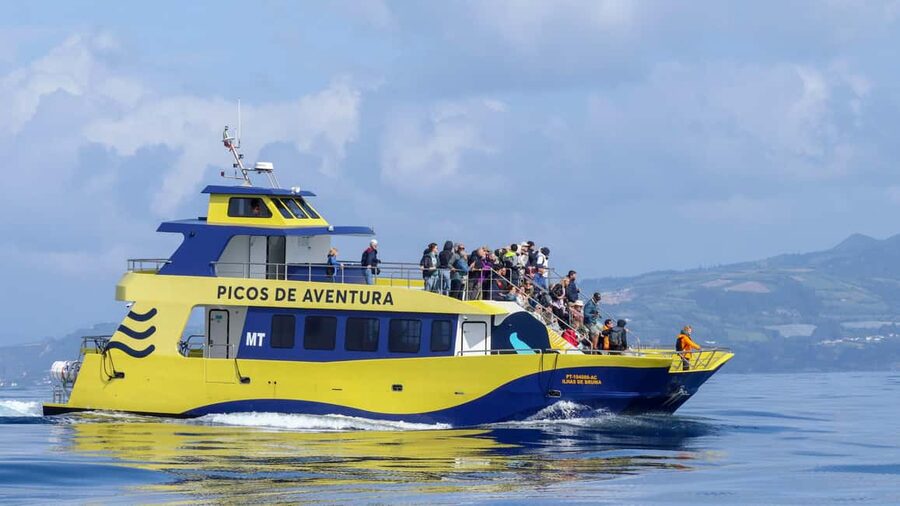
The meeting point is the marina across from Hotel Marina Atlântico. Look for the Picos de Aventura boat and arrive ready for a short briefing before boarding.
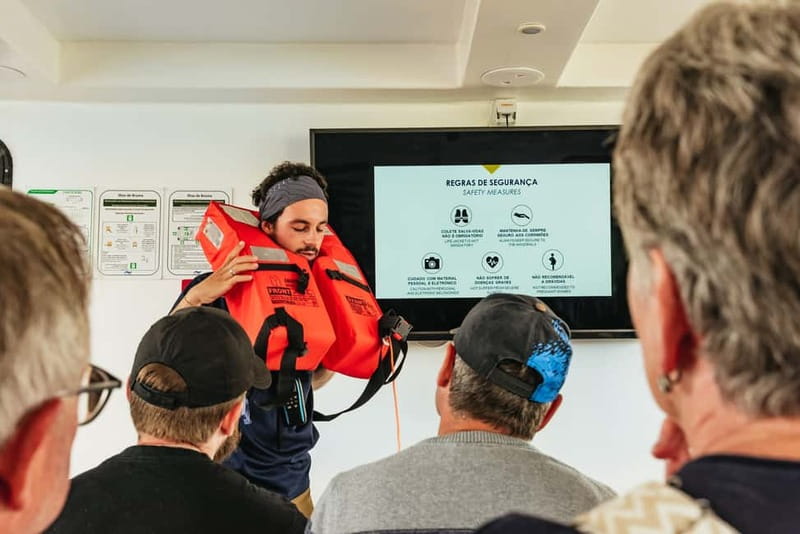
The safety talk takes about 20 minutes. You receive a life jacket and, when needed, a raincoat. The crew also explains the code of conduct around marine life. This is useful information, not just a formality, since the boat may spend long periods positioning itself carefully around a pod.
The tour then heads out for roughly two and a half hours of whale watching. The total activity lasts about three hours, including the briefing and return to the marina.
The first stretch can feel like a fast boat ride, especially on the zodiac. It is fun, but the ride may bounce hard over waves. Several people found the back of the zodiac more stable than the front. If you have a sensitive back, motion sickness, or simply want a gentler outing, choose the catamaran if that option is available.
Choosing between the zodiac and catamaran
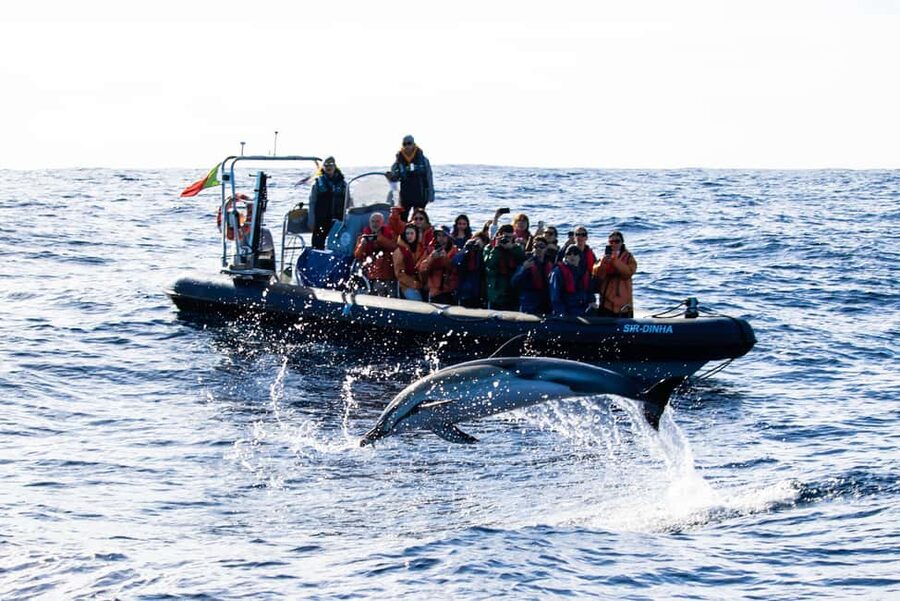
The boat type can shape your whole day. The zodiac is the lively option. It gets you across the water quickly and puts you close to the surface, which makes dolphins racing beside the boat especially exciting.
That speed comes with a price. The zodiac can be bumpy and wet, particularly in wind or choppy water. One useful tip is to avoid a heavy meal before departure if you are prone to seasickness. Sit toward the rear if you want a steadier ride.
The catamaran is the more comfortable choice. It offers wider seating, some shelter from rain, and, according to one outing, a bathroom. That can be important for families or anyone who prefers not to spend three hours on a small open boat.
The catamaran may not feel as close to the water as the zodiac, and it might not provide quite the same speed or thrill. Still, a slightly more distant view is better than an uncomfortable ride. The crew has reported sightings from both boat types, so your decision is mostly about comfort and motion.
How the wildlife search works
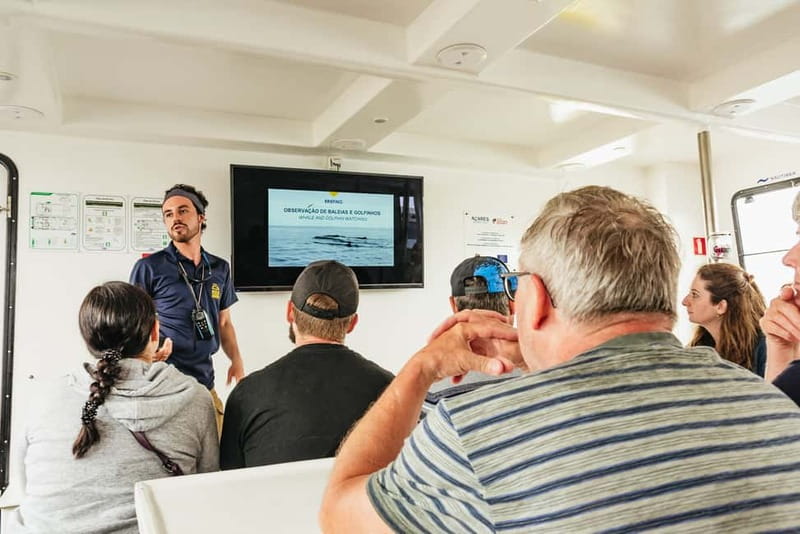
Once you are offshore, the marine biologist helps you understand the search. The crew watches the horizon for blows, dorsal fins, splashes, and groups of birds. Birds can signal fish activity, which may also attract dolphins and whales.
The coastal lookouts do much of the hard work. They scan from land and radio the boat when they locate animal activity. The skipper then adjusts the route. This explains why the trip may change direction or pause for a while. The crew is not wandering aimlessly. It is following information from the people with the best high vantage points.
The reported success rate is 98 percent for whale and dolphin sightings. That is unusually encouraging, but it is not a promise that you will see a whale on your particular departure. Wildlife moves freely, and conditions change.
The stated guarantee is more precise: if you see no whales or dolphins, you can receive a full refund or book another trip for free. If you see dolphins but no whales, that guarantee does not apply. Keep that distinction in mind when deciding how much certainty you need.
More Whale Watching with a Marine Biologist in Portugal:
- Azores: Whale Watching & Islet Boat Tour w/ Marine Biologist
★ 4.7 · 2,945 reviews - Sesimbra: Arrábida Dolphin and Whale Watching with Biologist
★ 4.9 · 310 reviews - Sesimbra: Arrábida Dolphin and Whale Watching tour with biologist
★ 5.0 · 248 reviews - Observation of Dolphins and Whales with Marine Biologist in Arrábida
★ 5.0 · 224 reviews
What you might see in the Azores
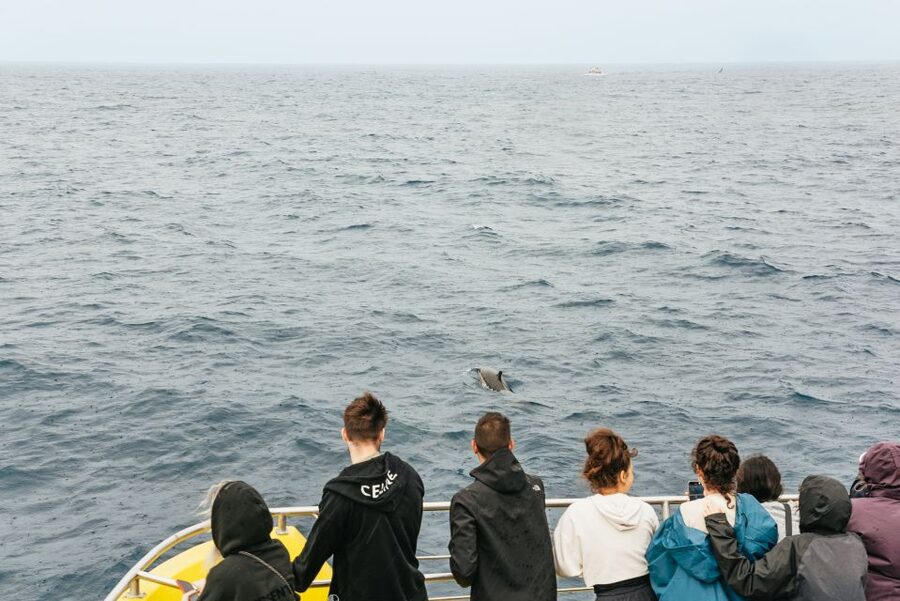
The wildlife list is one of the tour’s strongest points. Sightings have included sperm whales and sei whales, along with bottlenose, Atlantic spotted, and striped dolphins.
Sperm whales are a major draw. They may surface more quietly than dolphins, so you need to watch closely for a blow or dark body at the waterline. Seeing several sperm whales on one outing is possible, though never assured.
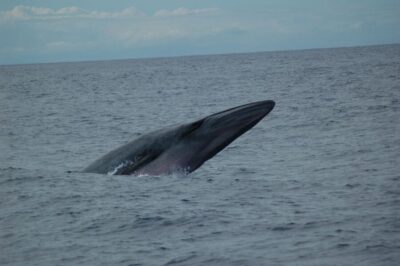
Sei whales have also appeared during trips, sometimes alongside more than one dolphin species. A few outings have included a mother and calf, while others have produced large pods numbering in the hundreds.
Dolphins are often the most active part of the trip. They may ride the waves beside the boat, leap, or gather in tight groups. Atlantic spotted dolphins and striped dolphins can create fast-moving, highly animated sightings. Bottlenose dolphins may stay close to the boat for longer periods.
Other wildlife has included turtles, flying fish, hammerhead sharks, tuna, and seabirds. These sightings are less predictable, but they show how much is happening below and around the boat.
One especially unusual account described a feeding area with dolphins, whales, birds, and tuna all gathered around the same food source. You should not expect that exact scene, but it helps explain why the marine biologist’s role adds value. The guide can connect separate sightings into a larger picture of the ocean food chain.
The marine biologist makes the difference
The guide is not simply pointing and naming animals. During the return trip, the biologists may walk around the boat, explain what you saw, and answer individual questions.
That personal contact is useful when the sea is busy. If a whale surfaces in the distance, you may need help knowing where to look. If dolphins appear near the bow, the guide can explain their behavior instead of leaving you with a blur of fins and spray.
Guides named Mark and Sarah have been praised for their enthusiasm and understanding of whales. Bia was described as a warm companion, while Raquel brought humor to one outing. Mateo received praise for explaining the animals clearly. The exact guide is not guaranteed, but the format consistently centers on marine science and respectful observation.
The quality of the explanations also helps on a quiet day. If no whale appears, you still learn how the crew searches, how the species differ, and why some encounters are brief. That makes the trip more than a hunt for photographs.
Returning along São Miguel’s coast
The return journey is not wasted time. The boat travels near the coast, giving you views of São Miguel’s volcanic rock formations and sea-cut cliffs.
After hours looking toward the horizon, the coastline offers a welcome change of scale. You can see how the island rises from the Atlantic, and the guide may continue discussing the natural setting around you.
The route back can also change if another pod appears. On one rough-weather outing, the crew altered course to see more dolphins. That flexibility is a good sign, as long as it remains within the safety and wildlife rules.
Keep your raincoat close. Even on a sunny day, spray and wind can make the ride feel cold. Sunglasses help with glare, and polarized lenses may be more useful than binoculars because dolphins can move close to the boat and distant objects are hard to focus on from a moving deck.
Price, timing, and practical value
At $76 per person, this is not the cheapest way to spend three hours in São Miguel, but it offers more than transport to a viewing area. The fee includes the boat, crew, guide, marine biologist, life jacket, and raincoat.
The wildlife guarantee improves the value. A quiet trip is still disappointing, but you are not left with nothing if the sea produces no whales or dolphins. You can request a refund or return for another trip at no extra cost, subject to the stated conditions.
There is no hotel pickup, food, or drink. Bring a reusable water bottle and eat before you arrive. Large bags and luggage are not allowed, so leave suitcases at your accommodation.
Tours are offered in English, Portuguese, and Spanish. The standard departure is from Ponta Delgada. A North Coast version leaves from Rabo do Peixe on Thursday, Friday, and Saturday, with the same refund or rebooking rule if no whales are seen.
Free cancellation is available up to 24 hours before departure, and you can reserve now and pay later. The trip is weather dependent, so severe conditions may lead to a cancellation or a new date.
Who should book this cruise?
I would choose this outing if you want a wildlife experience guided by people who care about how the animals are approached. It suits couples, older children over six, families who choose the catamaran, and anyone with a real interest in marine life.
The zodiac is a good fit if you enjoy speed, spray, and a bit of adventure. The catamaran is better if you want shelter, a bathroom, or a less punishing ride.
Think twice if you have back problems, heart problems, are pregnant, or dislike rough water. The operator does not allow children under six, sandals, flip-flops, luggage, or large bags. Wear closed-toe shoes and warm clothes, even in good weather.
Should you book the São Miguel whale-watching cruise?
Yes, if you can accept that wild animals do not keep appointments. The combination of coastal lookouts, marine biologists, respectful rules, and a no-sighting refund or rebooking option makes this a well-balanced choice at $76.
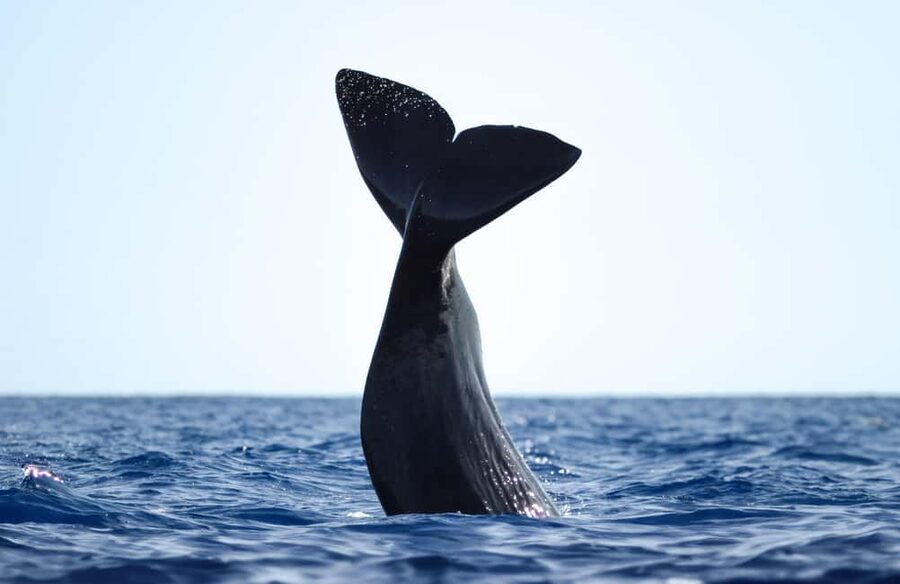
Choose the catamaran for comfort and the zodiac for excitement. Bring layers, polarized sunglasses, and a steady camera setup. Most important, judge success by the quality of the encounter, not by counting species. A pod of dolphins riding the waves can be just as memorable as a whale’s tail disappearing into the Atlantic.
FAQ
Where does the whale-watching cruise depart?
The regular tour departs from the marina across from Hotel Marina Atlântico in Ponta Delgada. The boat carries the Picos de Aventura name.
How long does the experience last?
The total activity lasts three hours. This includes a 20-minute safety briefing and about two and a half hours of whale watching.
What happens if no whales or dolphins are seen?
You can receive a full refund or book another trip for free if no whales or dolphins are spotted.
Is the trip available in languages other than English?
Yes. Live guides are available in English, Portuguese, and Spanish.
What should I bring?
Bring warm clothing, sunglasses, closed-toe shoes, and a reusable water bottle. A camera with a way to keep it steady can also be useful.
Can I bring luggage or wear sandals?
No. Large bags and luggage are not allowed, and sandals or flip-flops are not suitable. Wear closed-toe shoes.
Is the cruise suitable for everyone?
No. Children under six, pregnant women, and people with back or heart problems should not take this activity. The zodiac can be particularly bumpy, so the catamaran may be the better boat choice for comfort.
Just added around Portugal
- Madeira : Whales and Dolphins wooden boat excursion★ 4.1 · 247 reviews
- Madeira: Whale and Dolphin Watching Tour★ 4.6 · 174 reviews
- From Machico: Madeira Whale and Dolphin Watching Boat Tour★ 4.8 · 225 reviews
- Terceira Island: Whale & Dolphin Watching | Best Wildlife Tour★ 4.0 · 24 reviews
- Observation of Dolphins and Whales with Marine Biologist in Arrábida★ 5.0 · 224 reviews
- Sesimbra: Arrábida Dolphin and Whale Watching tour with biologist★ 5.0 · 248 reviews
- Full Day Sete Cidades with Whale Watching at Mosteiros★ 5.0 · 10 reviews
- Whale Watching Activity in North Coast★ 4.5 · 49 reviews
Whale Watching Cruises in Portugal, compared.
Funchal: Dolphin and Whale Watching Catamaran Cruise
Read our review →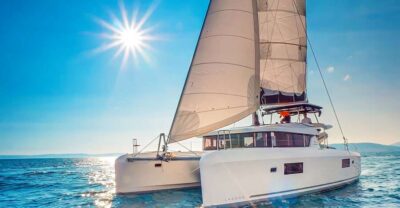
Funchal Bay: Dolphin & Whale Watch Luxury Catamaran Cruise
Read our review →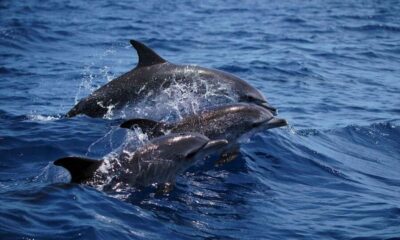
Dolphin and Whale Watching Catamaran Cruise from Funchal
Read our review →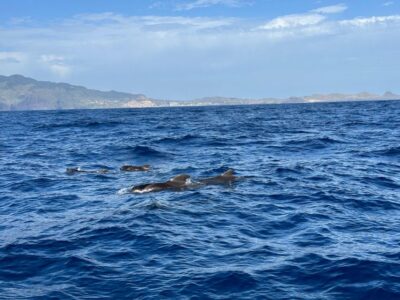
Funchal: RIB Whale Watching Cruise and Optional Dolphin Swim
Read our review →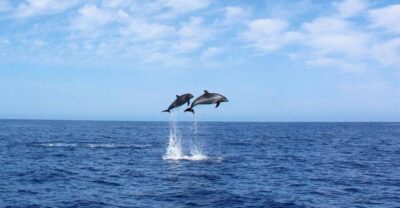
Madeira: 2.5-Hour Whale and Dolphin-Watching Cruise
Read our review →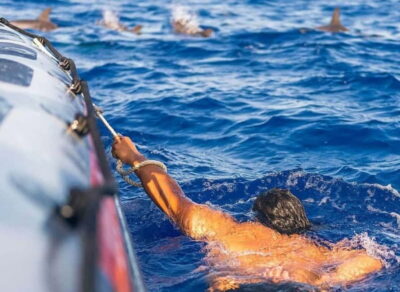
Funchal: Whale Watching and Swimming with Dolphins Cruise
Read our review →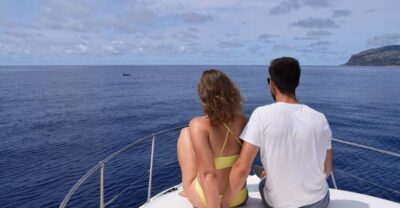
Browse the lists this tour appears in