
REVIEW · VANCOUVER WHALE WATCHING TOURS
Vancouver: Open-air Whale Watching Tour, Granville Island
Whales make Vancouver feel wonderfully wild. I like the open-air catamaran, which gives you a full 360-degree view without cabin windows or railings blocking your photographs, and I like the close focus on marine life from the naturalist on board. The Salish Sea can produce sightings of orcas, humpbacks, dolphins, seals, sea lions, and seabirds, all in open water rather than an aquarium setting.
The main trade-off is simple: wildlife is never scheduled. You may see several species, as happened on a trip that followed three humpback whales, or you may spend long stretches scanning the water. The ride lasts about three to five hours, and it is not recommended for children under three, pregnant people, or wheelchair users.
Key points to know before you book
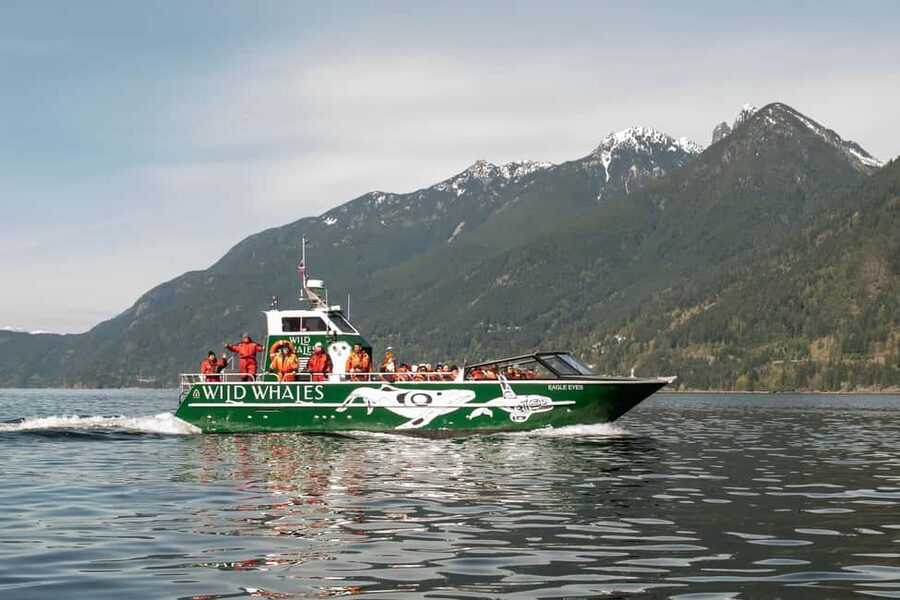
- Open-air Eagle Eyes catamaran: Walk around the deck while cruising and search for wildlife from the bow, stern, or sides.
- Three to five hours on the Salish Sea: The exact length depends on weather and where the animals are found.
- Strong sighting potential: Orcas, humpbacks, grey whales, dolphins, Steller sea lions, harbor seals, and seabirds may appear.
- Naturalist-led interpretation: Guides explain whale behavior, identification, migration, and the marine food web.
- Granville Island departure: You are close to downtown Vancouver, but parking can take time in summer.
- Practical comfort: The twin-hull boat offers a steadier ride than a small zodiac, with individual seating, washrooms, and optional warm outerwear.
Setting out from Granville Island
The tour begins at Wild Whales Vancouver, at 1806 Mast Tower Lane on Granville Island. This is a handy departure point if you are staying around downtown Vancouver, since the island can be reached by car, public transit, or the small local ferry service.
Give yourself plenty of time. You are asked to arrive 45 minutes before departure, and that is sensible rather than fussy. Granville Island gets very busy during the summer, and paid parking is spread around the island. Arriving late could turn a relaxed start into a sprint along the docks.
The briefing takes about 45 minutes. You receive safety information and prepare for an outing in open water. This is also the time to ask about warm clothing or an optional windbreaker or suit if the conditions look cool.
Granville Island adds useful flavor to the day. You can eat before or after the trip, but food and snacks are not included, so plan ahead. Bring drinks and a reusable water bottle. Alcohol and drugs are not allowed, and pets, drones, non-folding strollers, and fireworks must stay behind.
A few more whale watching trips around Vancouver worth a look
- Vancouver Half-Day Whale Watching Adventure with Free Photos
★ 5.0 · 5,000 reviews - Vancouver: Covered Whale Watching Adventure with Free Photos
★ 4.8 · 2,260 reviews - Whale-Watching Tour from Vancouver
★ 4.5 · 1,572 reviews
Why Eagle Eyes changes the viewing experience
Eagle Eyes is a custom-built, open-air catamaran with a twin-hull design. That matters in two ways. First, the boat offers more stability than a small zodiac, which can be helpful if you prefer a steadier ride. Second, the open deck gives you a much wider view than a standard enclosed cabin.
You can move around while the boat is cruising. Stand at the bow when you want an unobstructed look ahead, shift to the side when the naturalist points out activity, or step back and watch the wake and coastline. You are not tied to one seat or one window.
The lack of a cabin is also the main comfort consideration. Wind and spray are part of the experience. Bring warm layers, a hat, and clothing suited to changing weather. A camera is worth packing, but keep it secure and expect the occasional splash.
The boat is described as mid-sized, which gives you open space without the feel of a very large sightseeing vessel. That can make wildlife viewing more personal and less crowded. Still, the deck is shared, so you may need to shift position when several people want the same sightline.
There are individual seats and onboard washrooms. You do not need to stand for the whole trip, but moving around is the best way to use the boat’s design.
Following whales across the Salish Sea
The main portion of the outing takes place on the Salish Sea, a network of coastal waters bordered by British Columbia and the Pacific Northwest. The setting includes open water, coastal mountains, islands, and a busy marine food web.
The captain and marine naturalist work together. The captain handles the route and boat, while the naturalist helps you understand what you are seeing. You learn how to tell whale species apart, how animals behave at the surface, and why the whales travel through these waters.
The tour can last three to five hours. A five-hour booking is a useful expectation, but the actual trip may be shorter or longer within that range depending on weather and the location of the whales. If animals are far from Granville Island, the travel time becomes part of the day.
That uncertainty is worth accepting before you board. You are not visiting a controlled attraction with guaranteed appearances at fixed times. The appeal comes from finding free-ranging animals on their own terms.
A whale sightings guarantee is included, but you should still ask what the guarantee means when you book, since the supplied tour details do not explain the remedy or conditions. The important point is that the operator presents sightings as part of the booking commitment, while individual species and viewing conditions can never be promised.
The animals you may see
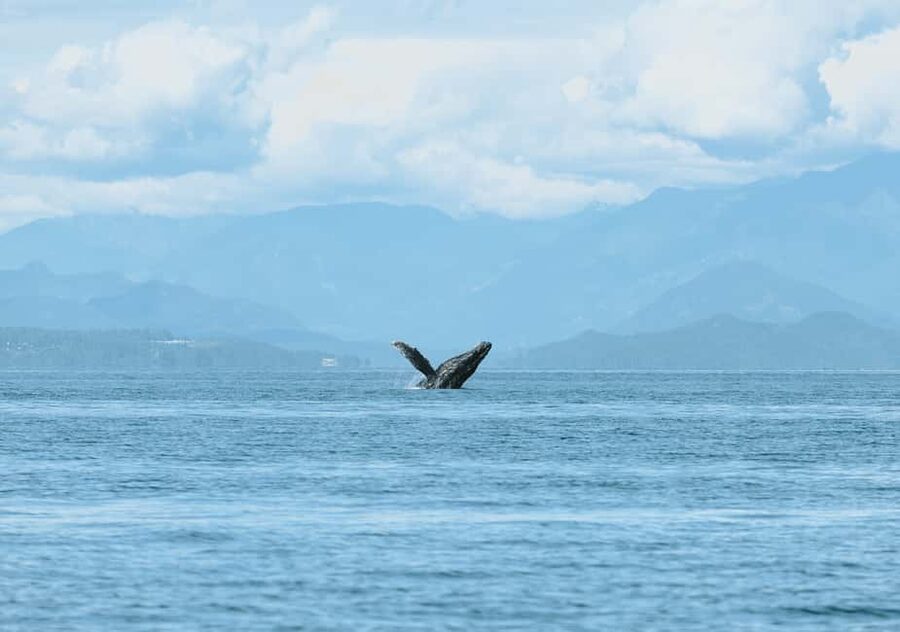
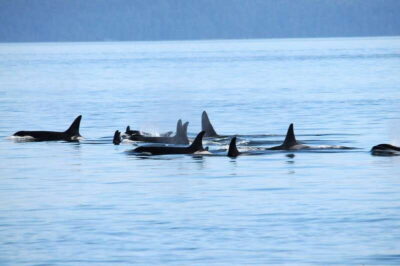
Orcas are the most famous possibility. If they appear, you may see dorsal fins, surfacing behavior, or family groups moving through the water. The experience can be brief or extended, depending on where the animals are and how the boat can approach responsibly.
Humpback whales are another strong possibility. They are often identified by their blows, body shape, dorsal fin, and tail markings. On one outing, the naturalist Julia helped the group follow three humpbacks and explained their behavior as they tracked them. That kind of commentary gives meaning to a distant surfacing whale instead of leaving you to guess at what just happened.
Grey whales, Pacific white-sided dolphins, Steller sea lions, and harbor seals are also listed among the possible sightings. Sea lions may be noisy and easy to notice, while seals can be quieter and harder to spot at first. Your naturalist can help direct your attention to smaller or more distant animals.
You may also see seabirds across the water. Even when whales are not immediately visible, the sea remains active. A naturalist can explain how these species fit into the wider marine system, including animals you do not see on the day.
This variety helps balance the unpredictability of whale watching. You might set out hoping for orcas and end up with humpbacks, harbor seals, and dolphins instead. That is not a lesser day. It is a closer look at the whole coastal ecosystem.
Same water, a different way to meet them:
- Vancouver’s Intimate West Coast Whale Watching Experience
★ 4.5 · 698 reviews - Vancouver Sunset Whale Watching Adventure with Free Photos
★ 5.0 · 454 reviews - Vancouver, BC: Whale Watching Tour with Guide
★ 4.7 · 270 reviews - Wild Whale Watching Experience – Open Air Vessel
★ 5.0 · 158 reviews
The naturalist makes the difference
The strongest part of this experience is the human interpretation. A skilled guide can turn a scan of empty-looking water into a lesson in animal behavior, migration, and conservation.
Julia received especially strong praise for her work explaining humpback behavior and helping the group identify the three whales they followed. She also discussed harbor seals and other marine life, including sea otters even though none appeared on that trip. That is useful guiding: you learn about the ecosystem without being promised animals that are not present.
The guides are described as people who know the whales by name and follow their migration stories. You can expect commentary in English throughout the trip. The explanations are intended for all ages, though the minimum age and other suitability limits mean this is not a good choice for every family.
The conservation message also matters. You are not simply looking for a dramatic photograph. You are learning how marine animals share food, space, and travel routes, and why responsible viewing protects them. The rule against touching animals is obvious but important. So is the ban on drones, which can disturb wildlife and interfere with the boat.
What the scenery adds to the trip
The Salish Sea provides more than a backdrop for whale sightings. You will have views across coastal waters toward the mountains and islands, with changing light and weather shaping the day.
The open deck is ideal when you want to watch the horizon instead of focusing only on animals. I like this part of the design because it gives the trip a sense of place. You are not simply being taken to a viewing point. You are spending several hours on the water and seeing how the coast looks from offshore.
The 360-degree view also helps photographers. There are no enclosed cabin windows to reflect light or limit your angle. You can respond quickly when a whale surfaces behind the boat or when dolphins appear off one side.
Photography still takes patience. Wildlife may surface far away, move quickly, or appear for only a moment. Bring a camera if you enjoy the challenge, but do not judge the day only by the number of perfect photographs you take.
Is the $165 price fair?
At $165 per person, this is not a cheap add-on. The value depends on what you want from a whale watching trip.
You are paying for three to five hours on the water, an experienced captain, a marine naturalist, a mid-sized open-air vessel, onboard washrooms, individual seating, and the chance to see several species. The 360-degree deck is a real advantage over a boat where you must remain behind glass or compete for a window.
The price feels easier to justify if you care about photography, marine biology, or a less enclosed boat experience. It also makes sense if you want an activity that uses a substantial part of your day rather than a quick harbor cruise.
You need to budget for your own food and drinks, since those are not included. Transportation to Granville Island is also your responsibility. Gratuity is optional.
The reported overall rating is 4.9 from 51 ratings, and 91 percent of participants gave the transport a perfect score. Those figures suggest the boat and operation are performing well, but they do not remove the basic risk of wildlife watching: the animals choose the schedule.
Who should book this tour?
I would recommend it to adults, older children who can handle several hours outdoors, photographers, and anyone who prefers a close look at the marine environment rather than a short sightseeing cruise.
It suits people who enjoy learning as much as seeing. The naturalist commentary adds real value, especially if you want to understand why a whale surfaces in a certain way or how to tell a humpback from an orca at a distance.
It is less suitable if you need a fully enclosed cabin, dislike wind and spray, or want a guaranteed view of a particular species. The open-air design is the attraction, but it also means you must dress for the conditions.
Children under three are not recommended. The activity is also not recommended for pregnant people and is not suitable for wheelchair users. Non-folding strollers are not allowed.
Practical advice for a better day
Dress more warmly than you think you need. Even on a pleasant day at Granville Island, the boat’s speed and open deck can make the air feel cooler. Wear layers, bring a hat, and use the optional windbreaker or suit if offered.
Arrive 45 minutes early. This gives you time to find the office, deal with parking, complete the briefing, and board without stress.
Bring food and drinks for the outing. A reusable bottle is specifically recommended, and snacks are sensible because the trip can occupy most of the day.
Keep your camera ready, but secure it carefully. The open deck offers excellent angles, yet spray and movement are part of the setting.
Do not bring a drone, pet, alcohol, drugs, fireworks, or a non-folding stroller. Do not touch marine life. These rules protect both the animals and the people on board.
The company offers free cancellation up to 24 hours before departure and a reserve-now, pay-later option. Check the available start times before booking, since the exact schedule depends on the date.
Should you book Eagle Eyes?
Book this tour if you want a serious half-day on the water, broad viewing angles, and useful explanations from a marine naturalist. The strongest reasons are the open-air Eagle Eyes catamaran, the mid-sized group setting, and the chance to learn while searching for whales in their natural home.
Skip it if you need guaranteed orcas, a sheltered cabin, or accessible boarding. For everyone else, $165 is a fair price for a five-hour wildlife outing with a strong sighting policy, solid comfort features, and a real sense of the Salish Sea.
FAQ
Where does the whale watching tour depart from?
It departs from the Wild Whales Vancouver office at 1806 Mast Tower Lane on Granville Island in Vancouver, British Columbia.
How long does the tour last?
The tour lasts between three and five hours. The duration depends on weather and the location of the whales.
How early should I arrive?
You should arrive 45 minutes before the scheduled departure time for the safety briefing and boarding.
What animals might I see?
Possible sightings include orcas, humpback whales, grey whales, Pacific white-sided dolphins, Steller sea lions, harbor seals, and seabirds.
Is a whale sighting guaranteed?
A whale sightings guarantee is included with the tour. The supplied details do not specify the exact terms of that guarantee.
Is the boat enclosed?
No. Eagle Eyes is an open-air catamaran with an unobstructed 360-degree view of the water.
Can I move around while the boat is moving?
Yes. You can walk around the deck while the vessel is cruising, which helps you find the best viewing position.
Are washrooms available?
Yes. Onboard washrooms are available, along with individual seating.
What should I bring?
Bring warm clothing, a hat, a camera, food, drinks, and a reusable water bottle. An optional windbreaker or suit may be available for extra warmth.
Who should not take this tour?
The tour is not recommended for children under three or pregnant people, and it is not suitable for wheelchair users. Pets, drones, non-folding strollers, alcohol, drugs, fireworks, and touching marine life are not allowed.
Just added around Vancouver
- Vancouver: Day Trip to Victoria Seaplane with Whale Watching★ 4.5 · 109 reviews
- Vancouver: Zodiac Whale Watching Tour from Granville Island★ 4.6 · 6 reviews
- Vancouver, BC: Whale Watching Tour Small Zodiac with Guide★ 4.7 · 65 reviews
- Vancouver: Catamaran Whale Watching Tour, Granville Island★ 4.9 · 27 reviews
- Wild Whale Watching Experience – Open Air Vessel★ 5.0 · 158 reviews
- Vancouver-Victoria Day Trip by Seaplane + Whale Watching by Boat★ 4.5 · 142 reviews
- Whale Watching Adventure from Vancouver BC★ 5.0 · 59 reviews
- Intimate West Coast Whale Watching – Partly-Sheltered★ 5.0 · 18 reviews
Vancouver Whale Watching Tours, compared.
Vancouver Half-Day Whale Watching Adventure with Free Photos
Read our review →Vancouver: Covered Whale Watching Adventure with Free Photos
Read our review →
Vancouver’s Intimate West Coast Whale Watching Experience
Read our review →
Vancouver Sunset Whale Watching Adventure with Free Photos
Read our review →
Wild Whale Watching Experience – Open Air Vessel
Read our review →
Vancouver-Victoria Day Trip by Seaplane + Whale Watching by Boat
Read our review →Browse the lists this tour appears in