
REVIEW · VANCOUVER WHALE WATCHING TOURS
Wild Whale Watching Experience – Open Air Vessel
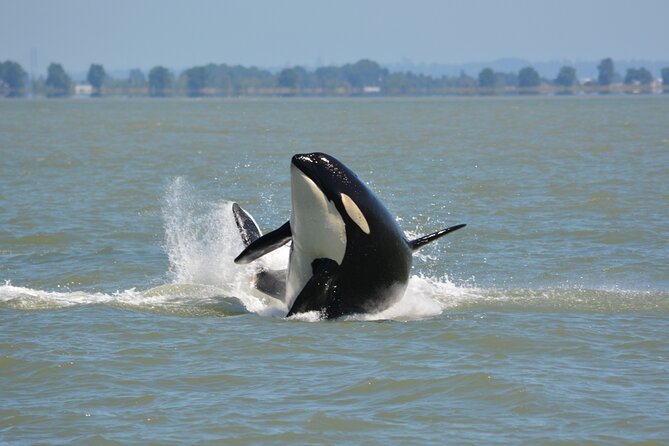
Whales do not follow a timetable. That is what makes this five-hour open-air cruise from Granville Island exciting, and sometimes demanding. You head through English Bay and into the Strait of Georgia with a marine naturalist, watching for orcas, humpback, minke, and grey whales. The boat also keeps an eye out for sea lions, seals, porpoises, bald eagles, herons, and seabirds.
I like the unrestricted 360-degree view from the Eagle Eyes and the fact that tour data supports research and conservation. I also like the small-group feel, with no more than 35 people, plus the full-length flotation suit that protects you from wind and spray. The main drawback is simple: you may spend several hours at sea for a short burst of whale activity, and the open boat can feel cold or rough.
You should bring snacks, dress for weather, and accept that wildlife sightings can never be promised. When conditions line up, though, this can be a thrilling day on the water. One group saw killer whales, seals, sea lions, and humpback whales. Another watched whales play around the boat for about 20 minutes. Those moments are why people give this trip a 4.9 rating and recommend it at a rate of 97 percent.
Key points to know before boarding
- Granville Island departure: You leave from 1806 Mast Tower Lane, near historic Granville Island, with fine views of Vancouver at the start.
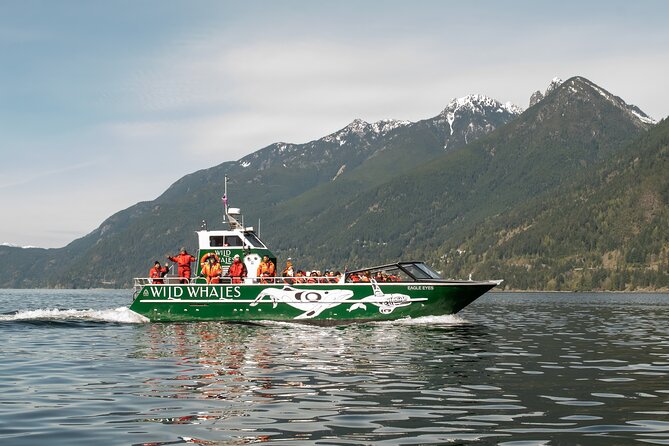
- Eagle Eyes open-air vessel: The boat provides an unrestricted view in every direction, with room for up to 35 people.
- Full-length flotation suit included: You wear the orange anti-exposure suit over your clothes, a useful layer when wind and spray make the water feel cold.
- Wildlife is never guaranteed: The usual search includes orcas, humpback, minke, and grey whales, plus seals, sea lions, porpoises, eagles, herons, and seabirds.
- Bring your own food: The trip can last up to five hours, and snacks are not included.
- Conservation is part of the outing: Information gathered on Vancouver tours goes toward research and conservation work.
Starting at Granville Island with Vancouver views
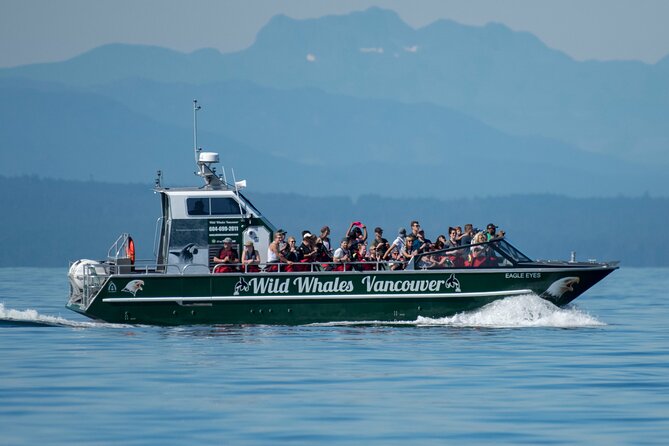
The trip begins at 1806 Mast Tower Lane, Vancouver, BC V6H 4B6. The meeting point is close to public transportation, and the tour returns to this same location at the end.
The first part is not simply a transfer to the whale area. As you leave Granville Island, you get a water-level look at Vancouver and its setting around English Bay. This gives the day a pleasant opening, especially if you enjoy seeing a city from a different angle.
The route then heads out of English Bay and into the Strait of Georgia. You are not stopping at a series of fixed points. Instead, the captain and naturalist adjust the trip around current wildlife reports and conditions. That makes each outing different, but it also means the timing is less predictable.
The tour lasts about five hours, though the stated range is roughly three to five hours. The longer trips are tied to the search for whales and the distance needed to reach them. I would plan your day as if the full five hours are required, rather than scheduling a tight lunch or another timed activity afterward.
A few more whale watching trips around Vancouver worth a look
- Vancouver Half-Day Whale Watching Adventure with Free Photos
★ 5.0 · 5,000 reviews - Vancouver: Covered Whale Watching Adventure with Free Photos
★ 4.8 · 2,260 reviews - Whale-Watching Tour from Vancouver
★ 4.5 · 1,572 reviews
What the Eagle Eyes boat changes
The Eagle Eyes is an open-air vessel, which is the heart of this experience. You do not look through windows or try to see around a tall cabin. Instead, you have an open view of the water and wildlife in all directions.
That helps when an animal surfaces unexpectedly. A whale can appear off the side, behind the boat, or several angles away from the first sighting. With a 360-degree view, you can turn quickly and keep watching without fighting for a window.
The trade-off is exposure. Wind can make the ride feel much colder than the temperature at the dock, and spray is possible. Every person receives a full-length, one-piece anti-exposure flotation suit to wear over their clothes. The suit covers your arms and legs and was especially appreciated by one group that found the water cold.
Wear practical clothes beneath it. You will want layers that are easy to put on and remove, since the suit is designed to go over what you already have. Sunscreen is included, but you should still dress as if the weather may shift during a long period on the water.
A restroom is available on board, which matters during a trip that can last several hours. The vessel is smaller than a large sightseeing boat, and the maximum group size is 35 people. That does not guarantee a quiet ride, but it does make it easier to keep track of the naturalist and follow the action.
Searching the Strait of Georgia for whales
The wildlife search is the main event, but it is not a staged show. The boat may spend time moving through open water while the crew scans for signs of animals. You might see a fin, a blow, a group of birds, or nothing for a while before the day changes suddenly.
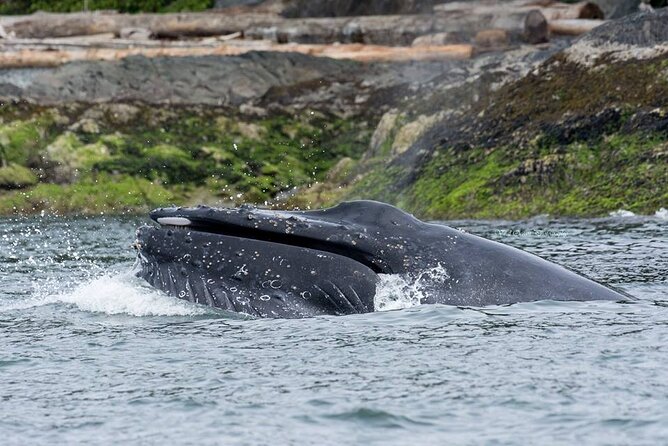
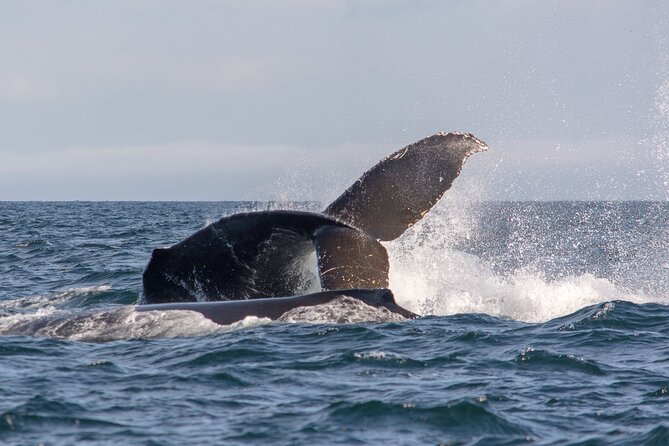
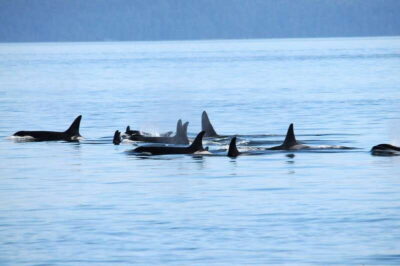
The main targets are orcas, humpback whales, minke whales, and grey whales. Each species offers a different kind of sighting, but the tour cannot promise which one you will see, or if you will see whales at all.
That uncertainty is worth understanding before you pay. A whale-watching trip is not a guaranteed performance with animals appearing on command. One useful way to judge the value is to ask if you would still enjoy a day of coastal scenery, marine life, and outdoor learning if whale sightings were brief.
The strongest reports describe dramatic encounters. One group watched whales come close and play near the boat for at least 20 minutes. Another saw a pod of orcas along with seals. A further outing included killer whales, seals, sea lions, and humpback whales. Those are excellent sightings, but they should be treated as fortunate conditions, not a promised package.
When whales do appear, the captain knows when to slow or stop. One account describes the boat going quiet as everyone waited for a fin to surface. That change from fast travel to still observation is part of the appeal. You may spend much of the trip moving, then suddenly find the whole boat hushed and focused on one animal.
Seals, sea lions, birds, and smaller surprises
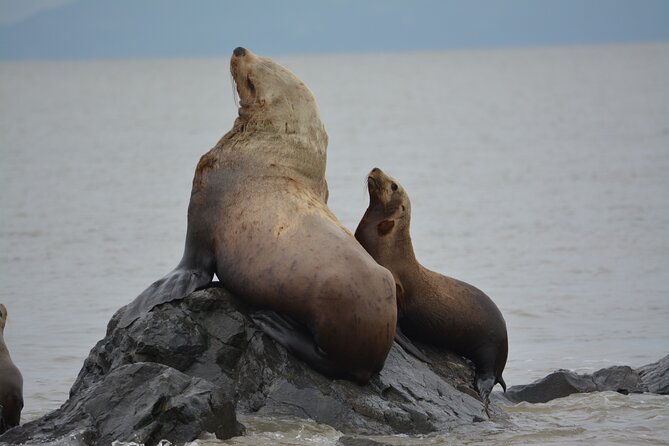
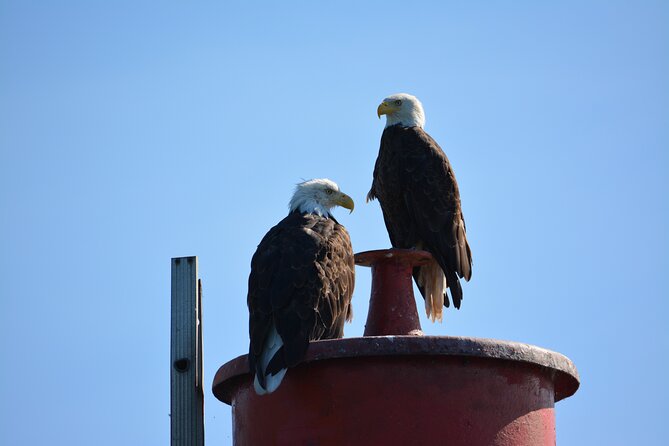
Whales get the billing, but the extra wildlife can keep the trip rewarding between sightings. The search includes Steller sea lions and California sea lions, harbour seals, harbour and Dall’s porpoises, bald eagles, great blue herons, and many seabird species.
These animals also help you read the water. A group of seabirds, a seal on the surface, or a sudden change in bird activity can give the naturalist something useful to explain. Even if a whale stays out of sight, you are not limited to staring at empty water.
This broader focus is one reason I like the trip for people who enjoy natural history rather than only collecting a whale photograph. You learn about animal behaviour, local ecology, the geography of the waters, and the history of the region. The conservation message is not an extra advertisement pasted onto the outing. Data from Vancouver tours supports research and conservation initiatives, giving the trip a practical purpose beyond sightseeing.
The naturalist also helps you identify what you are seeing. Field guides, whale identification guides, and other learning materials are available to borrow on board. If you like knowing the difference between a seal and a sea lion, or between one whale species and another, these materials make the ride more engaging.
Same water, a different way to meet them:
- Vancouver’s Intimate West Coast Whale Watching Experience
★ 4.5 · 698 reviews - Vancouver Sunset Whale Watching Adventure with Free Photos
★ 5.0 · 454 reviews - Vancouver, BC: Whale Watching Tour with Guide
★ 4.7 · 270 reviews - Vancouver-Victoria Day Trip by Seaplane + Whale Watching by Boat
★ 4.5 · 142 reviews
The marine naturalist adds meaning to the ride
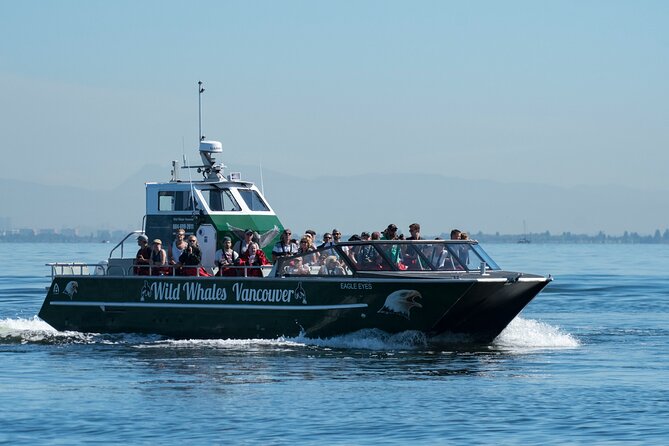
A good naturalist changes the tone of a wildlife trip. Instead of hearing only that an animal has appeared, you get context about what it is doing and why the sighting matters.
The guide discusses behaviour, ecology, geography, history, and conservation. That gives you something to follow during the long stretches between sightings. It also helps you understand why the boat may slow down, change direction, or wait in one area.
The crew member Yas received special praise for being engaging, and the captain was described as professional and attentive. The captain’s judgment matters on an open-air boat, particularly when the group needs to move quickly toward wildlife and then become quiet and careful nearby.
The vessel is permitted to approach wildlife more closely than some other boats can. That does not mean animals will come alongside or that you will always get a close view. It means the boat has more flexibility when observing wildlife, while the captain still needs to make responsible choices around the animals.
Motion sickness, snacks, and the five-hour reality
The length of the trip deserves serious attention. The journey can last up to five hours, and snacks are not included. Bring food that is easy to manage on a boat, along with a refillable water bottle. Bottled water is carried on board, but the operator prefers refillable bottles to reduce single-use plastic.
Ginger candy can be provided if you feel motion sickness. Single-use ear plugs are also available on request. These are useful details, but they do not replace sensible preparation. If you know you get seasick, consider what normally helps you and speak with a medical professional if needed.
The open-air format can be more comfortable for some people who dislike enclosed boats, since you have fresh air and a broad view. It can also make the wind more noticeable. The anti-exposure suit offers shelter from the elements, but you should not mistake it for a warm indoor cabin.
The experience is not recommended for people with neck problems. The trip involves time on a moving vessel, and the open-air ride may be a poor fit if motion or sudden boat movement causes pain.
Is $169.74 a fair price?
The listed price is $169.74 per person. That is not a casual harbor cruise, so the value depends on what you want from the day.
You are paying for a long outing, a professional captain and marine naturalist, a smaller vessel, an anti-exposure flotation suit, water, sunscreen, learning materials, and the chance to see several major marine species. The conservation connection also adds value if you prefer excursions that contribute to research.
The price feels strongest when the trip delivers multiple wildlife sightings and a skilled guide. Seeing orcas, humpbacks, seals, and sea lions in one outing would make the cost easier to justify. Even a less dramatic day can have value if you enjoy the coastal ride and naturalist commentary.
Still, you should be comfortable with the possibility of limited whale activity. The experience is long because the crew must search for animals, not because every minute contains action. If you want a short, guaranteed attraction with a fixed timetable, this is not the right use of your money.
The small maximum group of 35 is another part of the value. You are not being placed on a huge sightseeing ship where the best view disappears behind a crowd. The boat is still shared, of course, but the size should make the naturalist’s explanations and wildlife spotting easier to follow.
Who should book this open-air whale tour?
I would recommend it to you if you enjoy wildlife, fresh air, and flexible plans. It suits people who would rather spend a day looking for real animals than visiting a predictable attraction. It is also a good fit if you want a guide to explain conservation and local marine life rather than simply point out whales.
Families and groups can take part if they are comfortable with a long boat ride and changing weather. Most people can participate, but anyone with neck problems should consider another activity. You should also be able to manage the physical demands of wearing a flotation suit and staying on a moving boat for several hours.
This outing may not suit you if you dislike cold, wind, or uncertainty. It may also disappoint if your main goal is a guaranteed close-up photograph. The boat can legally approach wildlife more closely than some other vessels, but animals decide how near they come.
Book with a flexible day around it. Confirmation arrives within 48 hours, subject to availability, and the trip requires suitable weather and a minimum number of participants. If poor weather or low enrollment cancels the outing, you are offered another date or a full refund. You can also cancel for a full refund up to 24 hours before the start time. Changes or cancellations inside that window are not accepted.
Final verdict: a strong choice for patient wildlife fans
I would book this tour if I wanted an active, open-air search for marine life from Vancouver and had five hours to spare. The 360-degree view, small maximum group, helpful suit, conservation work, and strong naturalist program give it more substance than a simple boat ride.
I would not book it for a rushed schedule or if I needed guaranteed whale sightings. Bring snacks, wear layers, accept the cold, and treat every whale encounter as a gift rather than a promise. If that sounds like your kind of day, Wild Whales Vancouver offers a very good chance to experience the Strait of Georgia with purpose and excitement.
FAQ
Where does the whale-watching tour begin?
The tour begins at 1806 Mast Tower Lane, Vancouver, BC V6H 4B6, Canada, near Granville Island and public transportation.
Where does the tour end?
The activity returns to the same meeting point where it began.
How long does the experience last?
The journey lasts approximately five hours, with the stated trip range being about three to five hours depending on where the whales are.
What wildlife might I see?
The search includes orcas, humpback whales, minke whales, grey whales, Steller and California sea lions, harbour and Dall’s porpoises, harbour seals, bald eagles, great blue herons, and seabirds.
Is the boat enclosed?
No. The Eagle Eyes is an open-air vessel with an unrestricted 360-degree view. A full-length anti-exposure flotation suit is provided to wear over your clothing.
Are food and drinks included?
Bottled water is available, and you may borrow field guides and whale identification guides. Snacks are not included, so you should bring your own food for the trip.
Can I get help with motion sickness?
Ginger candy can be provided on request for motion sickness, and single-use ear plugs are also available on request.
What happens if the tour is canceled because of weather?
If poor weather cancels the experience, you are offered a different date or a full refund. The same applies if the minimum number of participants is not reached.
Just added around Vancouver
- Vancouver: Day Trip to Victoria Seaplane with Whale Watching★ 4.5 · 109 reviews
- Vancouver: Zodiac Whale Watching Tour from Granville Island★ 4.6 · 6 reviews
- Vancouver: Open-air Whale Watching Tour, Granville Island★ 4.9 · 51 reviews
- Vancouver, BC: Whale Watching Tour Small Zodiac with Guide★ 4.7 · 65 reviews
- Vancouver: Catamaran Whale Watching Tour, Granville Island★ 4.9 · 27 reviews
- Vancouver-Victoria Day Trip by Seaplane + Whale Watching by Boat★ 4.5 · 142 reviews
- Whale Watching Adventure from Vancouver BC★ 5.0 · 59 reviews
- Intimate West Coast Whale Watching – Partly-Sheltered★ 5.0 · 18 reviews
Vancouver Whale Watching Tours, compared.
Vancouver Half-Day Whale Watching Adventure with Free Photos
Read our review →Vancouver: Covered Whale Watching Adventure with Free Photos
Read our review →
Vancouver’s Intimate West Coast Whale Watching Experience
Read our review →
Vancouver Sunset Whale Watching Adventure with Free Photos
Read our review →
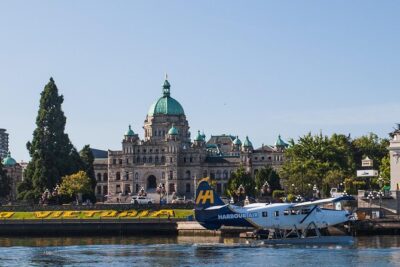
Vancouver-Victoria Day Trip by Seaplane + Whale Watching by Boat
Read our review →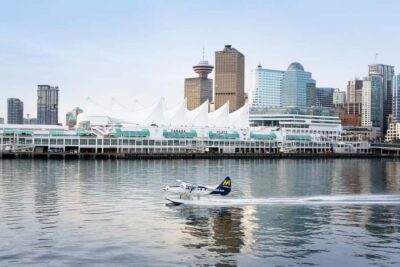
Vancouver: Day Trip to Victoria Seaplane with Whale Watching
Read our review →Browse the lists this tour appears in