
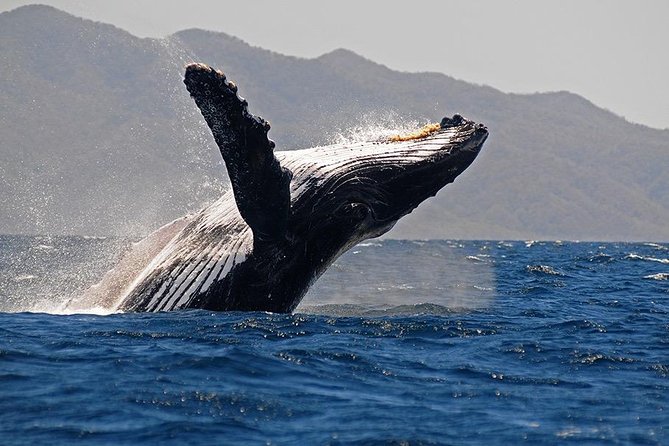
REVIEW · PUERTO VALLARTA WHALE WATCHING TOURS
Whale and Dolphin Watching with a Biologist in Puerto Vallarta
Whales turn a boat ride into a lesson. This four-hour Puerto Vallarta trip pairs close encounters with humpbacks and dolphins with citizen science, so your outing supports ongoing marine research. I especially like the marine biologist guides, who explain whale behavior as it happens, and the use of a hydrophone that lets you hear whale songs underwater. The chance to spot turtles, giant manta rays, and several dolphin species adds variety.
The main consideration is that wildlife follows its own schedule. Some departures may start slowly, while others see whales within 15 or 20 minutes. The boat has no bathroom, and the ride can be active on a windy day, so this suits you best if you are comfortable on a small vessel and willing to accept nature’s timetable.
Key points at a glance
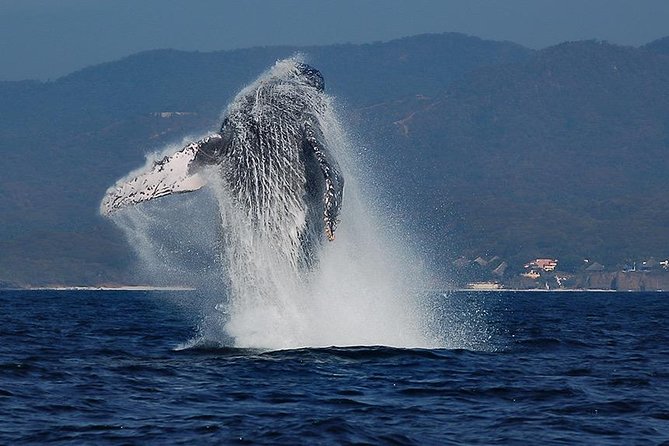
- Humpback season runs through winter: Puerto Vallarta’s visiting whales come to mate and give birth, giving you a chance to see mothers, calves, and males competing for attention.
- A real biologist leads the trip: Guides such as Jemma, Gemma, Gena, Camilla, and Jema explain communication, parenting, movement, and feeding behavior in plain language.
- The hydrophone changes the experience: You may not only see whales at the surface, but also hear their songs beneath the boat.
- Small boats offer better sight lines: Groups are limited to 20 people, with many departures carrying about 12 to 16 passengers.
- Wildlife can extend beyond whales: Look for bottlenose, spotted, spinner, and rough-toothed dolphins, plus turtles, giant mantas, sea lions, and seabirds.
- Your ticket helps support research: You can take part in data collection and learn how the research programs track whales and dolphins.
Meeting the biologist at Marina Vallarta
The tour begins at Opequimar Centro Marino, at Av. Paseo de la Marina Sur 214 in Marina Vallarta. You return to the same place after roughly four hours on the water.
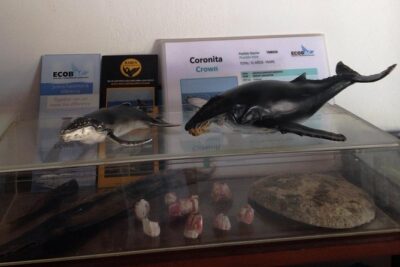
Before boarding, the team gives an educational introduction. This is more than a quick safety speech. You may see baleen and a whale vertebra, which help put the animals’ size into perspective before you encounter them offshore. The introduction also covers the types of whales and dolphins found in the area and explains what the crew will watch for.
That early lesson matters. A whale surfacing for a few seconds can seem random if you do not know what to look for. With a biologist pointing out breathing patterns, tail movements, mother and calf behavior, and changes in direction, the waiting becomes part of the experience rather than empty time.
The guides have backgrounds in marine biology, marine ecology, science journalism, and wildlife photography. Their role is not simply to point and shout when a whale appears. They connect each sighting to the animal’s behavior and to the research work taking place in the bay.
More Whale Watching with a Marine Biologist in Puerto Vallarta:
- Whale Watching Adventure – Led by a Marine Biologist
★ 5.0 · 176 reviews - Azores: Whale Watching & Islet Boat Tour w/ Marine Biologist
★ 4.7 · 2,945 reviews - São Miguel: Whale-Watching Cruise with Marine Biologist
★ 4.6 · 1,311 reviews
A small boat built for wildlife viewing
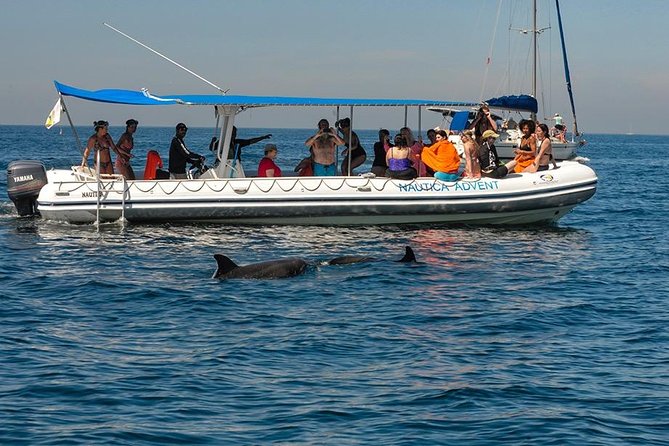
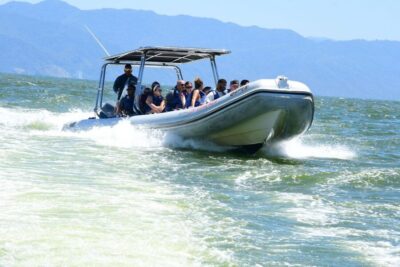
The boat is covered, which gives you shade and some protection from wind and spray. It is also small enough to provide a close view of the water on both sides. Group sizes are capped at 20, and many trips appear to run with around 12 to 16 people.
That size is a useful middle ground. You get the access of a small craft without being packed into a large sightseeing vessel. A smaller group also makes it easier to hear the biologist and shift your position when animals appear on different sides.
There is a tradeoff. The boat has no bathroom, so use facilities before departure. The ride can be windy, and a small boat responds more directly to the movement of the sea. The crew provides life jackets and helps people board safely, but you should still expect a genuine boat trip rather than a calm harbor cruise.
The captain plays a major part in the outing. Jorge and Cesar are praised for smooth, careful handling and for positioning the boat behind whales without crowding them. Good boat work matters because the animal may surface only briefly, and a poor angle can mean seeing a back when you hoped for a tail.
Finding Puerto Vallarta’s winter humpbacks
The main attraction is the humpback whale. During the winter months, these whales come to Puerto Vallarta to mate and give birth. That seasonal purpose explains the range of behavior you might see.
A single adult may surface, breathe, and disappear. A mother and calf may travel together, with the calf practicing movement and communication. Several males may compete around a female. The guides explain what is happening instead of treating every splash as the same event.
Possible sightings include breaches, tail slaps, pectoral-fin waves, rolling, and groups swimming together. A calf may pop out of the water, while an adult male may launch into a full breach. These dramatic displays are never promised at a particular moment, but winter provides a strong chance to see active whales in the bay.
Some departures have produced sightings of 15 to 30 whales, while others have focused on one remarkable mother and calf. That range is important. A high count does not always mean a better outing. Seeing one mother teach a calf how to communicate, while listening to the sounds below the boat, can be just as memorable as watching a large group.
The operator says its experience and research work allow the crew to find the animals, with a money-back promise if no animals are found. Even so, you should remember that wildlife sightings remain natural encounters. The most honest expectation is a strong opportunity, not a staged show.
Hearing whale songs through a hydrophone
The hydrophone is one of the most distinctive parts of this tour. When conditions allow, the biologist places it in the water and shares the sounds with the group.
Humpback songs add a second layer to whale watching. You can see a whale surface in the distance, then hear voices carrying underwater from nearby animals. The guides can explain how sound helps whales communicate and why the sounds may change depending on the situation.
This is especially valuable during slower stretches. You may spend time waiting for a whale to surface, but the water can still be active below you. The hydrophone turns that quiet period into an observation rather than a pause.
If your goal is only to collect dramatic photographs, the hydrophone may seem secondary. I think it is one of the features that makes this trip more worthwhile than a simple boat ride. You leave with a better sense of whales as social animals, not just large shapes appearing at the surface.
More Whale and Dolphin Watching Tours in Puerto Vallarta:
- Whale & Dolphin Watching Cruise in Puerto Vallarta All Inclusive
★ 4.0 · 212 reviews - Tenerife: Eco-Yacht Whale and Dolphin Watching and Swimming
★ 4.7 · 15,619 reviews - Los Cristianos Respectful No-Chase Whale and Dolphin Safari
★ 4.6 · 12,782 reviews - From Funchal: Ecological Catamaran Dolphin Whale Watching
★ 4.5 · 8,204 reviews
Dolphins, turtles, mantas, and other sightings
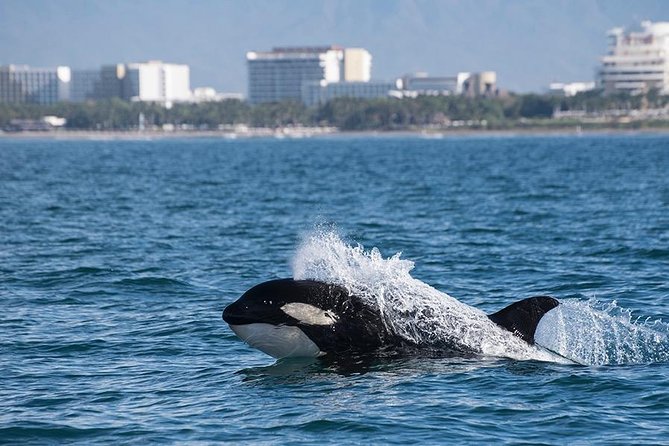
Winter departures combine whale watching with dolphin watching. The possible dolphin species include bottlenose, spotted, spinner, and rough-toothed dolphins. The crew may also encounter orcas or false orcas, though those are less common possibilities rather than expected sightings.
Dolphins often bring a different kind of energy to the trip. Whales may surface slowly and deliberately, while dolphins can move quickly beside the boat or gather in large groups. A mother whale and calf may share the area with dolphins, creating the sort of mixed encounter you cannot plan in advance.
The wider list of wildlife includes marine turtles and giant manta rays. Some outings have also included sea lions and blue-footed boobies. These sightings are bonuses, not the central promise, but they make the trip feel like a broad look at Puerto Vallarta’s marine life instead of a single-species hunt.
The biologist helps here. A turtle at the surface or a manta passing below can be easy to miss if you are focused only on the next whale. Keep watching in every direction, especially when the boat slows.
What the research element adds
Your participation helps support research programs involving whales and dolphins. During the trip, the team shares information about its work and may invite you to take part in observations.
This gives the experience a useful purpose. You are not simply consuming a wildlife encounter and heading back to shore. You learn how sightings, behavior, location, and group composition can contribute to a broader record of marine life.
The research angle also encourages respectful viewing. The captain works to position the boat for a clear look while maintaining space around the animals. That balance matters. A close photograph is nice, but a calm encounter that does not pressure the whale is better.
I would choose this outing over a generic whale cruise if you like to understand what you are seeing. The guides are especially good at explaining parenting, communication, migration, and the behavior of male groups. Families with older children and teenagers can get a lot from that approach because there is always something to watch and a question to ask.
The four-hour rhythm on the water
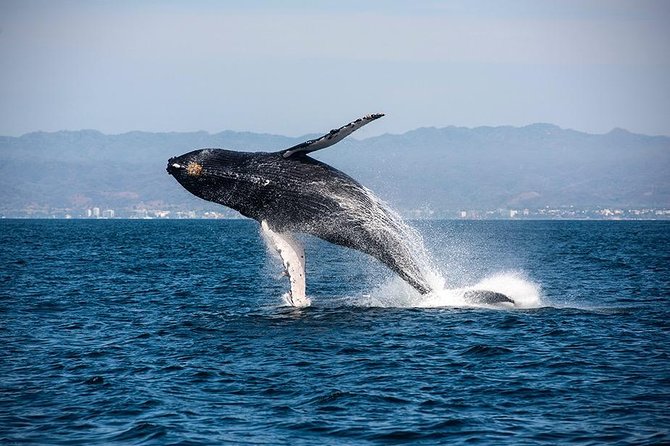
The exact route changes according to the animals. After the shore presentation and boarding, the boat heads out to search for whales and dolphins. Some outings begin with sightings within 15 or 20 minutes. Others may spend an hour searching before the action begins.
Once whales are found, the boat may remain in one area for a while. This gives you time to watch repeated surfacing patterns, see breaches, take photographs, and listen through the hydrophone. The crew may then move to another area, perhaps looking for mothers with calves or groups of dolphins.
Food and drinks may be included on the boat. Several accounts describe sandwiches and soft drinks, and one guide even prepared sandwiches for the group. Treat this as a welcome mid-trip snack rather than a full meal. Bring any special food you need, since the provided option may not suit every diet.
The trip usually returns after about three and a half to four hours. The length feels right for a wildlife outing. Shorter trips can end just as the crew locates the animals, while much longer trips may be tiring on a small boat. Here, you have enough time for a slow start and a serious viewing period without spending the entire day offshore.
Price, group size, and overall value
At $105 per person, this is not the cheapest water activity in Puerto Vallarta. The price makes more sense when you consider what is included in the experience: about four hours on the water, a small covered boat, a biologist guide, a captain focused on responsible positioning, research participation, and the chance to hear whale songs.
The value is strongest during the winter whale season. If you see several whales, a mother and calf, dolphins, and perhaps turtles or mantas, the price feels fair for a specialized half-day outing. The educational presentation also gives the trip more substance than a basic sightseeing ride.
Your value depends on what you want. If you only need a quick photograph of a whale, a less specialized trip may cost less. If you want interpretation, a small group, and a connection to conservation work, the extra money is easier to justify.
The high overall rating, 4.9 out of 5 from 667 reviews, and 97 percent recommendation rate reflect strong satisfaction. The most praised points are the guides’ warmth, the captains’ safe handling, the small boat, close sightings, and the amount of information shared.
Who should book this experience
I would recommend this trip to people who want more than a boat ride. It suits couples, families with teenagers, photographers, first-time whale watchers, and anyone curious about marine biology.
The English-language format works well if you want the guide’s explanations in English. Service animals are allowed, and the activity is near public transportation. Most people can participate, but the tour is not recommended for anyone more than seven months pregnant.
You should also be comfortable with the practical limits: no bathroom on board, changing sea conditions, a small craft, and no guarantee of a spectacular breach at the exact moment you raise your camera. Bring sun protection, water if needed, and cash for tips. A camera with a wrist strap is sensible, since the boat can move as you take photos.
Should you book the whale and dolphin tour?
Book it if you want the best mix of wildlife viewing and useful explanation in Puerto Vallarta. The biologist guides, hydrophone, research connection, and small covered boat give it real substance. The possibility of seeing mothers, calves, dolphins, turtles, mantas, and even rare orcas makes the outing exciting without pretending nature runs on a schedule.
I would be more cautious if you need guaranteed calm water, a bathroom, or a fully predictable itinerary. For most people visiting during winter whale season, though, this is a strong choice. The crew’s skill matters, the conservation purpose is meaningful, and four hours gives you time to let the sea reveal what it has planned.
FAQ
Where does the tour begin and end?
It begins at Opequimar Centro Marino, Av. Paseo de la Marina Sur 214, Marina Vallarta, Puerto Vallarta. The tour ends back at the same meeting point.
How long does the experience last?
The tour lasts approximately four hours.
How much does the tour cost?
The listed price is $105 per person.
What animals might I see?
You may see humpback whales, bottlenose dolphins, spotted dolphins, spinner dolphins, rough-toothed dolphins, marine turtles, and giant manta rays. Orcas and false orcas are possible but not guaranteed. Some outings have also seen sea lions and blue-footed boobies.
Is the tour offered in English?
Yes. The experience is offered in English.
How many people can join the boat?
The tour has a maximum of 20 participants. Some departures have carried approximately 12 to 16 people.
Can I cancel for a full refund?
Yes, if you cancel at least 24 hours before the experience’s start time. Cancellations within 24 hours are not refunded. If poor weather or an insufficient number of participants causes the operator to cancel, you can receive a full refund or choose another option.
Just added around Puerto Vallarta
- Whale Watching Guaranteed Experience in Puerto Vallarta★ 5.0 · 7 reviews
- Whale Watching Guaranteed Experience in Puerto Vallarta★ 5.0 · 156 reviews
- Whale watching tour★ 5.0 · 12 reviews
- Whale watching★ 4.0 · 6 reviews
- Whale Watching Experience – 4 Hours in Puerto Vallarta★ 5.0 · 9 reviews
- Whale Watching and Los Arcos 5 Islands Adventure★ 5.0 · 32 reviews
- Whale Watching Experience in Puerto Vallarta★ 5.0 · 8 reviews
- Whale Watching Experience★ 4.5 · 186 reviews
Puerto Vallarta Whale Watching Tours, compared.
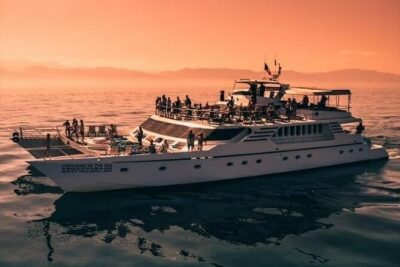
Sunsets and Whales Mega Yachts ALL INCLUSIVE: Puerto Vallarta
Read our review →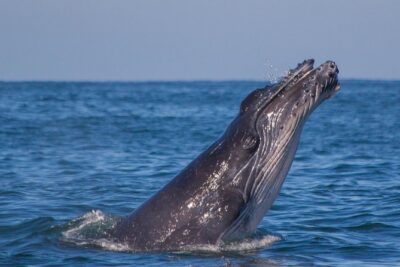
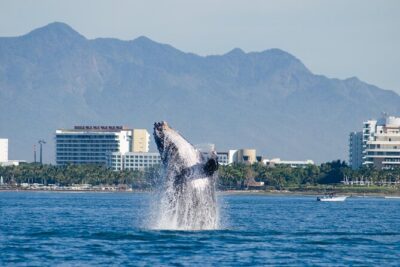
Whale Watching Cruise In Puerto Vallarta & Nuevo Vallarta
Read our review →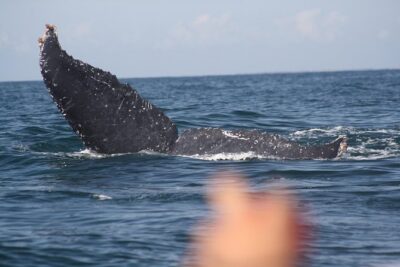
Small-Group Half-Day Whale-Watching Tour in Puerto Vallarta
Read our review →
Whale & Dolphin Watching Cruise in Puerto Vallarta All Inclusive
Read our review →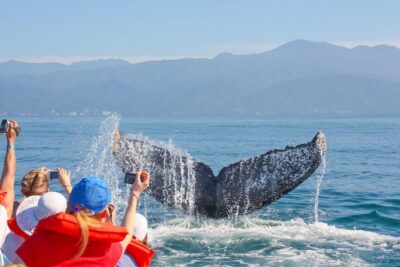
Whale Watching Guaranteed Experience in Puerto Vallarta
Read our review →Browse the lists this tour appears in