
REVIEW · HUMPBACK WHALE TOURS IN FRENCH POLYNESIA
Humpback whale watching and marine life in Moorea
Whales can turn a morning into a story.
Pacifik Attitude combines humpback whale watching with time in the water, giving you more than a boat ride around Moorea. I like the small-group feel reported by several visitors, including one outing with only eight people, and I like the guides’ clear focus on respectful wildlife encounters. Guides such as O’Neil, Doris, Mata, Chewy, and Andrew are repeatedly praised for explaining animal behavior and handling safety well.
The main catch is simple: swimming with whales is never guaranteed. Ocean conditions, whale behavior, visibility, and legal wildlife rules all shape the day. You may hear a whale singing, see a mother and calf, or watch from the boat at a distance. You may also face rough swells that make getting into the water uncomfortable.
Key points to know before booking
- Whale season runs from July 20 to November 20: This is the permitted period for humpback whale watching in French Polynesia.
- The trip lasts about three hours: It is a focused half-day outing rather than a full-day island cruise.
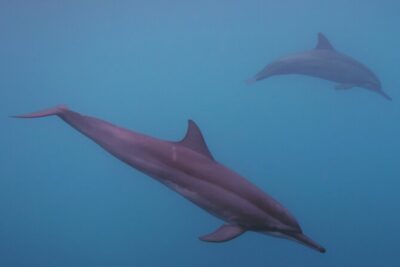
- The wildlife list can be long: Sightings have included humpback whales, spinner dolphins, melon-headed whales, turtles, sharks, stingrays, and reef fish.
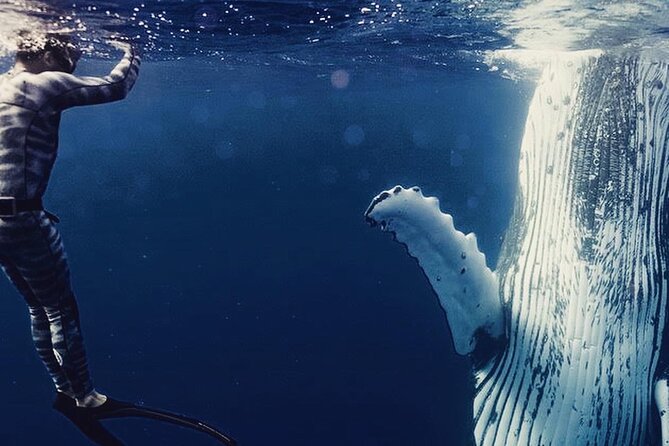
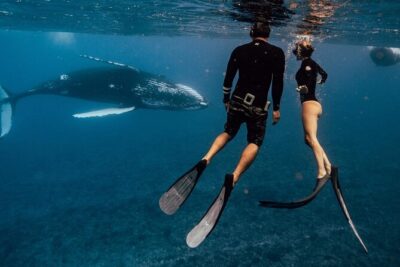
- Swimming depends on nature: Some outings include time in the water with whales, while others involve watching from the boat.
- The guides emphasize respectful contact: They explain whale behavior and try to place the boat carefully without treating the animals like a guaranteed show.
- The price is $327.95 per person: That is a serious splurge, but the value improves when you get a small group, skilled crew, and several kinds of marine life in one morning.
What this Moorea whale trip is really about
Pacifik Attitude presents the outing as a way to connect with Moorea’s ocean rather than simply collect a whale photograph. That difference matters. The crew’s stated approach is based on respect for the lagoon, its wildlife, and the balance between species.
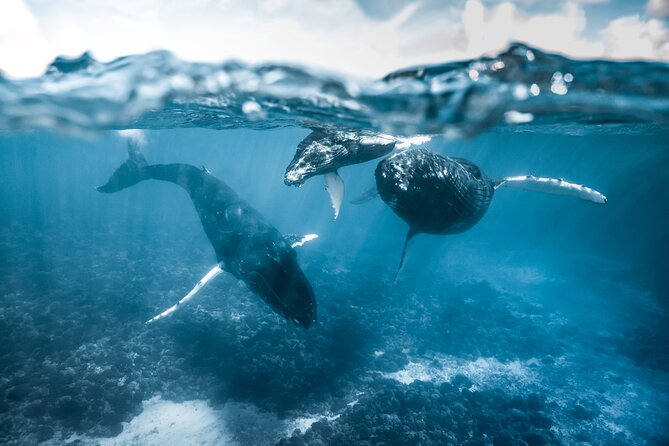
In practical terms, you spend about three hours moving between likely whale areas and other marine-life spots. Guides use their eyes and, according to one account, an underwater microphone to help locate whales. You might hear a male singing before you see anything. One person described feeling the sound through the water, even though the whale remained too deep to view clearly.
That is part of the honest appeal of this experience. The ocean is not a theater with animals on cue. A whale may surface nearby, remain below the boat, swim away, or allow a brief look before disappearing. Pacifik Attitude appears to treat that uncertainty as part of the experience rather than promising a guaranteed swim.
More Humpback Whale Tours in French Polynesia
- Swim with humpback whales
★ 5.0 · 224 reviews - Private tour observing and swimming with humpback whales in Moorea
★ 5.0 · 126 reviews - Swim in Moorea with Humpback Whales and More
★ 5.0 · 42 reviews
Hauru Public Park and the seasonal meeting points
Your meeting point depends on the time of year. From December through July, the stated meeting point is the parking area at Hauru Public Park. From August through November, you meet at Pacifik Attitude.
This seasonal arrangement is worth checking carefully when you book. The permitted humpback whale season begins July 20, so late July sits in a transition period between the listed meeting-point schedules. Your booking confirmation should settle the exact location.
The operating hours are broad, from 5:30 a.m. to 6 p.m. for the period listed through July 19, 2026, and from 5 a.m. to 6 p.m. from July 20 through November 20, 2026. Specific tour departures are not supplied here, but the 5 a.m. opening during whale season helps explain the popular early outing.
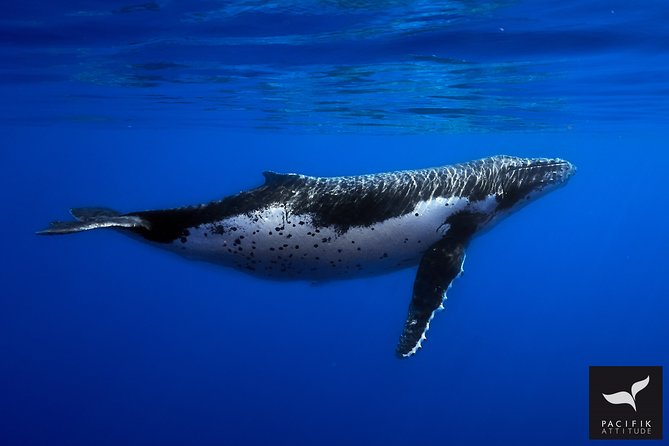
The 5 a.m. trip has a practical advantage. One group found the sea calm at that hour and spent about 25 minutes with a lone juvenile whale. Early conditions are never guaranteed, but a calm start can make a real difference when you are on a small boat and hoping to enter the water.
The three-hour route, from search to swimming
The route is not a fixed sightseeing circuit with named landmarks. The captain searches for whales and other marine life, then adjusts the outing to the animals and sea conditions.
You begin by heading out from the meeting point with the captain and guide. The crew watches the surface, listens for whale sounds, and checks likely areas. Along the way, you might encounter spinner dolphins, turtles, stingrays, reef sharks, or schools of fish.
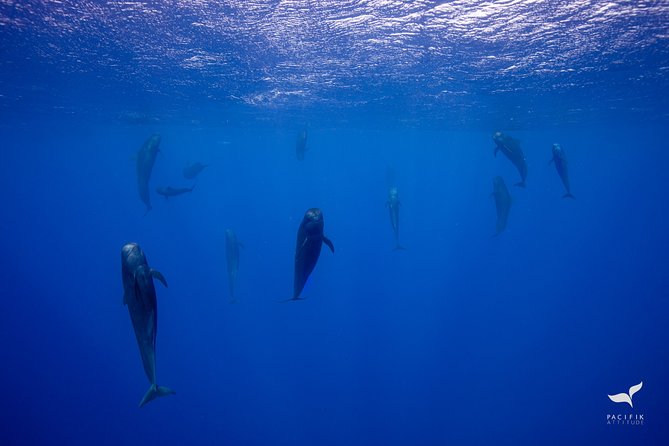
Several accounts describe a surprisingly broad mix of marine life. One outing included spinner dolphins, two humpback whales, melon-headed whales, sharks, stingrays, and many fish. Another included turtles and dolphins before reaching deeper water. These sightings are not promised, but they show why the trip can still feel worthwhile when whales remain distant.
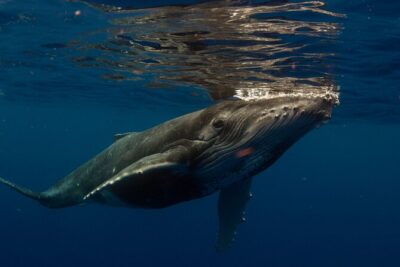
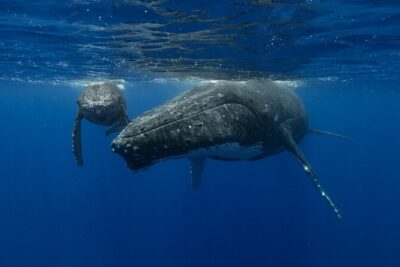
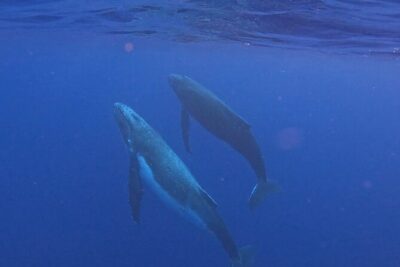
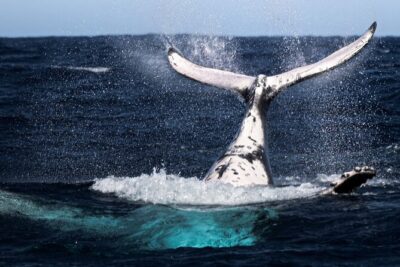
Once whales are located, the crew explains what is happening. You might see a single juvenile, a pair resting near the surface, or a mother with a calf. A particularly striking account described a mother and baby sleeping, followed later by surface activity, leaps, and tail slaps. Another group heard a singing male and then watched a mother and calf nearby.
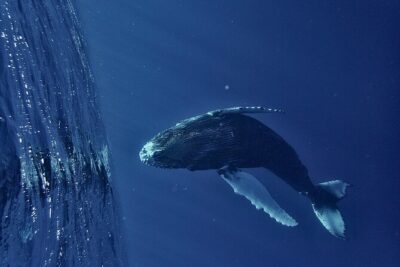
If conditions and whale behavior allow, you may enter the water. The best reports describe curious whales swimming close to the group, including one juvenile that stayed with swimmers for roughly 25 minutes. That is a rare kind of wildlife encounter, but it should be treated as a lucky outcome rather than the basic promise of the tour.
When swimming is not suitable, you watch from the boat. Rough water, distance from the animals, or a whale’s behavior can make entering the sea unsafe or inappropriate. One person chose not to swim farther from the boat because the sea was too formed, yet still saw a mother and calf. That is a useful reminder: a responsible crew may keep you out of the water even when everyone wants a closer look.
The crew makes a major difference
The strongest part of Pacifik Attitude is the human side of the outing. Names that come up positively include O’Neil, Doris, Mata, Chewy, Andrew, and Captain Ikeo. Their roles vary by departure, so you should not expect a particular person unless your confirmation says so.
O’Neil is praised as a strong snorkel leader. Doris is described as friendly and helpful with safety explanations, including support for a non-swimmer. Mata is noted for explaining whale behavior clearly and guiding a swim. Chewy is praised as both captain and guide, including during rough water.
These details matter because whale watching is not only about locating an animal. You need a captain who handles changing sea conditions, a guide who gives clear instructions, and a crew willing to wait for the right moment instead of rushing people into the water.
The guides also appear to understand that a close encounter requires restraint. The best wildlife trips leave the animal in control. You may see a whale approach, but you should not expect the boat or swimmers to chase it.
More Humpback Whale Tours in Moorea:
- Half-Day Humpback Whales Encounter in Moorea
★ 5.0 · 41 reviews - 4 Hour Private Humpback Whales Encounter in Moorea
★ 5.0 · 6 reviews - Watch and Swim with Humpback Whales in Moorea
★ 5.0 · 3 reviews - Humpback Whales in Cabo San Lucas
★ 5.0 · 1,005 reviews
How much marine life might you see?
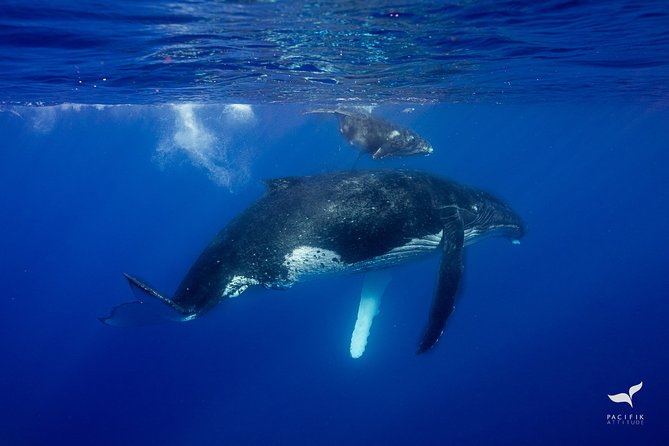
Humpback whales are the main reason to book, but the surrounding wildlife can fill in the gaps. Sightings recorded on this outing include:
- Humpback whales, including mothers, calves, juveniles, and singing males
- Spinner dolphins
- Melon-headed whales
- Turtles
- Reef sharks
- Stingrays
- Many kinds of reef fish
The mix gives the trip more value than a narrow whale search. A quiet whale day can still include dolphins and reef animals. At the same time, you should not read this list as a checklist. The operator cannot control which species appear.
The most memorable moments may not be the biggest animals. Hearing a whale below the surface, seeing a calf act playfully, or watching a ray pass beneath the boat can carry the morning. If you need guaranteed close whale contact, no responsible operator can offer that.
Rough water, swimming ability, and comfort
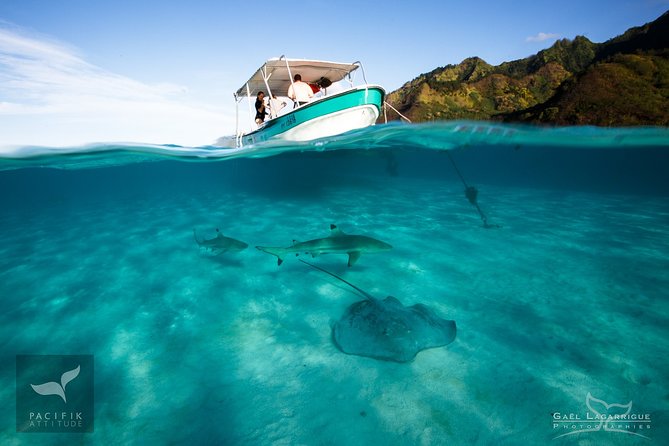
You need a moderate level of physical fitness. This is an active ocean outing, not a dry sightseeing cruise. Getting on and off a boat, handling sea movement, and possibly swimming away from the boat all require some comfort in the water.
Children are allowed from age five. The information provided does not give a separate child price, flotation policy, or detailed swimming requirements, so families should ask the operator for those details before booking.
Non-swimmers are not automatically excluded. One couple included a non-swimmer, and the crew was described as helpful and friendly. Still, the experience changes if you cannot swim. You may watch from the boat or take part only in ways the crew considers safe.
Sea conditions deserve respect. One trip involved rough water, yet the captain handled it well. Another group saw whales from a distance because the sea made swimming less appealing. If you are prone to seasickness, the possibility of swells is worth considering, even though no specific medication or onboard policy is supplied.
Food and small-group value
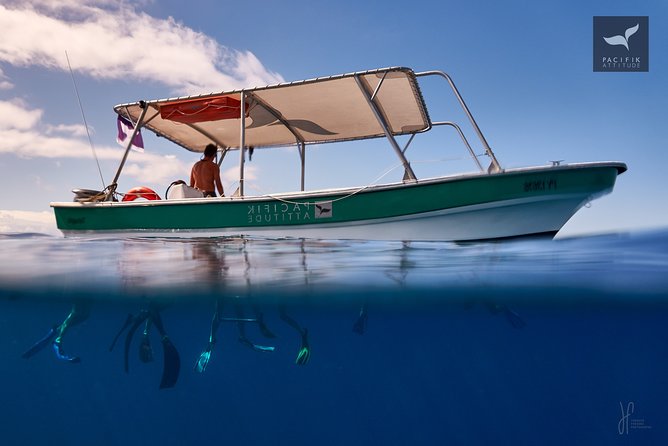
One account mentions lunch on board, including a meat or vegetarian quiche with pineapple. That sounds like a welcome touch after time on the water. The supplied details do not clearly promise lunch on every departure, so confirm whether food is included for your selected outing.
The group size can affect the value more than a small snack. One person described a boat carrying only eight people. A smaller group gives you more room to listen to the guide, move around the boat, and enter the water without feeling lost in a crowd.
That said, the group size may vary. The price of $327.95 per person is high for a three-hour activity, especially if you only see whales from far away. The cost becomes easier to justify when you have a small boat, skilled crew, good sea conditions, and several marine species in one outing.
I would compare this with the cost of other Moorea wildlife trips, but I would not judge it by whale sightings alone. You are also paying for local boat handling, wildlife knowledge, safety management, and the chance to spend time in a protected ocean setting without turning the animals into a staged attraction.
Respectful whale encounters, not a guaranteed performance
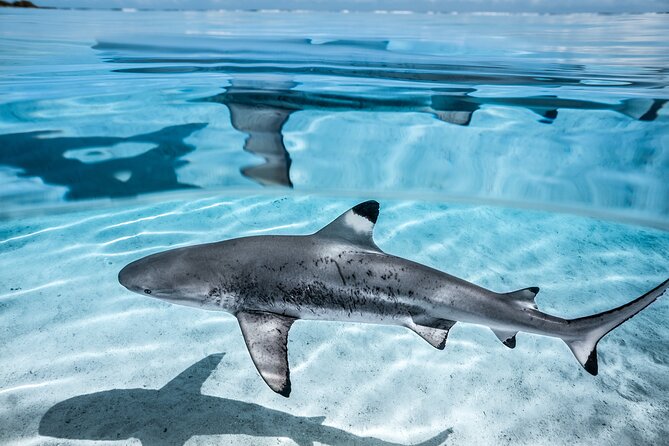
French Polynesia allows humpback whale watching from July 20 through November 20. That legal window is important because it reflects seasonal rules around these animals.
The crew’s approach is one of the reasons this outing earns strong marks. They explain whale behavior and try to keep contact respectful. In the water, that may mean waiting quietly, giving the animals space, and accepting that the encounter ends when the whales move on.
You should book with the right expectation. This is not a promise that you will swim with a whale. It is a chance to observe humpbacks in their environment, with swimming possible when conditions and behavior permit.
That distinction protects both you and the animals. A boat that refuses to force an encounter may feel disappointing for a moment, but it is doing the right thing.
Booking, confirmation, and cancellation details
Confirmation is sent within 48 hours of booking, subject to availability. Because the meeting point changes by season, read that confirmation closely instead of relying only on the location shown during the initial purchase.
The experience uses a mobile ticket. You can cancel for a full refund up to 24 hours before the start time. Changes or cancellations made within 24 hours are not accepted for a refund.
Weather can cancel the trip. If that happens, you are offered another date or a full refund. The same applies if the minimum number of participants is not reached, with the choice of another date or experience, or a refund.
The tour is commonly booked about 79 days ahead. That suggests you should reserve early if your Moorea schedule is fixed, especially for the July to November whale season. Still, your booking is subject to availability until confirmed.
Who should book Pacifik Attitude?
I would recommend this trip to you if you want a serious wildlife outing, enjoy being on the ocean, and can accept an uncertain result. It suits people who value a small boat, clear explanations, and a crew that puts animal welfare before a perfect photograph.
It is also a good fit if you want more than humpbacks. Dolphins, turtles, rays, sharks, and reef fish can make the trip worthwhile even when the whales stay below the surface.
I would think twice if you need a guaranteed swim, dislike rough water, or want a relaxed sightseeing cruise with little physical effort. The three-hour length is manageable, but the sea may be active and the morning may involve waiting, searching, and changing plans.
Should you book this Moorea whale tour?
Pacifik Attitude is worth booking when you see the $327.95 price as payment for a chance, not a guarantee. The strongest case is a small group, a capable captain, thoughtful guides, and the possibility of seeing several marine species in one outing.
Book during the permitted humpback season, confirm the meeting point, and choose an early departure if calm water matters to you. Go ready to watch from the boat if the sea turns rough or the whales keep their distance.
If you can accept that uncertainty, this may be one of Moorea’s most powerful ocean experiences. If you need certainty, save your money. The whales, quite reasonably, are in charge.
FAQ
Where does the tour meet?
From December through July, the meeting point is the parking area at Hauru Public Park. From August through November, the meeting point is Pacifik Attitude.
How long does the experience last?
The outing lasts approximately three hours.
When is humpback whale watching allowed?
Humpback whale watching is allowed in French Polynesia from July 20 through November 20.
Is swimming with the whales guaranteed?
No. Swimming depends on whale behavior, weather, sea conditions, visibility, and safety. You may watch whales from the boat instead.
How old must children be to join?
Children are allowed on board from five years old.
What fitness level is required?
A moderate level of physical fitness is recommended.
How much does the experience cost?
The listed price is $327.95 per person.
What happens if bad weather cancels the trip?
You will be offered another date or a full refund. The same choice applies if the minimum number of participants is not reached.
Just added around Moorea
- Whale watching and snorkelling in Moorea★ 5.0 · 64 reviews
- Whale watching 6 people half day★ 5.0 · 38 reviews
- Whale Watching Moorea (non-swimming)★ 4.0 · 12 reviews
- WHALE TOUR – Watching and Swimming with Whales★ 5.0 · 52 reviews
- Snorkeling Lagoon Cruise and Whale Watching in Moorea★ 5.0 · 2 reviews
- Watch and Swim with Humpback Whales in Moorea★ 5.0 · 3 reviews
- Shared Whale Expedition★ 5.0 · 34 reviews
- Sacred Experience Swimming with a Whale in Moorea★ 5.0 · 46 reviews
Humpback Whale Tours in French Polynesia, compared.
Private tour observing and swimming with humpback whales in Moorea
Read our review →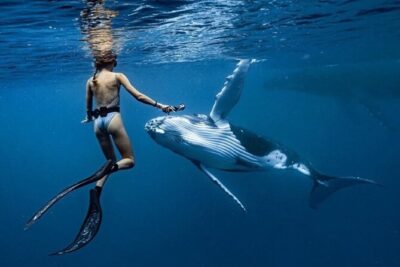
Browse the lists this tour appears in