REVIEW · ZODIAC AND RIB WHALE WATCHING IN REYKJAVIK
Reykjavik: Whale and Puffin Watching RIB Boat Tour
Fast boat, wild water, real wildlife. From Reykjavík’s Old Harbour, this two-hour RIB tour searches for puffins, whales, dolphins, and porpoises while giving you a fresh view of Harpa Concert Hall and the Sun Voyager sculpture. I especially like the small group of up to 12 people and the chance to learn from a marine biologist, rather than simply scanning the sea in silence.
I also like the proper cold-weather gear, which matters more than you may expect, and the crew’s habit of sharing photographs after the trip. The main drawback is simple: you will get bounced around, and the North Atlantic can be cold, wet, and windy even on a pleasant Reykjavík day. Wildlife is never guaranteed, either.
Key points to know before booking
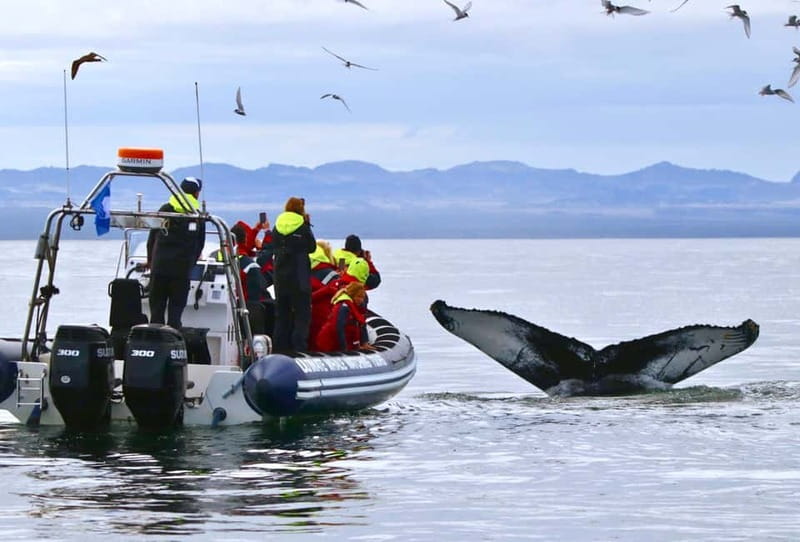
- Small RIB, maximum 12 people: The boat can cover more water and turn more easily than a large whale-watching vessel.
- Puffins are seasonal: You can see them from roughly 20 April through 15 August, with the wider tour season running from 1 April to 31 October.
- Marine biologist commentary: Guides explain whale, dolphin, puffin, and seabird behavior while helping you spot animals.
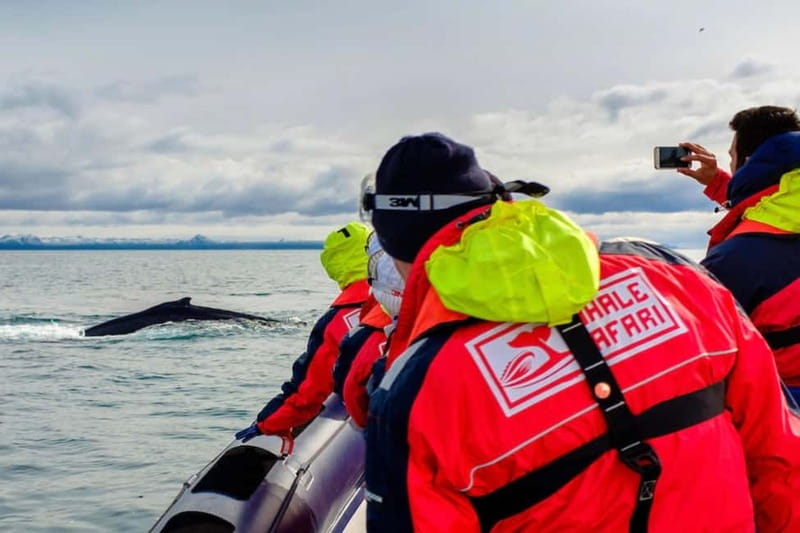
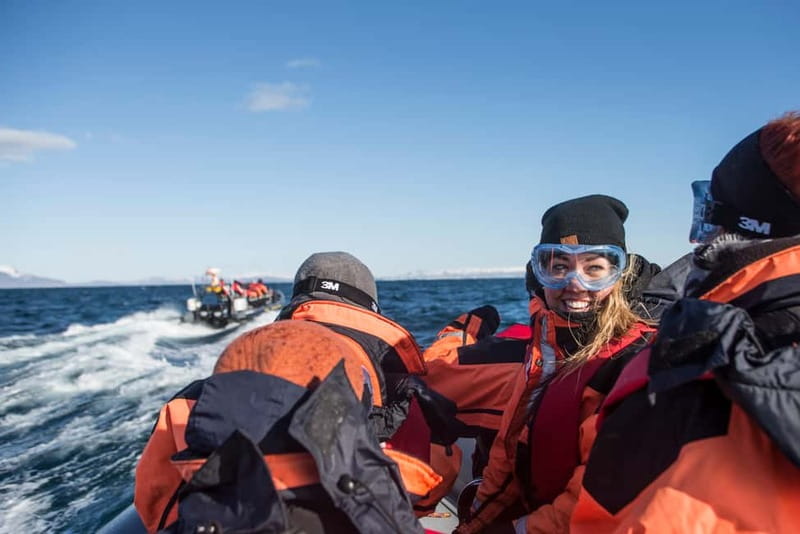
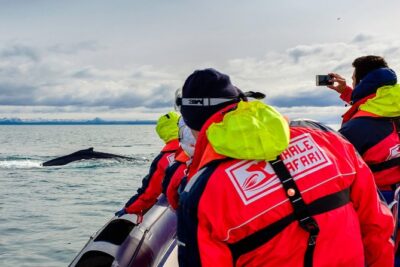
- Cold-weather equipment is included: Warm overalls, gloves, goggles, and safety gear are supplied, though you should still bring warm layers and solid shoes.
- Wildlife sightings vary: Recent trips have seen humpback and minke whales, dolphins, porpoises, and puffins, but no sighting can be promised.
- The ride is part of the attraction: The RIB is stable and comfortable for its type, but the experience remains fast, noisy, and bumpy.
Leaving Reykjavík’s Old Harbour
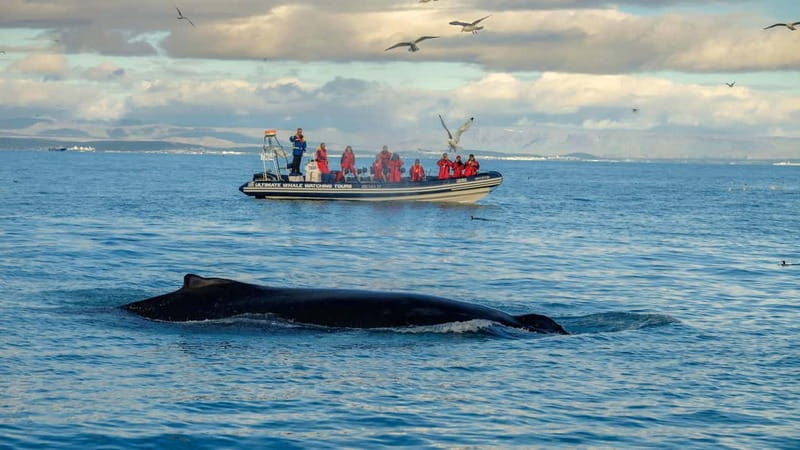
You meet at the ticket office in the Old Harbour at least 30 minutes before departure. That extra time is useful, since you need to check in, sign a waiver, and put on the supplied protective clothing before heading to the boat.
The harbour is a good starting point. You are close to central Reykjavík, and the first part of the trip gives you a water-level view of the city. On the return, the boat passes the distinctive Harpa Concert Hall and the Sun Voyager sculpture, so this is not only a wildlife trip. It also gives you a short sightseeing ride along the city shore.
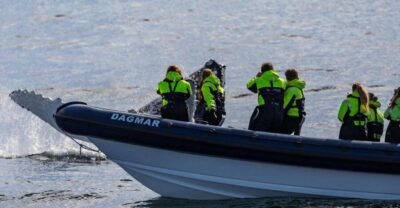
The group size matters here. With no more than 12 participants, you are not packed into a large crowd, and you have a better chance of hearing the guide and getting a clear view over the side. The smaller boat also lets the captain search a wider area instead of following the same route as a larger vessel.
More Whale Watching and Wildlife Cruises in Iceland
- Reykjavik: Whales and Puffins Express Cruise Combo Tour
★ 4.4 · 552 reviews - Iceland Super Saver: Puffin Cruise plus Whale-Watching Tour from Reykjavik
★ 4.0 · 110 reviews - Two-In-One: Whale & Puffin Watching Tours from Reykjavik
★ 4.5 · 59 reviews
Why the RIB boat changes the experience
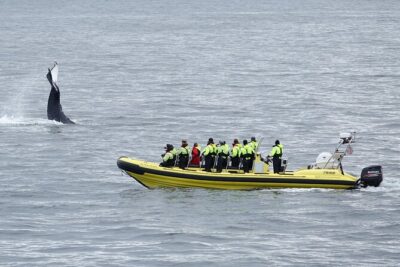
A RIB, or rigid inflatable boat, sits low on the water and can move quickly. That combination gives you a more active outing than a conventional sightseeing cruise. The captain can cover ground in the two-hour time limit and adjust course when the guide spots birds or signs of marine life.
The boat is designed to be stable, but stable does not mean smooth. You should expect a lively ride, especially near the front. One useful detail from the supplied equipment is the seating, which includes shock-absorbing support. That makes the boat more comfortable than many small speedboats, but you still need to follow the crew’s instructions and hold your position securely.
The speed is a major part of the appeal. Several people describe the ride as thrilling, and some compare it to an amusement-park attraction. If you enjoy wind, spray, and a fast run across open water, this feels like two activities in one. If you want a quiet cruise with a steady platform for photography, choose a larger boat instead.
The first search: puffins around the islands
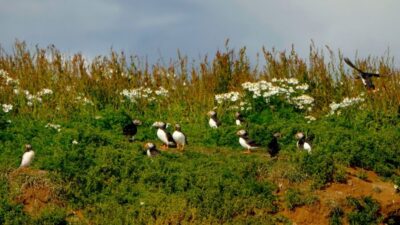
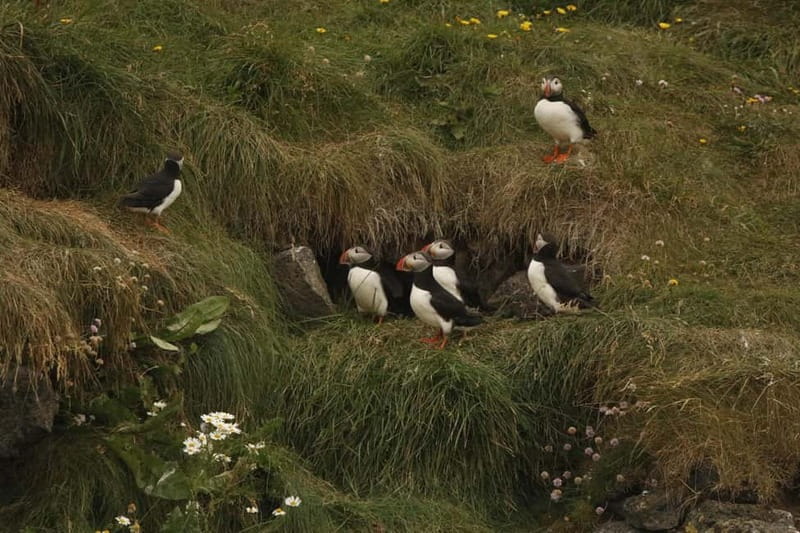
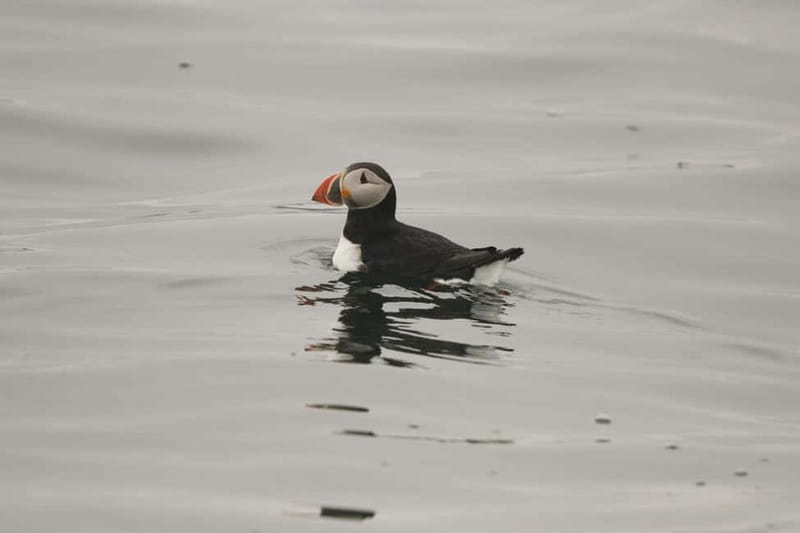
The trip usually heads toward nearby islands first, where puffins gather during their nesting season. The official puffin period is 20 April through 15 August, although the wider operating season continues until 31 October. A few late-season trips have still found puffins around the end of August, but you should not plan on them after the stated season.
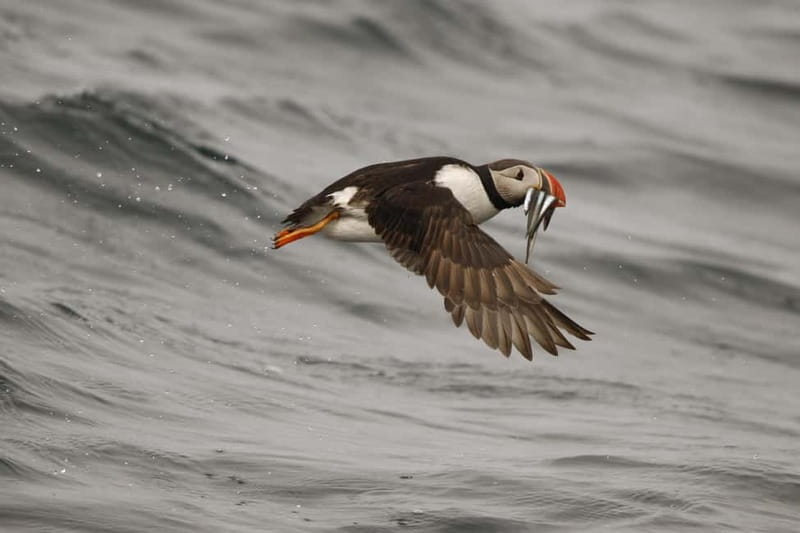
Seeing puffins in the wild is different from seeing them in a zoo or at a managed viewing site. You watch them around their island habitat, along with other seabirds, while the guide explains what you are looking at. The small boat can approach the area closely without the height and distance of a large vessel.
There is a catch. Puffins may be far from the boat, and the rough ride can make photographs difficult. You might see many birds but struggle to capture a sharp image. Bring a camera if you like, but keep your expectations sensible. The crew may also take photographs during the outing and share the usable images later, which takes some pressure off you.
Searching for whales, dolphins, and porpoises
After the island visit, the captain heads farther out to look for larger marine animals. Depending on conditions and animal movements, you might see minke whales, humpback whales, white-beaked dolphins, harbour porpoises, or several kinds of seabirds.
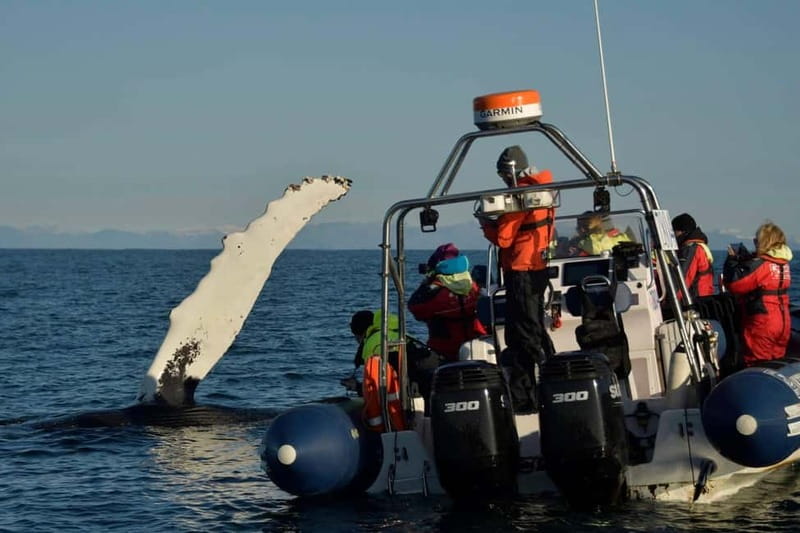
Humpback whales are the sightings people most hope for, and the supplied trip reports include everything from one whale to several pods. Some outings have seen multiple humpbacks and minke whales, while one unusually fortunate April trip recorded more than 60 whales. Other trips have found only one whale, but also dolphins and puffins.
That range is worth understanding before you pay $200. The cost buys a well-run search by a trained crew and a fast, maneuverable boat. It does not buy a guaranteed animal encounter. The ocean decides what appears, how long it stays near the surface, and how close the boat can safely go.
The most exciting reports describe whales near the RIB, including humpbacks surfacing beside the boat and a humpback with a calf swimming nearby. One trip saw bubble-feeding close to the boat. Those moments can be extraordinary, but they are lucky conditions, not the standard promise of the tour.
The crew also appears to put respect for the animals ahead of chasing the closest possible view. On one outing, the guide and captain stayed farther back while other boats approached more closely. That can mean a less dramatic photograph, but it is the better approach for a responsible wildlife trip.
More Zodiac and RIB Whale Watching in Iceland
- Reykjavik: Whale Watching by RIB Speedboat
★ 4.7 · 621 reviews - Reykjavik: Whale Watching Tour by RIB Boat
★ 4.7 · 393 reviews - RIB Whale Watching Small-Group Boat Tour from Reykjavik
★ 4.5 · 241 reviews - Speedboat Whale Watching Small-Group Tour in Reykjavik
★ 4.5 · 223 reviews
The guide’s role makes the difference
Your English-speaking guide is specially trained in whale watching, and the strongest part of the experience is the live explanation. A marine biologist may point out the difference between a minke and a humpback, explain why dolphins travel beside the boat, or help you notice a whale’s blow before you see its body.
Several guide names appear in the trip feedback, including Maya, Alex, Emily, Max, Matt, and Sam. Their personalities vary, but the common thread is clear: the best guides combine science with humor and active spotting. Max, for example, was praised for his passion for marine animals and bird behavior, while Emily helped the group find dolphins, a minke whale, and a humpback.
This matters because whales often surface for only a few seconds. A good guide tells you where to look and what to expect. You are less likely to spend the whole ride staring at empty water.
The guide may also take photographs with a good camera and send them afterward. Sam was praised for sharing high-quality pictures, and other trips received images within hours or by the following day. That is a useful bonus, especially when the boat’s motion makes it hard for you to use your own phone.
Cold-weather gear and what you should wear
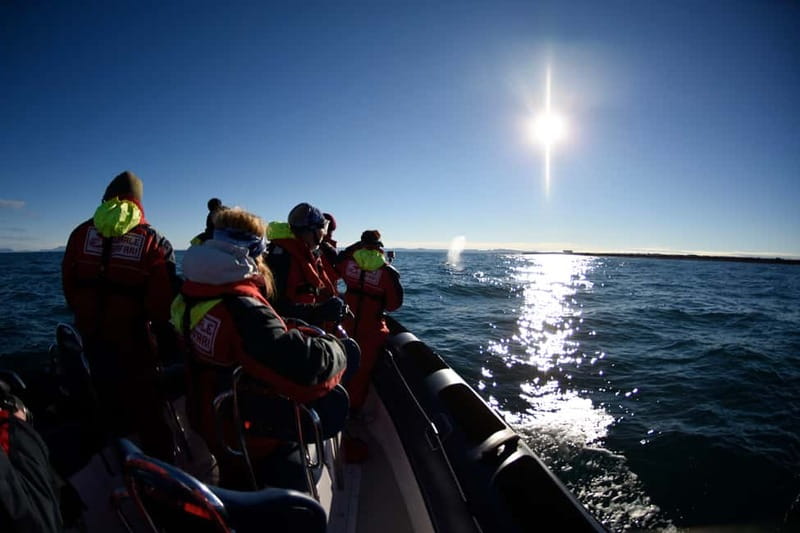
The operator supplies warm overalls, gloves, and goggles, along with the required safety equipment. The overalls are water-resistant and designed to block wind, and they are not a minor extra. People who dressed too lightly found the cold more intense once the boat reached open water.
I would still wear:
- Warm wool or thermal layers
- Hiking shoes or other secure, flat footwear
- A warm hat
- Personal gloves if you prefer your own
- Sunglasses if conditions are bright
The supplied goggles protect your eyes from wind and spray. Sunglasses can work too, but the boat moves fast and proper eye protection is useful. High heels are not allowed, and they would be a poor choice on a bouncing deck anyway.
You may get wet despite the protective suit. Rain, hail, sea spray, and wind have all been part of past outings. The best mindset is to treat the weather as part of the adventure, not as a problem the clothing can completely remove.
What the two-hour timing means
Two hours is enough for a focused search, but it is not a full-day expedition. The boat needs time to leave the harbour, visit the puffin islands, search for whales, and return along the Reykjavík shore. If the animals are spread out or hard to locate, the time can pass quickly.
One important point is that the smaller RIB can cover a broad area during those two hours. Its speed is an advantage when the crew needs to move between possible sighting areas. The tradeoff is that you have less time to wait quietly in one place.
Some people have suggested choosing a longer whale trip when available, since whales may spend long periods below the surface. That is sensible advice if whales are your only goal. This two-hour outing works best if you want a compact mix of speed, puffin islands, city views, and marine wildlife.
Is $200 a fair price?
At $200 per person, this is not a cheap add-on. You are paying for a small group, a certified captain, a trained wildlife guide, safety equipment, cold-weather gear, and a boat that can move quickly across a wider search area.
The value improves if you care about the quality of the experience, not just the number of animals seen. The RIB lets you sit close to the water, the group is limited to 12, and the crew may provide photographs afterward. A large boat may cost less or offer more indoor space, but it cannot give you the same fast, low-to-the-water ride.
I would consider the price worthwhile for an active wildlife outing, especially if you are already planning to spend time in Reykjavík and want something different from museums and city walks. I would be more cautious if your budget is tight or if you need a guaranteed whale sighting. No responsible operator can provide that.
Who will enjoy this most?
This trip suits adults, older children, and active visitors who like a bit of motion. The minimum age is 10, and the minimum height is 145 centimeters. You also need to be within the 140-kilogram weight limit.
It is a strong choice for:
- People who want an exciting boat ride as well as wildlife
- Visitors hoping to see puffins in their island habitat
- Anyone who values live guidance from a marine biologist
- Photographers who are happy to receive crew images afterward
- Small groups who prefer a more personal outing
It is not suitable for pregnant women, people with mobility impairments, children under 10, people under 145 centimeters, people over 75, or anyone over 140 kilograms. The bouncing motion and open-water conditions are the key concerns.
If you are prone to motion sickness, think carefully. The supplied information does not promise a smooth ride, and the front seats are especially lively. The rear may feel calmer, but you should follow the crew’s seating directions rather than trying to choose a particular place.
Practical booking advice for Reykjavík
The tour operates from 1 April through 31 October, while puffin sightings are seasonal. For puffins, aim for late April through mid-August. For whales, the supplied outings show sightings across spring, summer, autumn, and even winter dates, but conditions and animal activity change constantly.
Weather can force schedule changes. The operator has moved trips when conditions were poor and communicated those changes well. Keep some flexibility in your Reykjavík plans instead of booking this directly before a flight or an important timed activity.
You can cancel up to 24 hours before departure for a full refund, and the reserve-now-pay-later option lets you hold a place without paying immediately. Those policies help when Iceland’s weather may rearrange your day.
Should you book the RIB whale tour?
Book it if you want wildlife plus a fast, physical boat ride, and if you can accept cold, spray, bouncing seats, and uncertain sightings. The small group, strong guide commentary, warm gear, and access to crew photographs give this expensive outing real value.
Skip it if you want a calm cruise, need firm accessibility, or would be disappointed by a day with only one whale or no puffins. For the right person, though, a humpback surfacing near the boat, dolphins racing alongside, or puffins circling their island can make this one of Reykjavík’s most memorable two hours.
FAQ
How long is the whale and puffin tour?
The tour lasts two hours.
Where does the tour leave from?
You meet at the ticket office in Reykjavík’s Old Harbour at least 30 minutes before departure.
When is puffin season?
Puffin season is listed as 20 April through 15 August, with some sightings reported near the end of August.
What animals might I see?
You might see puffins, humpback whales, minke whales, white-beaked dolphins, harbour porpoises, and other seabirds.
Are wildlife sightings guaranteed?
No. The trip searches for wildlife, but sightings depend on the animals and sea conditions.
What clothing is provided?
The tour provides warm overalls, gloves, goggles, and all necessary safety equipment.
What should I bring?
Bring hiking shoes and weather-appropriate clothing. You may also want extra warm layers, a hat, personal gloves, and sunglasses.
Is there a toilet or food on the boat?
No. Toilets and food are not provided on board.
Who cannot take this tour?
The tour is not suitable for children under 10, people under 145 centimeters, people over 140 kilograms, pregnant women, people with mobility impairments, or people over 75 years old.
More Whale Watching and Wildlife Cruises in Reykjavik
- Reykjavik: Whale Watching and Puffin Excursion
★ 4.8 · 35 reviews - Reykjavik: Premium Whale and Puffin Watching Evening Tour
★ 4.9 · 28 reviews - Juneau Wildlife Whale Watching
★ 5.0 · 7,379 reviews - Juneau Wildlife Whale Watching & Mendenhall Glacier
★ 5.0 · 6,236 reviews
More Zodiac and RIB Whale Watching in Reykjavik
- From Reykjavik: Whale Watching Tour by Speedboat
★ 4.7 · 119 reviews - 2-Hour RIB Boat Whale Watching Tour from Reykjavik
★ 4.5 · 96 reviews - Whale Watching in Reykjavik by Speedboat
★ 4.8 · 77 reviews - Whale Watching by RIB Speedboat from Downtown Reykjavik
★ 4.5 · 26 reviews
Just added around Reykjavik
- Reykjavik: Whale Watching & Lava Show★ 5.0 · 4 reviews
- Reykjavik: Whale & Marine Adventure Tour★ 4.3 · 71 reviews
- Whales Of Iceland Admission Ticket★ 4.0 · 239 reviews
- Whale Watching and Northern Lights Half-Day Combo Tour★ 4.5 · 43 reviews
- Whale Watching by RIB Speedboat from Downtown Reykjavik★ 4.5 · 26 reviews
- Whale Wonders Morning Expedition from Reykjavík★ 4.0 · 10 reviews
- Whale Watching and Marine Life Tour in Reykjavik★ 4.5 · 55 reviews
- Whale Watching and Golden Circle Tour from Reykjavik★ 4.0 · 28 reviews
Zodiac and RIB Whale Watching in Reykjavik, compared.
RIB Whale Watching Small-Group Boat Tour from Reykjavik
Read our review →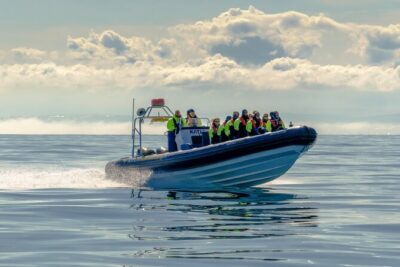
Speedboat Whale Watching Small-Group Tour in Reykjavik
Read our review →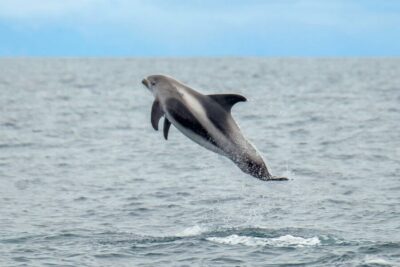
From Reykjavik: Whale Watching Tour by Speedboat
Read our review →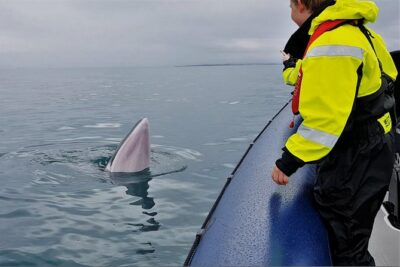
2-Hour RIB Boat Whale Watching Tour from Reykjavik
Read our review →