
REVIEW · WHALE WATCHING CRUISES IN AUSTRALIA
Port Stephens: 2.5-Hour Whale Watching & Outer Island Cruise
Whales can turn a calm sea into a theater. I like the two open viewing decks, which give you a fair chance to spot wildlife without fighting for one narrow rail, and I like the route past Tomaree and Yacaaba headlands toward the Outer Islands. The main catch is the ocean itself: even this large catamaran can move sharply, and motion sickness may spoil the trip for some people.
I also like the mix of wildlife. The target is the humpback whale, but dolphins, seals, sea birds, pilot whales, minke whales, and Bryde’s whales may also appear. Just keep your expectations sensible. Whale watching is a search, not a stage show, and a calm, patient outing can produce only a few sightings.
Key points to know before booking
- A 2.5-hour search for humpbacks: The cruise heads beyond Port Stephens toward the waters used by migrating whales.
- Two levels of outdoor viewing: Full walk-around decks let you change sides and follow activity across the water.
- A strong wildlife mix: Dolphins, seals, offshore birds, and several whale species may appear along the route.
- Large catamaran comfort: The Hinchinbrook Explorer or MV Osprey offers indoor air-conditioned areas, tea, coffee, and room to move.
- Motion sickness needs planning: Eat lightly, bring suitable medication, and expect movement once the boat reaches open water.
- Good value at $53: The fare covers the 2.5-hour whale watching cruise, but food, drinks, and transfers cost extra.
Leaving Nelson Bay for the open water
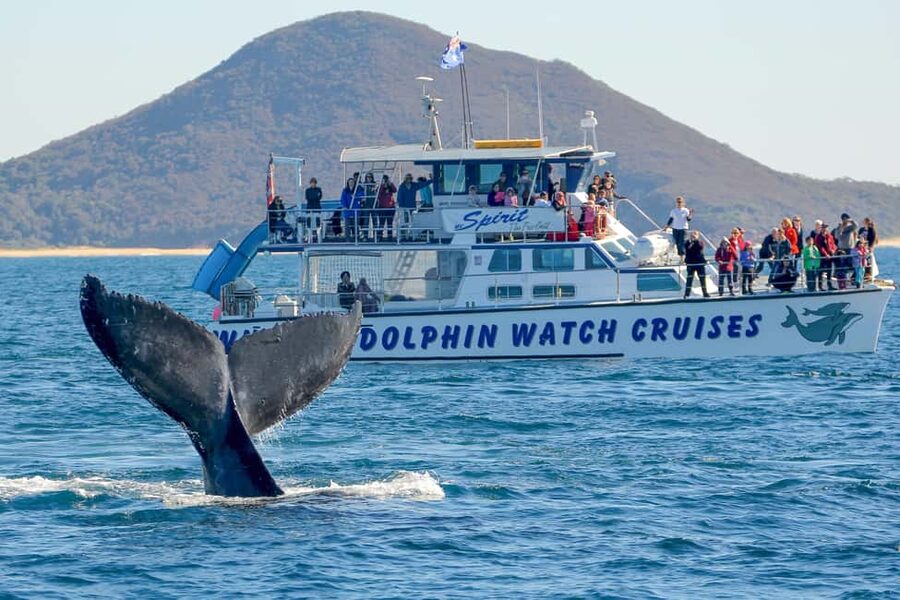
Your meeting point is Dock C at d’Albora Marina, 6 Teramby Road, Nelson Bay. Boarding begins 15 minutes before departure, so arrive with enough time to find the dock and settle in before the crew closes access to the boat.
The cruise usually runs in the morning or afternoon. That gives you useful flexibility if you are building a full day around Port Stephens, though the time of day may affect light, wind, and your own energy. I would choose the slot that fits your schedule best rather than assuming one departure guarantees better whale activity.
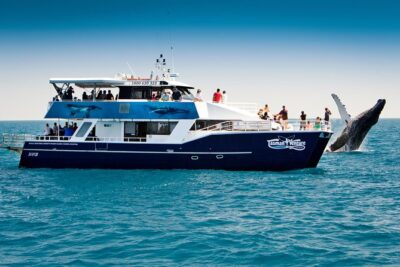
Moonshadow TQC Cruises operates the trip using the Hinchinbrook Explorer or MV Osprey catamaran. The vessel is about 30 metres long, with indoor air-conditioned areas and full walk-around decks. That matters because whale watching requires patience. You may spend long stretches scanning empty water, so having room to move, shelter from the weather, and a place to sit makes the waiting easier.
The boat is described as suitable for varied weather, but that does not mean the sea will feel smooth. Once you move away from the shelter of Port Stephens, the boat can roll and pitch. The large size helps with comfort and stability, yet it cannot remove ocean motion.
More Whale Watching Cruises in Australia
- Sydney: Whale Watching Adventure Cruise
★ 4.2 · 1,790 reviews - Brisbane Whale Watching Cruise from Redcliffe or Sunshine Coast
★ 5.0 · 997 reviews - Freedom 3/4 Day Hervey Bay Premium Whale Watching Cruise
★ 5.0 · 919 reviews
Tomaree and Yacaaba headlands set the scene
The first part of the cruise gives you a fine view of Port Stephens and its headlands. Tomaree and Yacaaba mark the entrance to the bay, and passing between these coastal points helps you shift from sheltered water toward the open sea.
This is more than scenery before the main event. The headlands make the geography of whale migration easier to understand. Humpback whales travel along the coast during their seasonal movement, and Port Stephens offers access to waters where they pass close by.
Keep your camera ready, but do not spend the whole trip looking through a screen. A whale may surface for only a few seconds, and you will spot more if you scan the water in sections. Watch for a blow, a dark back, a fin, or a sudden patch of white water.
The boat provides commentary in English, with information about the animals and the area. That commentary adds useful context during quiet periods. It also helps you understand what you are seeing when a whale surfaces at a distance rather than launching into a full breach.
Searching for the 40-tonne humpback
The main goal is the humpback whale, the most surface-active whale named for this cruise. That activity can include spyhops, pectoral fin slaps, body rolls, tail slaps, and the dramatic breach.
A full breach is never guaranteed, but the possibility gives the outing its spark. A humpback can propel much of its body above the water and crash back down with startling force. Even a more modest sighting, such as a mother and calf traveling together, can make the time on the water worthwhile.
The cruise operates in an area used by more than 30,000 whales each season. That is an impressive figure, but it should not be read as a promise that you will see dozens during your particular departure. Whales move freely, weather affects visibility, and the crew must search a broad area.
The strongest advice here is simple: bring patience. One passenger described seeing many humpbacks but needing to wait, while another found dolphins but no whales during rough, rainy conditions. Those two outcomes are both possible on a wildlife cruise.
The recent sightings described for this trip include young calves, a mother with a calf and escort, close passes, breaches, tail slaps, and repeated whale activity. That makes this a serious whale watching outing rather than a short scenic harbor ride. Still, nature keeps the final say.
The Outer Islands add seals, birds, and dolphins
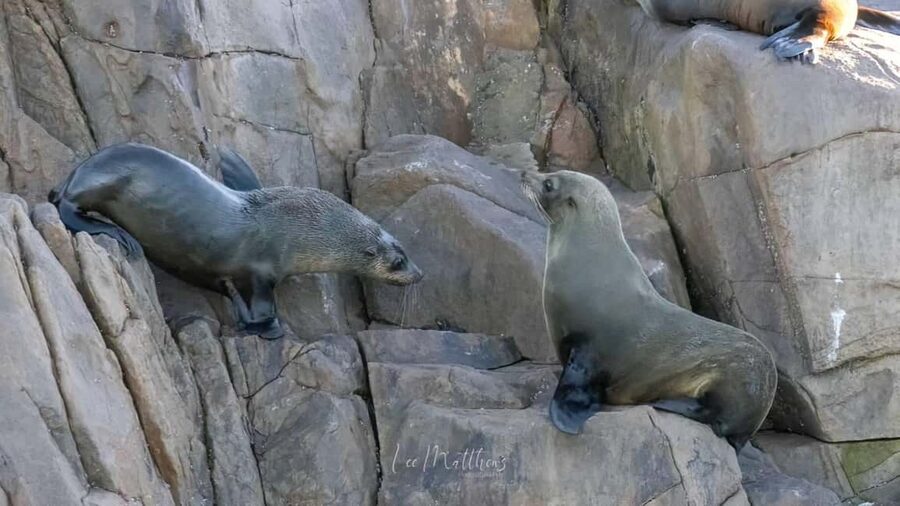
The route continues toward the Outer Islands, where the wildlife list widens. Seals may rest on rocks around the small islands, giving you a different kind of sighting from a moving whale. You may also see offshore sea birds riding the wind or resting on the water.
Dolphins are another strong possibility. The cruise can encounter large oceanic groups, with pods of up to 100 animals mentioned in the tour information. Dolphins may be more active and easier to follow than whales, especially when they travel near the boat or move in a tight group.
That variety helps protect the value of the trip. If the whales stay underwater, you still have a chance to see dolphins, seals, birds, and the coastal setting. One account described dolphins appearing when the whales did not, turning a disappointing whale search into an enjoyable wildlife outing.
You should also remember that the return journey may bring more sightings. Wildlife does not follow the planned order of the itinerary. Keep watching after the main search, especially around the islands and the entrance back toward the marina.
Same water, a different way to meet them:
- Whale Watching Tour with Spirit of Gold Coast
★ 4.5 · 884 reviews - Sydney Whale-Watching Cruise Including Lunch or Breakfast
★ 4.5 · 878 reviews - Sydney: 2-hour Express Whale Watching Cruise
★ 4.2 · 756 reviews - Spirit of Gold Coast 2.5-Hour Whale Watching Tour
★ 4.2 · 703 reviews
What the boat is like for a 2.5-hour trip
The catamaran is designed for viewing rather than luxury. You get full walk-around decks, which let you move from one side to the other when the crew spots activity. That is a real advantage over a boat with one small outdoor platform.
There are two outside levels for whale watching. The higher position can give you a broader view, while the lower deck may feel closer to the water. You can change your position as wind, sun, spray, and crowding change.
Indoor air-conditioned areas provide a break when the weather turns unpleasant. Several outings have had clear, calm conditions, while another faced rain and rough water at the beginning. The boat’s indoor space gives you somewhere to recover, though anyone prone to seasickness may still struggle.
Tea and coffee are included. Other food and drinks are not, and bringing your own food or drinks is not permitted. Plan to eat before boarding, but keep that meal light. A heavy breakfast or lunch is a poor partner for an active ocean crossing.
Motion sickness is the main practical concern
I would treat motion sickness preparation as essential, not optional, if you know you are sensitive. The operator recommends speaking with a pharmacist about a preventative remedy and taking it before boarding. You should also wear weather-appropriate clothing and bring sunglasses and sunscreen.
The advice to eat lightly is especially useful. You may feel fine in the marina and then notice the movement once the catamaran reaches open water. Sit where the crew advises, look toward the horizon when possible, and move inside if you need a break from the wind and spray.
You cannot blame the crew for unpredictable sea conditions or whale behavior. One outing had very rough weather and several sick passengers, while the boat itself was described as safe, well organized, and comfortable. These facts can exist together: a well-run vessel does not make an unsettled ocean smooth.
If you have a serious mobility concern, note that the cruise is not suitable for wheelchair users. Baby prams are not allowed on board. Collapsible strollers may be permitted, but they must remain in the main cabin and the crew will direct you to the storage area.
How much value do you get for $53?
At $53 per person, this is a reasonable price for a 2.5-hour wildlife cruise with an English-speaking guide, a large catamaran, outdoor viewing on two levels, indoor seating, and tea and coffee.
The value improves if you want more than a quick harbor circuit. You are paying for time in the whale migration area, a route beyond the headlands, the Outer Islands, and the chance to see several kinds of marine life. The size of the boat also gives you more options for watching than a small vessel with limited deck space.
The value is less certain if your only goal is a guaranteed close whale encounter. No ethical wildlife cruise can promise that, and some departures may produce dolphins or seals instead. If seeing a whale is the one condition for a successful day, you need to accept the risk before paying.
Food, drinks beyond tea and coffee, and transfers are not included. You must make your own way to Nelson Bay, so add local transport or parking costs to your budget. The free cancellation policy allows a full refund when you cancel at least 24 hours before departure, which gives you some flexibility when watching the forecast.
Who will enjoy this cruise most?
I would recommend this outing to families with older children, couples, photographers, and anyone who enjoys watching wild animals without needing a packed schedule. The two outdoor levels give children room to look for activity, while the indoor cabin offers a break when they tire.
It also suits people who want a balanced Port Stephens activity. You get coastal views, open-water cruising, birds, dolphins, seals, and whales in one trip. The commentary helps keep the cruise useful even during quiet stretches.
I would think twice if you dislike boat movement, have severe motion sickness, need wheelchair access, or want a tightly scripted tour with guaranteed sightings. A whale watching cruise asks you to trade certainty for the chance of something extraordinary.
Simple ways to make the outing better
Arrive before boarding begins so you can get settled without a rush. Wear layers and bring sunscreen even if the sky looks mild. The open decks can feel much cooler than the marina, and the weather can change during 2.5 hours at sea.
Bring a camera, but keep your eyes up. A whale may appear on the opposite side of the boat, so use the walk-around decks and listen to crew directions. If you are photographing, a fast reaction matters more than a perfect setup.
Take motion sickness medication only in line with advice from a pharmacist or medical professional. Eat lightly before departure, and avoid treating the cruise like a restaurant visit since outside food and drinks are not allowed.
Finally, allow for patience. Some of the strongest outings included breaches, tail slaps, calves, dolphins, and seals, but none of those moments can be ordered on demand. The better attitude is to enjoy the search and let the sightings build the day.
Should you book the Port Stephens whale cruise?
Book it if you want a fairly priced, well-equipped trip with a genuine chance to see humpbacks and a good range of other wildlife. The large catamaran, two outside viewing levels, indoor areas, tea and coffee, and informative commentary make the 2.5 hours easier to enjoy.
I would book with realistic expectations and a motion sickness plan. The best reason to choose this cruise is not a guaranteed breach. It is the chance to spend a substantial stretch of time around Tomaree, Yacaaba, and the Outer Islands, watching Port Stephens wildlife in its own setting.
FAQ
How long is the Port Stephens whale watching cruise?
The cruise lasts approximately 2.5 hours.
Where does the cruise depart from?
It departs from Dock C at d’Albora Marina, 6 Teramby Road, Nelson Bay, New South Wales.
When should I arrive for boarding?
Boarding begins 15 minutes before departure.
What animals might I see?
You may see humpback whales, pilot whales, minke whales, Bryde’s whales, dolphins, seals, and offshore sea birds.
Are whale sightings guaranteed?
No. The cruise searches for whales, but sightings depend on whale behavior, weather, and sea conditions.
What kind of boat is used?
The cruise uses either the Hinchinbrook Explorer or the MV Osprey catamaran, depending on the departure.
Is there indoor seating?
Yes. The vessel has large air-conditioned indoor areas as well as two levels of outdoor viewing.
Are food and drinks included?
Tea and coffee are included. Other food and drinks are not included, and outside food and drinks are not permitted.
Is the cruise suitable for wheelchair users?
No. The activity is not suitable for wheelchair users.
What should I bring?
Bring sunglasses, a camera, sunscreen, weather-appropriate clothing, and motion sickness prevention if needed.
Just added around Australia
- Wilsons Promontory: Whale Spotting Cruise with Lunch★ 4.9 · 20 reviews
- Noosa: Epic Whale Watching Ocean Kayak Tour & Beach 4X4★ 4.8 · 7 reviews
- Whale Watching Safari Byron Bay★ 4.9 · 39 reviews
- Western Australia: Swim with Humpback Whales★ 5.0 · 20 reviews
- Tweed Heads: Whale Watching Boat Tour★ 4.7 · 30 reviews
- Bremer Bay Orca Experience★ 5.0 · 79 reviews
- Wilsons Prom Whale Cruise★ 5.0 · 104 reviews
- Whale Watching and Wildlife Cruise Townsville and Magnetic Island★ 5.0 · 11 reviews
Whale Watching Cruises in Australia, compared.
Brisbane Whale Watching Cruise from Redcliffe or Sunshine Coast
Read our review →Freedom 3/4 Day Hervey Bay Premium Whale Watching Cruise
Read our review →
Sydney Whale-Watching Cruise Including Lunch or Breakfast
Read our review →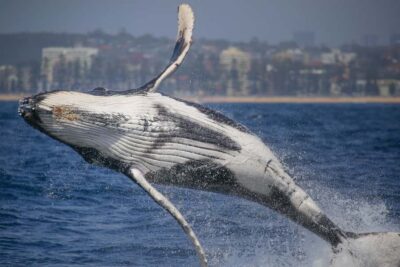
From Fremantle: 2-Hour Luxury Whale-Watching Cruise
Read our review →Browse the lists this tour appears in