
REVIEW · PORTUGAL WHALE WATCHING TOURS
Azores Whale Watching Tour – Ponta Delgada
The Atlantic is the star here. From Ponta Delgada, this 2 to 3 hour trip takes you into the open water with marine biologists searching for dolphins and whales in their natural setting. I like the choice of a speedy rigid inflatable boat or roomy catamaran, and I like that the crew puts animal welfare and safety at the center of the outing. The main catch is simple: wildlife follows its own timetable, and rough seas can make the ride uncomfortable.
I also like the full-refund promise if you see neither whales nor dolphins, though this is not a promise of whales alone. You may see several dolphin species, a sperm whale, or even migrating baleen whales, but you could also spend much of the trip reaching the right area and see dolphins without a whale. Bring warm layers, and take sea sickness seriously.
Key points at a glance
- More than 20 cetacean species pass through Azorean waters, including spotted dolphins, bottlenose dolphins, sperm whales, and migratory baleen whales.
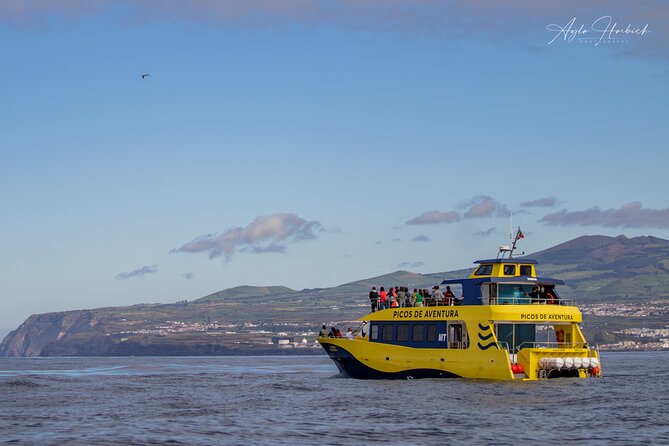
- Choose your boat carefully: the rigid inflatable speedboat gives a fast, close-to-the-water ride, while the catamaran offers more room, a covered cabin, an upper deck, and toilets.
- Marine biologists lead the trip, explaining the animals, local conservation work, and safe ways to watch wildlife.
- Morning and afternoon departures make it easy to fit the tour around sightseeing in Ponta Delgada.
- The route changes with recent sightings, using observation points along the southern coast rather than following one fixed path.
- Weather can cancel or change the outing, and children may not be allowed on small boats if sea conditions are unsafe.
Leaving Marina Pêro de Teive in Ponta Delgada
Your day begins at Picos de Aventura in Marina Pêro de Teive, on Avenida João Bosco Mota Amaral. Arrive 15 to 20 minutes early. That gives you time to check in, receive your rain coat and life vest if needed, and settle in before the briefing.
The marina is a practical starting point because the tour begins and ends in the same place. You arrange your own way there and back, as hotel pickup and drop-off are not included. The office is near public transportation, and the activity ends back at the meeting point after the boat returns.
Before setting off, the marine biology team explains the route, safety rules, possible species, and local protection efforts. This short introduction matters. It helps you understand why the boat may slow down, change direction, or wait quietly instead of charging straight toward an animal.
The exact route is based on recent dolphin and whale activity. The crew works with several observation points along the southern coast, so the outing is not a fixed sightseeing cruise. That flexibility improves the chance of finding wildlife, but it also means the timing can vary. Some of the 2 to 3 hours may be spent reaching productive water.
A few more whale watching trips around Portugal worth a look
- From Funchal: Ecological Catamaran Dolphin Whale Watching
★ 4.5 · 8,204 reviews - Funchal: Dolphin and Whale Watching Catamaran Cruise
★ 4.5 · 5,697 reviews - From Ponta Delgada: Whale and Dolphin Watching Trip
★ 4.7 · 4,109 reviews
Choosing between the speedboat and catamaran
The boat choice shapes the entire feel of the trip.
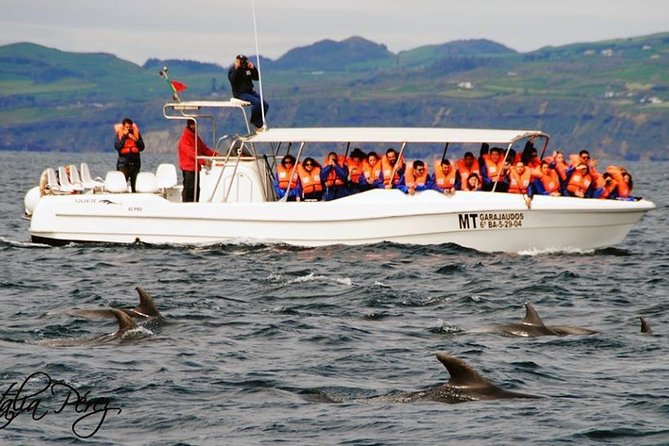
The rigid inflatable speedboat is the lively option. It sits close to the water, moves quickly, and gives you an exciting ride as the crew heads toward a sighting. You may feel more connected to the sea and closer to the action, but waves and wind are much more noticeable. Several people found the ride rough, and one outing left passengers soaked when the water became choppy.
This boat suits adults and older children who enjoy a little motion and can handle open-water conditions. It is a poor match if you are prone to sea sickness, unless you prepare carefully. Keep unnecessary bags in the available lockers, and use the supplied rain coat as a wind break as well as protection from spray.
The catamaran is the calmer choice. It has more space, a covered cabin, an open-air upper deck, and a toilet. The larger platform also makes it easier to move around and find a comfortable viewing position. It may not offer the same thrill as the speedboat, but you can still see dolphins well, including from the front of the lower deck.
For families with small children, the catamaran is the sensible pick. Children must be accompanied by an adult, and weather conditions can limit children’s participation, especially on smaller boats. If your group includes mixed ages, ask about the catamaran rather than assuming the boat type at booking.
Two to three hours searching the Atlantic
Once the boat leaves the marina, the real work begins. You scan the water for movement, watch the guide’s signals, and try to distinguish a dolphin fin from a wave crest. The guides identify species and explain what you are seeing, so the trip is not just a race from one sighting to the next.
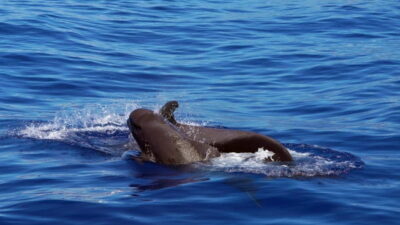
The Azores sit along routes used by a wide range of cetaceans. More than 20 species appear in these waters, although no single trip can promise a particular animal. Spotted dolphins and bottlenose dolphins are among the possible sightings. Sperm whales are also possible, as are pilot whales, sei whales, humpback whales, right whales, and other migratory species reported on successful outings.
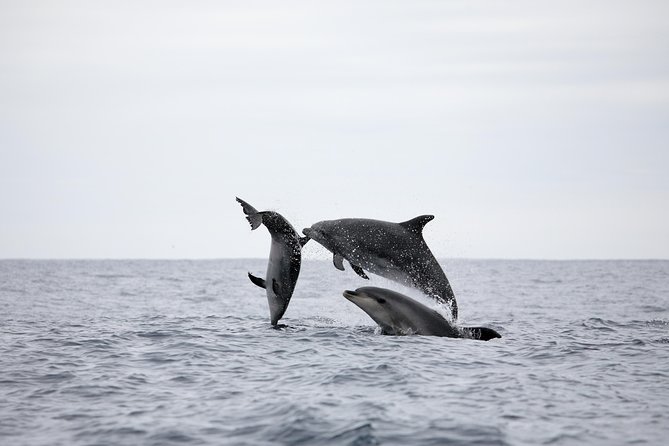
Dolphins can offer the most active show. They may travel in large groups and move quickly around the boat, giving you several chances to watch their behavior. The boat may stop or slow while the crew gives the animals space. This is an important part of responsible wildlife watching: the goal is observation, not pursuit.
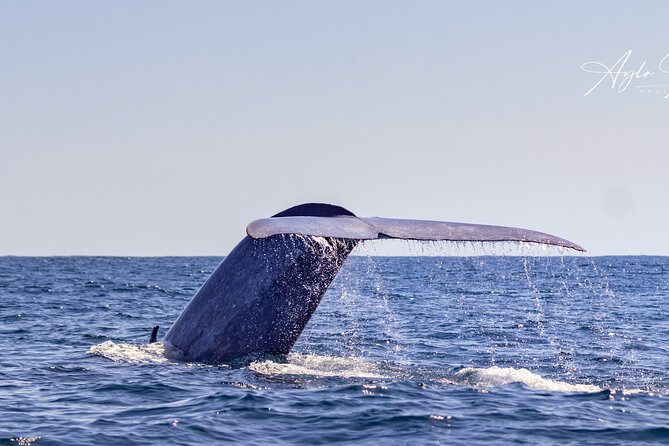
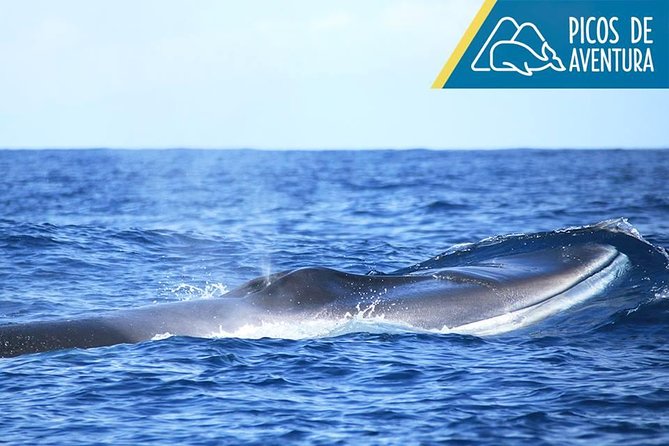
Whales require more patience. A distant blow, a dark back, or a brief tail may be all you see. Sometimes the crew senses a baleen whale nearby without getting a clear view. That can feel thin if you expected a close whale encounter, but it reflects the reality of watching wild animals in a vast ocean.
A few hours may produce several species, including multiple dolphins and whales. On another day, you might see dolphins for 20 minutes and no whale at all. The operator’s policy protects you from a complete blank: if you see neither a whale nor a dolphin, a full refund is offered. It does not guarantee a whale, and that distinction should guide your expectations.
The best and hardest parts of the wildlife search
The strongest feature here is the staff. The marine biologists are described as passionate, attentive, and careful about the animals’ welfare. They explain the species and the region, answer questions, and help you identify what appears on the surface.
That educational side gives the trip lasting value. You are not simply collecting a photograph of a fin. You learn why the Azores attract cetaceans, how migration affects sightings, and why the boat keeps a respectful distance. The guides’ enthusiasm is part of the fun, especially when the sea is quiet and you need something more than a sighting to hold your attention.
Still, guide quality can vary by departure. Most outings receive strong praise for clear explanations, but one disappointing trip included little commentary. I would treat that as a reminder to ask questions during the briefing and while on the water. The company presents the tour as an educational outing led by marine experts, so it is reasonable to expect more than simple animal spotting.
The scenery adds another layer. You see the Azorean coast from offshore, with open Atlantic water in every direction and the island behind you. The view is especially enjoyable when wildlife activity is slow. Just remember that the boat trip is the main event, not a calm coastal cruise.
Same water, a different way to meet them:
- Azores: Whale Watching & Islet Boat Tour w/ Marine Biologist
★ 4.7 · 2,945 reviews - Funchal Bay: Dolphin & Whale Watch Luxury Catamaran Cruise
★ 4.2 · 2,684 reviews - All Inclusive Whale and Dolphin Watching Luxury Tour
★ 4.9 · 2,573 reviews - Madeira Dolphin and Whale Watching on a Ecological Catamaran
★ 4.5 · 1,957 reviews
Sea conditions, clothing, and motion sickness
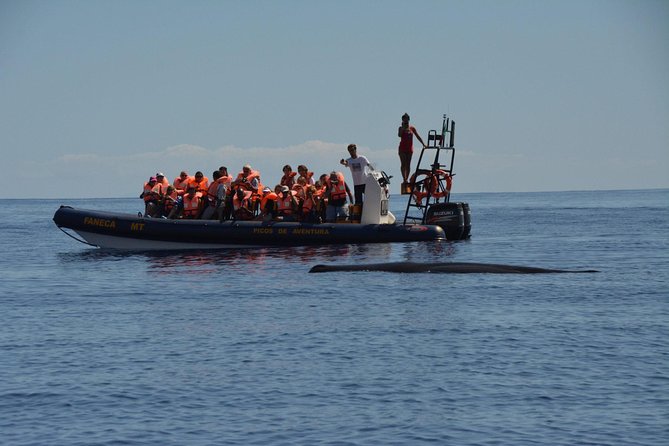
The weather is the key practical issue. Wind can make the ride cold, and waves can turn a pleasant trip into a hard one. Even on a calm day, the return journey may become breezier. The supplied rain coat helps block wind, so do not leave it behind just because the forecast looks dry.
Wear warm layers and secure anything you bring. The speedboat can create spray, and some outings become wet when the sea turns rough. A camera or phone is useful, but protect it carefully and avoid carrying more than you need.
If you get motion sickness, prepare before departure. The speedboat is the riskier choice, particularly when the crew travels well offshore. Several successful outings took boats miles from the coast, where the sea became rough. The catamaran is generally the better option for comfort, though no open-water trip is entirely free of motion.
Weather may force a cancellation or a new date. That happened to some scheduled departures before conditions improved. If the tour operator cancels because of poor weather, you receive a different date or a full refund. Leave some flexibility in your Ponta Delgada schedule if seeing whales and dolphins is important to you.
Is $78.60 good value?
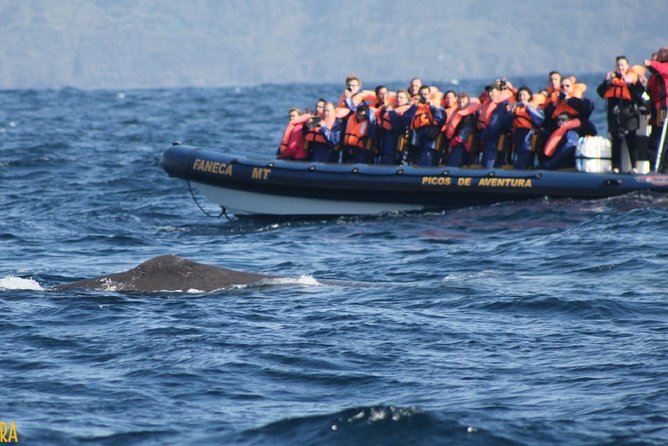
At $78.60 per person, this is not a cheap harbor ride, but the price is reasonable for a 2 to 3 hour search led by marine biology staff. You are paying for the boat, crew, safety equipment, wildlife interpretation, and access to offshore waters that you cannot reach on your own.
The value improves if you see several species and make good use of the commentary. A trip with common dolphins, spotted dolphins, and a whale can feel like one of the highlights of an Azores visit. A day with only distant dolphins is still a genuine wildlife outing, but it may feel less satisfying if your main goal is a close whale encounter.
The full-refund policy if no whales or dolphins appear lowers the financial risk. It does not remove the risk of rough weather, a long search, or a dolphin-focused trip. I would book this for the quality of the experience, not as a guaranteed whale photograph.
The group can reach up to 75 people. That is a sizable number, especially if everyone boards one vessel, though the catamaran’s space and upper deck help. If you want the most thrilling ride, the speedboat may feel more personal. If you value room to move and a toilet, choose the larger boat.
Who will enjoy this most?
This outing suits families, couples, photographers, and anyone who wants a close look at Azorean marine life without arranging a private charter. Children often enjoy the fast boat and the excitement of dolphins, but adults should consider sea conditions before choosing the smaller vessel.
It is also a good fit for visitors who value conservation. The company emphasizes responsible behavior around whales and dolphins, and the guides explain local protection work. You will get more from the trip if you enjoy learning about animal behavior rather than treating the boat as a simple amusement ride.
I would hesitate if you need a calm, predictable cruise, dislike wind, or have severe motion sickness. The catamaran helps, but the Atlantic remains the Atlantic. I would also avoid placing the tour on the last possible day of your trip if whale watching is a top priority, since poor weather can cause cancellations.
Booking, timing, and cancellation details
You can choose a morning or afternoon departure, and the tour is offered in English. A multilingual guide may operate the outing. Confirmation arrives when you book, and mobile tickets are accepted.
Free cancellation is available up to 24 hours before the start time. Changes or cancellations inside that 24-hour window are not accepted for a refund. The operator may also cancel if too few people book, in which case you are offered another date or experience, or a full refund.
Because the tour is often booked about 23 days ahead, I would reserve early during a busy visit, especially if you want the catamaran or a specific departure time. Keep your arrival plan simple: reach the marina early, attend the briefing, and avoid scheduling a tight activity immediately afterward.
Should you book the Ponta Delgada whale watching tour?
I would book it if you want a well-run, conservation-minded trip with a real chance to see dolphins and whales in open water. The strongest reasons are the experienced marine biology team, the choice of two very different boats, the possible range of species, and the refund protection if no cetaceans appear.
Choose the catamaran for children, comfort, toilets, and a steadier ride. Choose the speedboat for excitement, speed, and a close-to-the-water view, but prepare for spray and rough motion. Go in with the right promise to yourself: a rewarding encounter with Azorean marine life, not a guaranteed whale performance.
FAQ
Where does the whale watching tour begin?
It begins at Picos de Aventura in Marina Pêro de Teive, Avenida João Bosco Mota Amaral, 9500-771 Ponta Delgada, Portugal.
Where does the tour end?
The activity ends back at the same meeting point in Marina Pêro de Teive.
How long does the tour last?
The outing takes approximately 2 to 3 hours, with up to 3 hours spent at sea searching for whales, dolphins, and other marine life.
How early should I arrive?
You should arrive 15 to 20 minutes before departure for check-in, preparation, and the safety briefing.
Are whales guaranteed?
No specific whale species is guaranteed. The provider offers a full refund if you see neither whales nor dolphins, but you may see dolphins without seeing a whale.
What animals might I see?
Possible sightings include spotted dolphins, bottlenose dolphins, sperm whales, pilot whales, sei whales, humpback whales, right whales, and other migratory species.
Can I choose the type of boat?
Two boat types are available: a rigid inflatable speedboat and a modern catamaran. The catamaran has a covered cabin, open-air upper deck, and toilet.
Is the tour suitable for children?
Children must be accompanied by an adult. Weather conditions may limit children’s participation, especially on smaller boats. The catamaran is described as suitable for families with small children.
Are food and drinks included?
No. Food and drinks are not included in the tour.
What happens if bad weather cancels the tour?
You are offered another date or a full refund if poor weather causes the tour to be canceled.
Just added around Portugal
- Madeira : Whales and Dolphins wooden boat excursion★ 4.1 · 247 reviews
- Madeira: Whale and Dolphin Watching Tour★ 4.6 · 174 reviews
- From Machico: Madeira Whale and Dolphin Watching Boat Tour★ 4.8 · 225 reviews
- Terceira Island: Whale & Dolphin Watching | Best Wildlife Tour★ 4.0 · 24 reviews
- Observation of Dolphins and Whales with Marine Biologist in Arrábida★ 5.0 · 224 reviews
- Sesimbra: Arrábida Dolphin and Whale Watching tour with biologist★ 5.0 · 248 reviews
- Full Day Sete Cidades with Whale Watching at Mosteiros★ 5.0 · 10 reviews
- Whale Watching Activity in North Coast★ 4.5 · 49 reviews
Portugal Whale Watching Tours, compared.
From Funchal: Ecological Catamaran Dolphin Whale Watching
Read our review →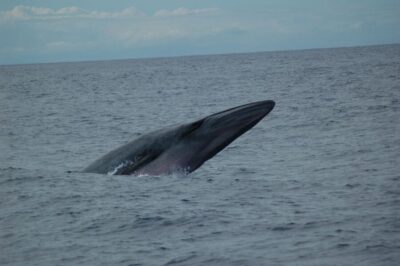
Funchal: Dolphin and Whale Watching Catamaran Cruise
Read our review →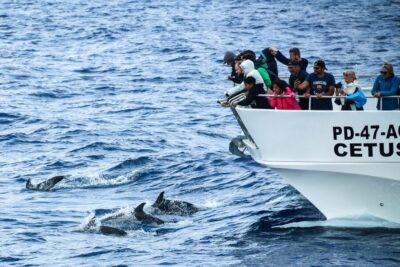
From Ponta Delgada: Whale and Dolphin Watching Trip
Read our review →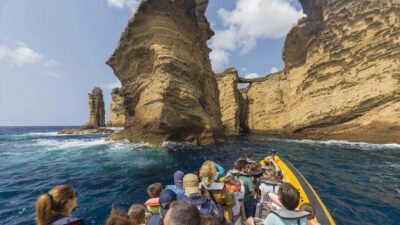
Azores: Whale Watching & Islet Boat Tour w/ Marine Biologist
Read our review →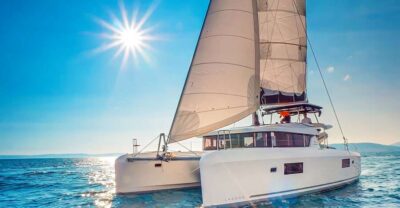
Funchal Bay: Dolphin & Whale Watch Luxury Catamaran Cruise
Read our review →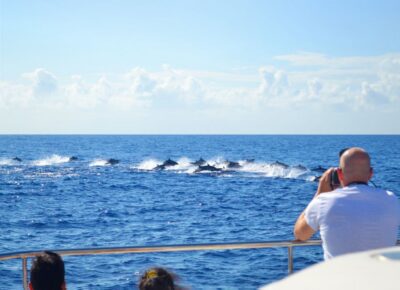
All Inclusive Whale and Dolphin Watching Luxury Tour
Read our review →
Madeira Dolphin and Whale Watching on a Ecological Catamaran
Read our review →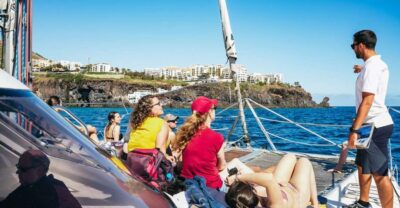
Funchal: Dolphin and Whale Watching by Luxury Catamaran
Read our review →Browse the lists this tour appears in