
REVIEW · USA WHALE WATCHING TOURS
Anacortes: Whale Watching Adventure Tour Near Seattle
Wild water, wild animals, no ferry required. This three-and-a-half-hour trip from Anacortes puts you aboard a fast, open-air zodiac boat with room for only 17 people, which I like for the clear views and personal feel. I also like that the crew provides cruiser suits, hats, gloves, and binoculars, since the Salish Sea can feel much colder than the marina. The main drawback is the ride itself: this is an exposed, lively boat, not a gentle cruise, and it is unsuitable for pregnant people or anyone with back or neck problems.
The tour costs $149 per person, a fair price if you value a small group, a long search area, and serious wildlife guiding. You should still arrive early, dress in layers, and accept that nature sets the schedule. Orcas, humpbacks, seals, sea lions, birds, and even a black bear have been spotted, but the day’s sightings will always depend on where the animals are moving.
Key points to know before you book
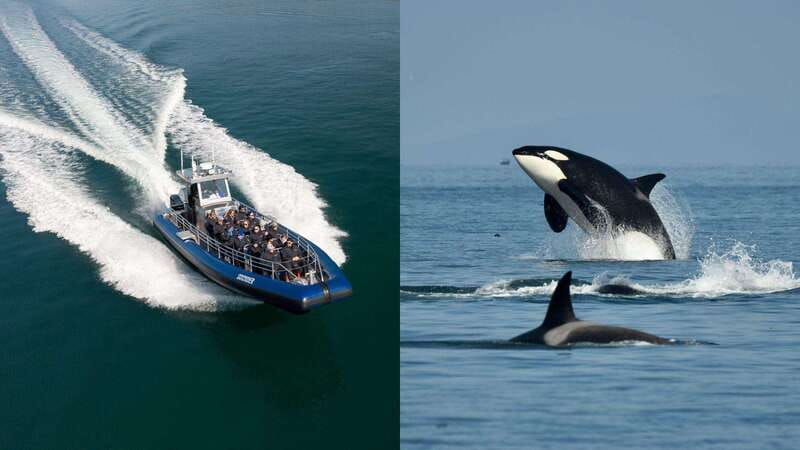
- Small zodiac boat: The maximum group size is just 17 passengers, so you get a good chance at an unobstructed view.
- No ferry crossing: You drive directly to Anacortes and check in at Skyline Marina.
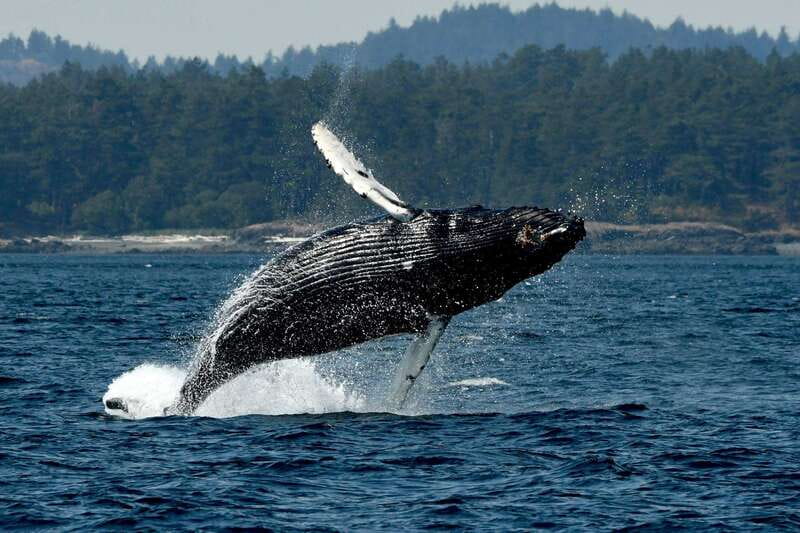
- Wildlife range: The Salish Sea is home to orcas, humpback, gray, and minke whales, along with porpoises, seals, sea lions, eagles, birds, and other wildlife.
- Warm gear provided: Cruiser suits, hats, gloves, and binoculars are included. Transparent ski goggles are also available for windy rides.
- Three and a half hours on the water: The route can cover a wide area around the San Juan Islands, with one reported trip traveling more than 57 miles.
- Plan for motion: The boat is open-air and built for speed, so it suits adventurous passengers better than anyone seeking a quiet, steady cruise.
Why Anacortes is a smart departure point
Anacortes makes this outing easier than many Seattle-area whale watching plans. You do not need to board a ferry or arrange a second island transfer. Instead, you drive to 2201 Skyline Way, Unit 203, in Anacortes and check in at the office on the building’s second story.
That direct departure matters. Ferry schedules can turn a simple day trip into a puzzle, especially during busy periods. Here, your main job is reaching Skyline Marina on time. The marina can be busy, so I would allow extra time for the drive, parking, and check-in.
Free parking is available in front of the office or on the street. A paid gravel lot across the street is another option, with passes available from the company. None of this is difficult, but arriving at the last minute is a poor strategy. You need to be at the office 30 minutes before departure so the crew can fit you with your cruiser suit and prepare the boat.
Late arrival is a real risk. Arriving 15 minutes or less before departure can count as a no-show, with no refund. Put simply, build in a buffer.
A few more whale watching trips around the USA worth a look
- Juneau Wildlife Whale Watching
★ 5.0 · 7,379 reviews - Juneau Wildlife Whale Watching & Mendenhall Glacier
★ 5.0 · 6,236 reviews - Boston: City Cruises Whale Watching Cruise
★ 4.5 · 4,710 reviews
Getting fitted for a fast, open-air ride
The boat is a zodiac-style vessel rather than a large, enclosed sightseeing ship. That design is the heart of the tour. With a maximum of 17 passengers, the group stays small, and you are not looking over rows of people to see a whale.
The tradeoff is comfort. A zodiac gives you a lively ride and brings you closer to the feel of the water, but it does not provide the same shelter as a big cabin boat. The open air is part of the fun, yet wind can make the water feel cold even on a pleasant day.
Blue Kingdom provides cruiser suits to help keep you warm and dry. Hats and gloves are available too, along with binoculars. A useful detail from the trip reports is that transparent ski goggles are available. Take them if offered, especially when the captain opens the throttle. One passenger found the wind intense enough that keeping their eyes open was difficult without eye protection.
Wear layers beneath the suit. You can remove a layer if the day warms up, but you cannot wish away cold hands after leaving the dock. Bring your own hat and gloves if you prefer, though the company can provide them.
Small bags and backpacks are allowed, but storage space is limited. Bring snacks and drinks in sealable containers, since there is no food or drink service aboard and coolers cannot be accommodated. A camera is welcome, but a dry bag or protective camera case makes sense around spray and wind.
The Salish Sea search, from Anacortes to the islands
Once the boat leaves Skyline Marina, the main part of the tour begins. The captain and marine naturalist search the Salish Sea for whales and other wildlife while explaining what you are seeing.
The route is not a fixed parade of stops. It is a moving search shaped by animal reports, sea conditions, and the behavior of the wildlife. That can mean a long run across the water before the first sighting, but it also gives the crew room to cover a broad area around the San Juan Islands.
One trip covered more than 57 miles of water. That detail tells you something important about the pace and range of the outing. You are not simply motoring around one harbor. You may spend much of the trip traveling between possible viewing areas.
The views are a major part of the day. You will see the San Juan Islands and surrounding waters from a low, open boat, with fewer visual barriers than you would have on a large vessel. The scenery changes as the boat moves, but the focus remains wildlife rather than a formal island sightseeing circuit.
The captain handles the route and boat, while the marine naturalist helps identify animals and explain their habits. That division works well. You get both practical boat handling and context about the animals, birds, and habitat around you.
Four whale species, plus plenty of smaller sightings
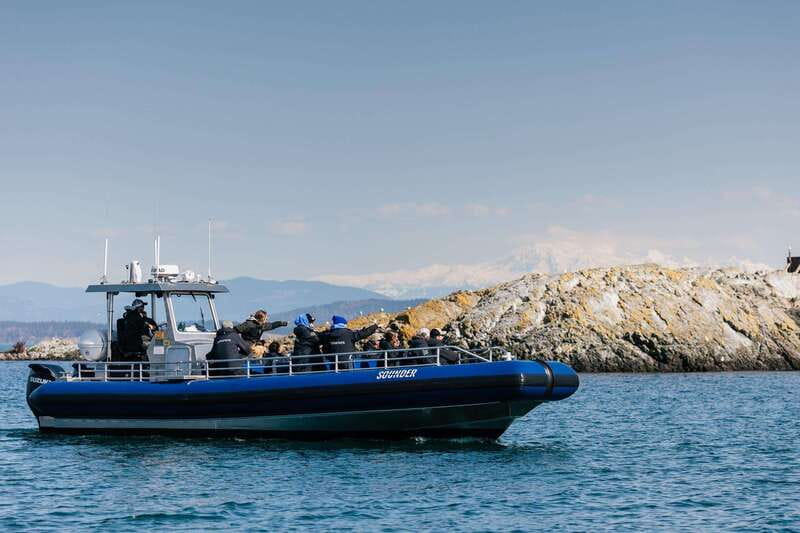
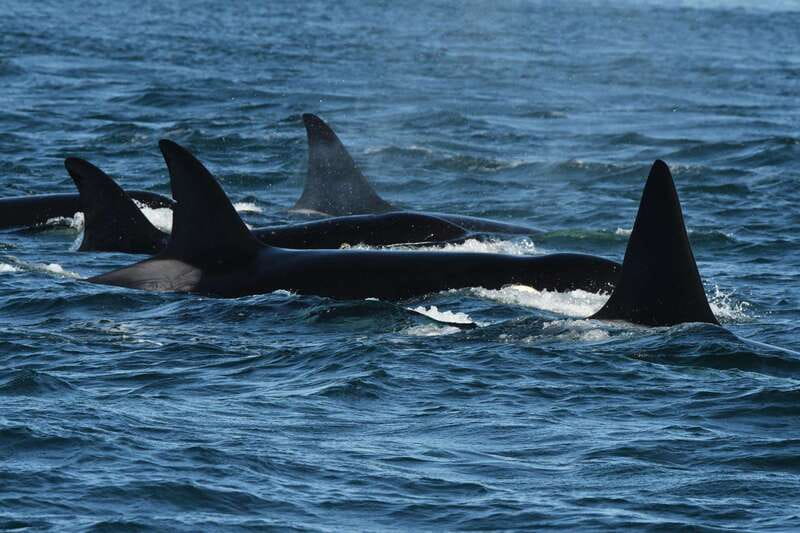
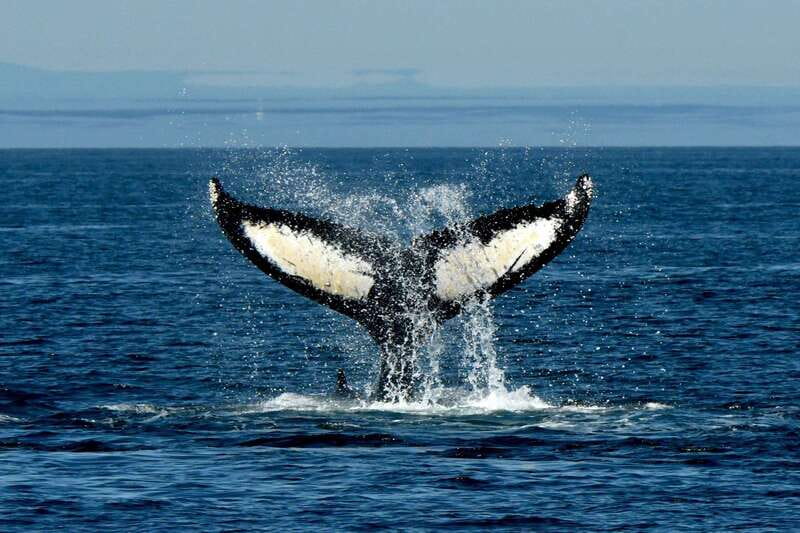
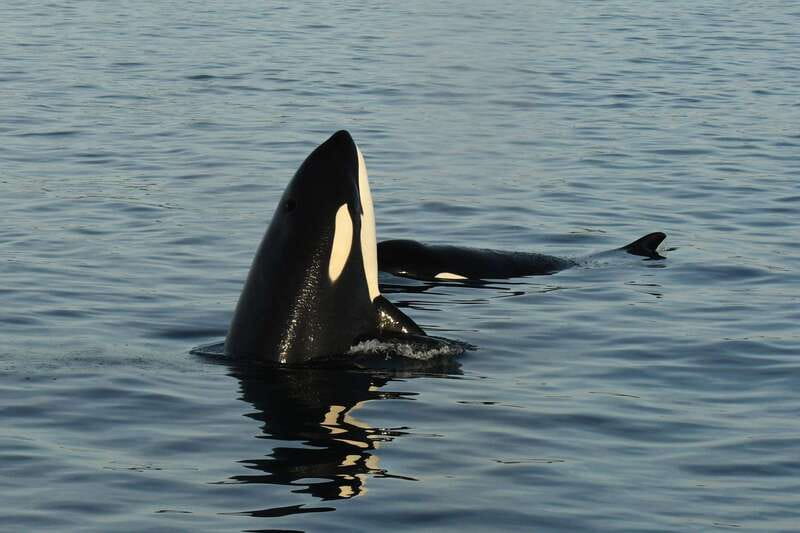
The local waters can hold four species of whale: orca, humpback, gray, and minke. You may also search for porpoises, harbor seals, sea lions, bald eagles, unusual birds, and other marine life.
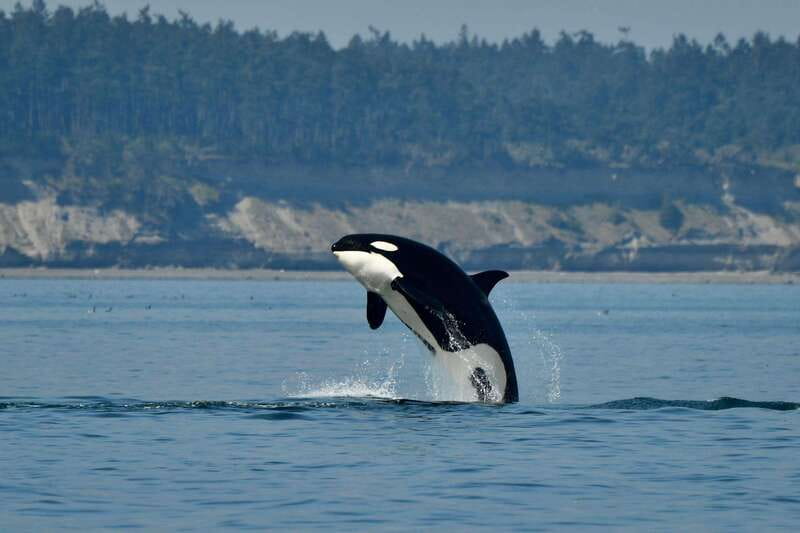
Orcas are the headline sighting, and several trips have found pods or family groups. One outing included two different orca families and a humpback whale. Another included a pod of five orcas. The crew may identify the family being viewed and explain details about the animals, which adds meaning to a sighting that might otherwise last only a few minutes.
Humpback whales have also appeared alongside orcas, seals, and sea lions. One especially varied day included three kinds of whales, many seals, rare birds, and a black bear. That is an exceptional list, not a promise for every departure, but it shows how broad the wildlife search can be.
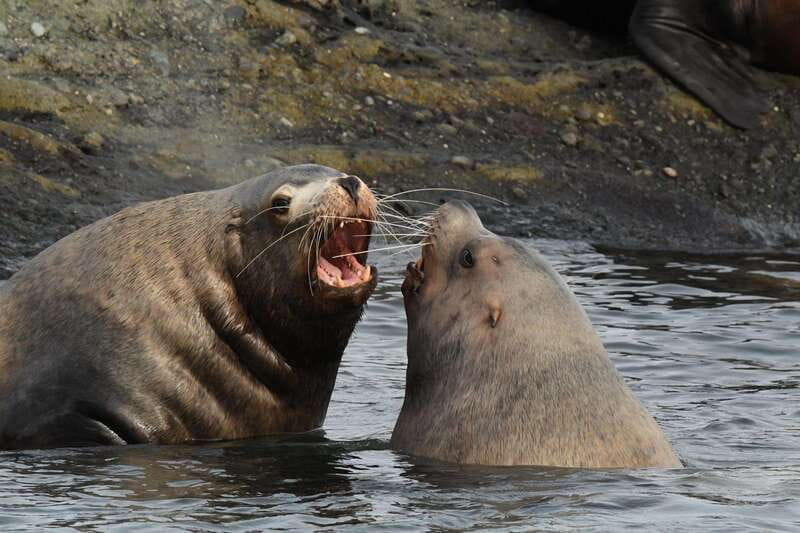
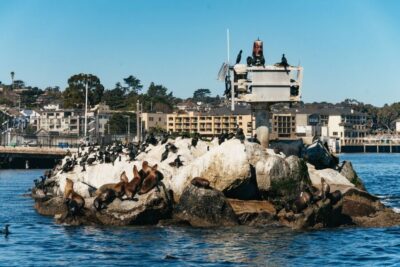
Sea lions deserve special attention. Their calls and size make them hard to miss when they appear, and one passenger particularly enjoyed seeing them alongside orcas and seals. Harbor seals are another common possibility, often adding quick movement close to the water while larger animals draw the group’s attention farther out.
Birdwatching is easy to overlook when everyone is scanning for a whale. The naturalist can help you notice eagles and less familiar birds in the habitat. I recommend keeping binoculars ready rather than treating them as emergency equipment. A whale may surface only briefly, while a bird can sit in view long enough for you to identify it.
Same water, a different way to meet them:
- Whale Watching Tour in Gloucester
★ 5.0 · 4,460 reviews - City Cruises Boston Whale Watching Cruise by High-Speed Boat
★ 4.5 · 3,115 reviews - Maui Eco-Raft Tour: Eye-Level Whale or Dolphin Watching – Lahaina
★ 5.0 · 2,482 reviews - San Diego Whale Watching Cruise
★ 5.0 · 2,317 reviews
Why the small group changes the day
The 17-person limit is one of the strongest reasons to choose this tour. A small boat does not guarantee better sightings, since whales do not follow a timetable, but it does improve the viewing process.
You are closer to the guide’s explanations. You have less competition for a good angle. You can turn quickly when someone spots movement, and the crew can communicate without speaking to a crowd spread across several decks.
Small groups also make the outing feel less manufactured. The day is still carefully run, with safety gear and a planned departure, but the boat has an intimate scale. The captain can adjust the route, and the naturalist can answer questions without addressing a room full of people.
The downside is that everyone shares the same exposure to wind, spray, and motion. On a large vessel, you might move indoors or find a steadier corner. Here, your comfort depends more on clothing, weather, and your tolerance for a lively ride.
The crew’s role in making wildlife meaningful
The strongest praise for this tour centers on the crew. Captain Tyler and naturalist Kristin were singled out for strong navigation, clear explanations, and respect for the animals’ space. Other trips also praised the captain and guide for finding whales quickly, identifying birds, and answering questions before passengers needed to ask.
That combination matters. A captain who knows how to cover water efficiently can improve your chance of reaching an active area. A good naturalist turns a sighting into a lesson about families, species, behavior, and habitat.
The tone also appears to be thoughtful rather than rushed. The crew’s goal is to give the boat time with the wildlife instead of treating each sighting as a quick photo stop. Safety receives attention too, which is important on a fast boat in open water.
You should remember that the crew cannot control the animals. Even an excellent captain cannot promise orcas on a particular day. What the crew can control is the search, the information, the route, and the way the boat approaches wildlife.
Is $149 a good value?
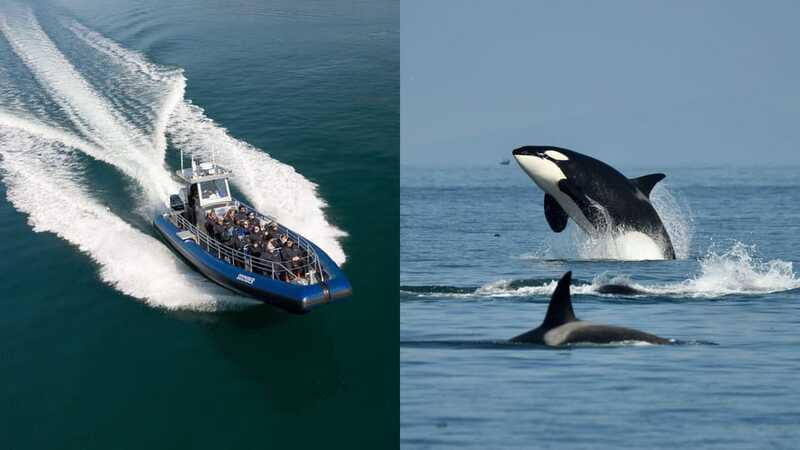
At $149, this is not the cheapest way to get on the water. The value comes from what is bundled into the price: a 210-minute outing, a maximum of 17 passengers, a captain, a marine naturalist, cruiser suits, hats, gloves, and binoculars.
The small boat is especially important in the price calculation. If your priority is a quieter, more personal wildlife outing with a good view from nearly anywhere aboard, the cost is easier to justify. You are paying for space, equipment, and a crew that can cover a large area while explaining what you see.
You also avoid ferry costs and ferry planning by departing directly from Anacortes. That may save both money and time if you are already in the area or are building a road trip around northwest Washington.
The value is weaker if you want a sheltered, relaxed cruise or have a low tolerance for cold and motion. A larger boat may suit you better, even if the group is bigger. This tour is best judged as an active wildlife search, not as a scenic boat ride with guaranteed whale sightings.
Free cancellation up to 24 hours before departure and the reserve-now, pay-later option add useful flexibility. Still, check the available date and departure time carefully, since schedules vary by date.
Who should book this adventure?
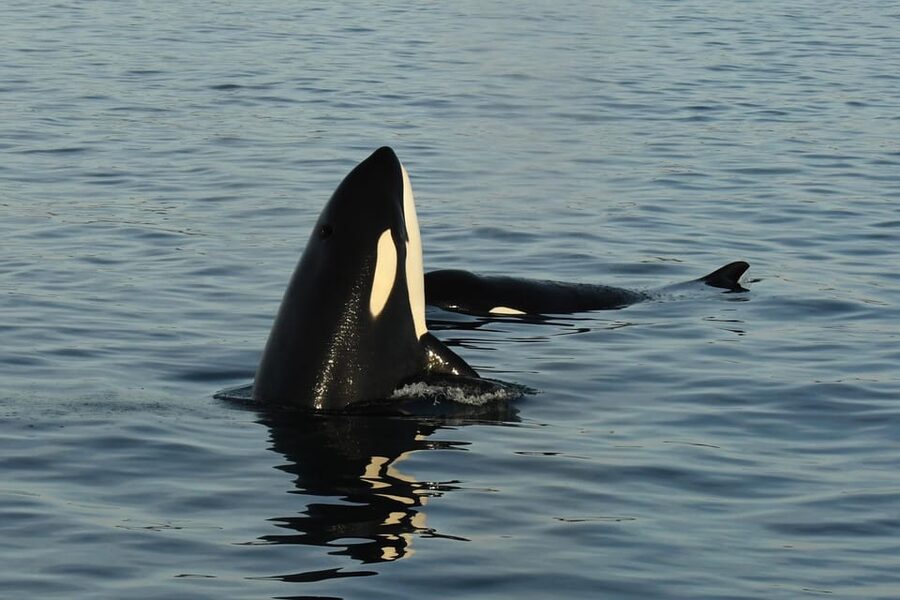
This outing fits adults, families with children six and older, photographers, birdwatchers, and anyone who prefers a small boat to a large sightseeing ship. It also suits people who enjoy a little speed and do not mind adjusting plans around wildlife.
Families should think about the child’s comfort, not just the age rule. Six is the minimum, but an open zodiac boat can be windy and active. A child who enjoys boats and can stay bundled up may have a wonderful time. A child who needs indoor space or dislikes motion may find the ride tiring.
The trip is not suitable for pregnant people or anyone with back problems, back injuries, or neck injuries. Smoking, alcohol, marijuana, and other drugs are not allowed. Participation also requires signing Blue Kingdom’s liability waiver.
The onboard restroom is a useful touch on a three to four-hour trip. It does not turn the boat into a luxury cruise, but it removes one practical worry during a long wildlife search.
Practical packing advice for the Salish Sea
I would arrive wearing comfortable layers and sturdy clothing that works under the provided cruiser suit. Hats and gloves are worth bringing even if you expect mild weather. If you forget them, the company can provide them.
Bring:
- A small backpack or bag
- Snacks and drinks in sealable containers
- A camera and protective dry bag
- Your own hat, gloves, or eye protection if preferred
- Extra layers for changing conditions
Do not bring a cooler, since storage is limited. Leave alcohol, tobacco, marijuana, and smoking supplies at home. Binoculars are supplied, so you do not need to pack a pair unless you have a favorite set.
The most useful tip is simple: protect your eyes from the wind. Clear ski goggles are available, and they may make the difference between enjoying the fast sections and squinting through them.
FAQ
Where does the whale watching tour depart?
The tour departs from Blue Kingdom Whale and Wildlife Tours at 2201 Skyline Way, Unit 203, Anacortes, Washington 98221. Check in at the office on the second story.
Do I need to take a ferry to join the tour?
No. The tour departs directly from Anacortes, so ferry travel is not required.
How long does the tour last?
The tour lasts about 210 minutes, or three and a half hours. The stated tour length is generally three to four hours.
What animals might I see?
The Salish Sea area is home to orcas, humpback whales, gray whales, and minke whales. You may also see porpoises, harbor seals, sea lions, eagles, birds, and other wildlife.
How many people can ride on the boat?
The zodiac-style vessel has a maximum capacity of 17 passengers.
What clothing and equipment are provided?
Cruiser suits, hats, gloves, and binoculars are provided. Transparent ski goggles are also available for windy conditions.
What is the minimum age?
The minimum age is six years old. Children under six cannot participate.
What should I bring and what is prohibited?
You may bring a small bag, snacks, drinks in sealable containers, and a camera. Coolers cannot be accommodated. Alcohol, tobacco, marijuana, smoking materials, and drugs are not allowed.
Should you book the Anacortes whale watching tour?
Book it if you want a small, fast, wildlife-focused outing and you are comfortable spending several hours outdoors on an open boat. The combination of a 17-person limit, provided cold-weather gear, a capable captain, and a marine naturalist gives this tour strong value at $149.
I would choose it for the chance to see the San Juan Islands from the water while searching for several whale species, sea lions, seals, and birds. I would skip it if you need a calm indoor setting, have back or neck concerns, are pregnant, or dislike wind and boat motion.
Arrive 30 minutes early, leave room in your schedule, take the goggles, and dress in layers. With those basics handled, you can focus on the water and let the captain and naturalist do the searching.
Just added around the USA
- Newport Beach: Year-Round Whale Watching Cruise★ 4.2 · 151 reviews
- Juneau: Mendenhall Glacier and Whale Watching Tour★ 4.6 · 98 reviews
- Oahu: Waikiki Eco-Friendly Morning Whale Watching Cruise★ 4.4 · 119 reviews
- West Oahu: Eco-Friendly Whale Watching Cruise★ 4.5 · 40 reviews
- Whale Watch Sail Ma’alaea★ 4.9 · 27 reviews
- Whale and wildlife watching Private and Semi-Private tours★ 5.0 · 2 reviews
- Oahu: Waikiki Eco-Friendly Afternoon Whale Watching Trip★ 4.5 · 60 reviews
- Waikiki: Sunset Whale Watching with 2 Drinks (BYOB-Friendly)★ 4.3 · 34 reviews
USA Whale Watching Tours, compared.
Juneau Wildlife Whale Watching & Mendenhall Glacier
Read our review →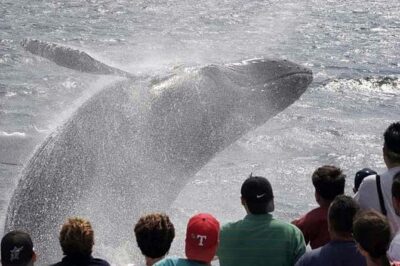
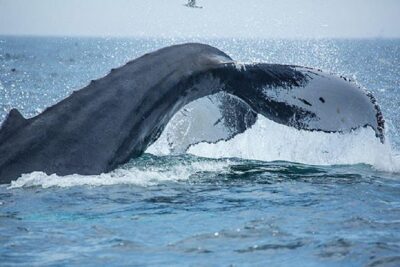
City Cruises Boston Whale Watching Cruise by High-Speed Boat
Read our review →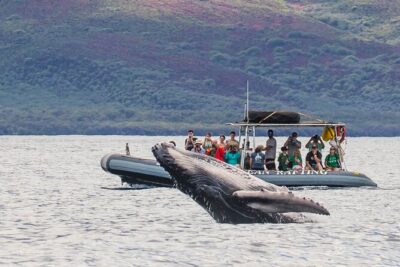
Maui Eco-Raft Tour: Eye-Level Whale or Dolphin Watching – Lahaina
Read our review →
Browse the lists this tour appears in