REVIEW · SYDNEY WHALE WATCHING TOURS
Sydney: Whale Watching & Wildlife Cruise
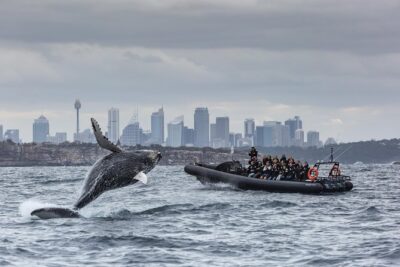
Whales can turn a Sydney view into a wild show. This 150-minute cruise leaves Circular Quay and heads through the harbour entrance into open Pacific waters, where humpback whales pass during their winter migration. I like the excellent city views at the start, and I like the crew’s patient effort to follow whales without crowding them. The $67 price also feels fair for a long cruise with live commentary and a 95% whale-sighting guarantee.
The catch is the sea itself. Open water can be rough, cold, and hard on the stomach, especially in winter. A few minutes of nausea can take the shine off a close whale encounter, so eat lightly, bring warm layers, and consider motion-sickness medicine before departure. The boat has an all-weather lounge and outdoor viewing, but the best sightings may happen outside.
Key points before you book
- Whale season runs from May through November: Humpback whales migrate past Sydney, with southern right whales also possible.
- The cruise lasts 150 minutes: That gives the crew time to leave Circular Quay, search offshore waters, and return.
- The 95% guarantee is useful but not absolute: If no whale appears, you can take another cruise in the same season for free, on standby and subject to availability.
- Open-ocean conditions matter: Strong waves, cold air, and sea motion are part of the experience, not a minor footnote.
- The guide and captain make a big difference: Guides such as Paul have been praised for lively commentary, while the captain helps spot whales and position the boat.
- Sydney’s icons provide a fine opening act: You get striking views of the Opera House and Harbour Bridge before the boat reaches the whale-watching grounds.
Leaving Circular Quay with the Opera House behind you
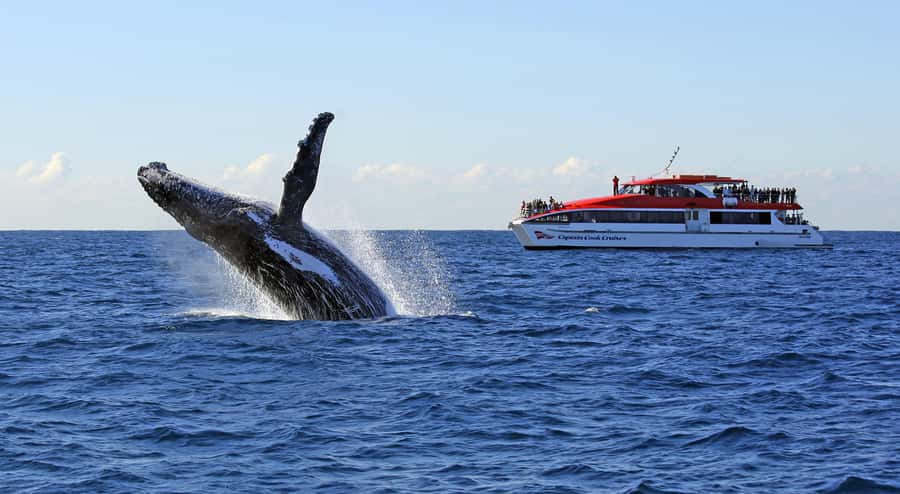
Your morning or afternoon begins at the Captain Cook Cruises ticket office at Circular Quay Wharf 6. Arrive at least 30 minutes before departure. That extra time matters because you need to check in, find the correct wharf, and board without a last-minute dash.
Circular Quay gives the cruise a memorable start. As the boat moves away, you can see the Sydney Opera House and Harbour Bridge from the water. The view changes quickly as the harbour opens up, and the familiar city skyline begins to feel less like a postcard and more like a backdrop to a trip into the wild.
The opening harbour section is also the easiest part for anyone worried about seasickness. The water is generally calmer than the open ocean, so use this time to settle in, listen to the first commentary, and decide where you feel most comfortable.
You can use the indoor all-weather lounge or head outside for fresh air and wider views. Outdoor space is useful when the guide points out wildlife, but the wind can be cold even on a pleasant Sydney day. Bring a jacket, scarf, and extra layer rather than trusting the temperature on land.
More Whale Watching Cruises in Australia
- Sydney: Whale Watching Adventure Cruise
★ 4.2 · 1,790 reviews - Sydney Whale-Watching Cruise Including Lunch or Breakfast
★ 4.5 · 878 reviews - Sydney: 2-hour Express Whale Watching Cruise
★ 4.2 · 756 reviews
Crossing the harbour entrance into open water
The main change comes at the entrance to Sydney Harbour. This is where a sightseeing cruise becomes a proper wildlife trip. The boat leaves the shelter of the harbour and begins searching the Pacific waters used by migrating whales.
You should expect movement. One June visitor described very strong waves and serious nausea, while also saying the close whale encounters made the discomfort worthwhile. That is a fair description of the trade-off. The boat is designed for viewing, but no vessel can remove the natural motion of an open ocean.
Eat lightly before you go. Motion-sickness tablets are usually most effective when taken before the cruise, not after the first wave hits. Once offshore, looking toward the horizon, staying outside, breathing slowly, and avoiding heavy food can help. The crew provides bags and instructions if you become sick, and there are toilets onboard.
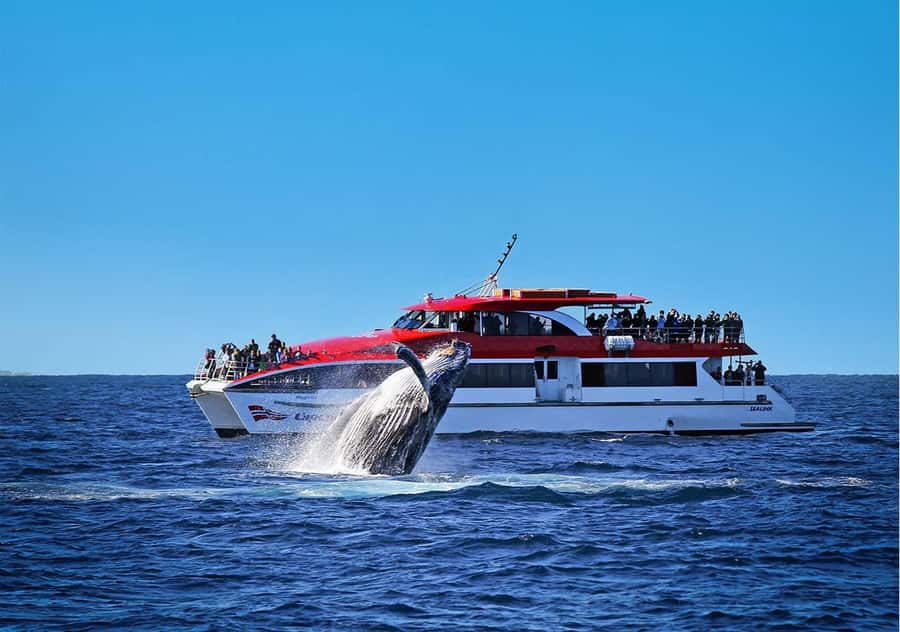
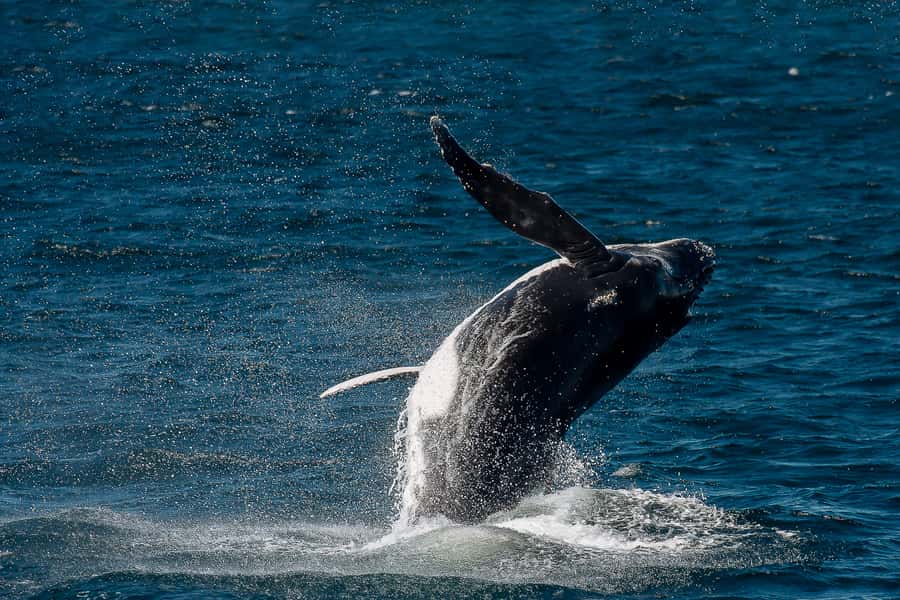
The captain and guide scan the water for blows, fins, backs, and sudden movement. A whale may surface near the boat, or the crew may follow a pod for a while. You might see a breach, when a whale launches partway out of the water, but that is never something anyone can promise. Wildlife sets the schedule here.
Watching humpback whales in their migration season
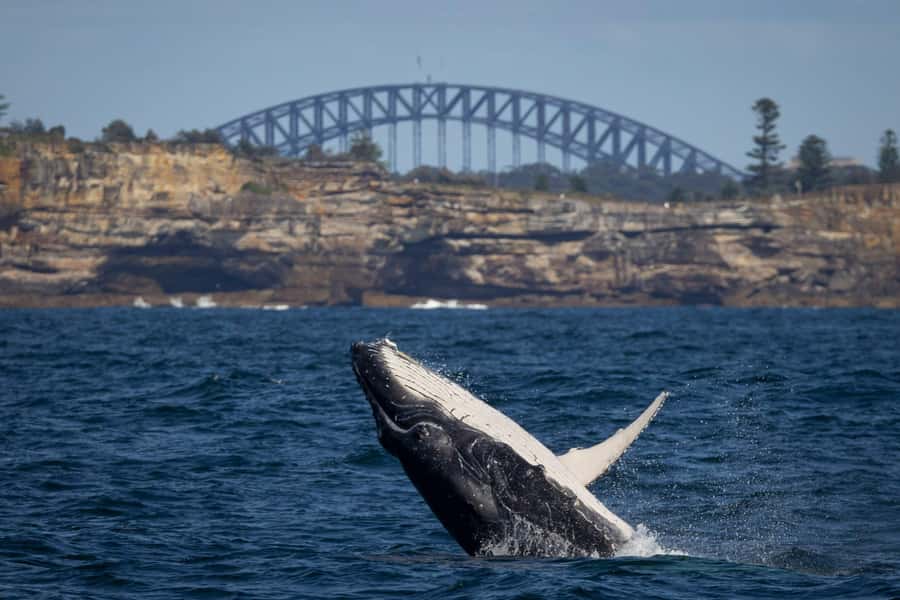
Sydney is a strong place to look for humpback whales from May through November. As many as 15,000 whales pass Sydney each year, and the cruise focuses on finding them in their natural environment rather than staging a performance.
That distinction matters. A whale may appear only briefly, showing a back or blow before disappearing. Another might travel beside the boat for several minutes. The best trips can include repeated sightings, close passes, or a breach, but a quieter trip is still a real wildlife encounter.
The crew works to follow whale activity without getting too close. This is good practice and also makes the viewing feel more respectful. The boat may reposition so people on both sides get a chance to see the action. One particularly useful detail from the crew’s approach is that they have switched sides after a sighting, instead of leaving half the boat staring at empty water.
Some passengers have seen a whale almost immediately. Others have waited until the return journey. That range is worth understanding before you book: the 95% figure is encouraging, but the supplied information also correctly notes that wild animals cannot be fully guaranteed.
If no whales appear, you can take a second cruise in the same season at no charge. The replacement trip is on a standby basis, must be confirmed 24 hours ahead, and depends on space. It is a helpful safety net, though it may not solve the problem if your Sydney visit is short.
Commentary from the guide and captain
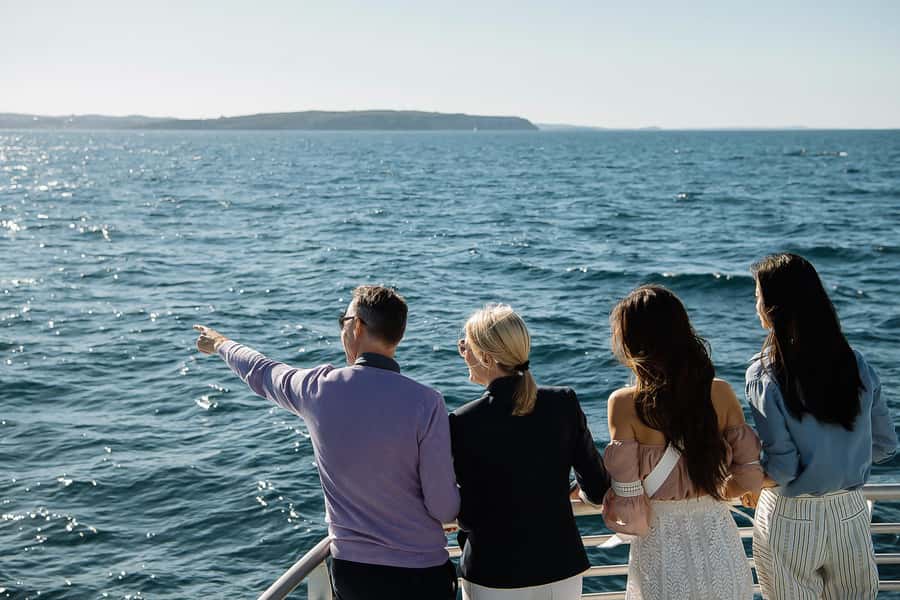
The live English commentary adds much more than simple directions. A good guide helps you understand what you are seeing, why the whales are in these waters, and where to look next.
Paul has been singled out for funny, engaging whale facts and an ability to keep the boat interested during the search. That matters during the quiet stretches. You are less likely to feel that nothing is happening when the guide explains what the crew is watching and how whales behave.
The captain also plays an important role. Spotting a whale from a moving boat takes sharp eyes, and the captain’s decisions affect how many people get a fair view. Several trips have been praised for following whales for a long time rather than rushing away after one brief sighting.
The commentary is not perfect in every seat. One passenger on the lower outside level could not hear the speaker while the boat was moving. If hearing the talk is important to you, try to stay near a speaker or in the lounge, then step outside when the guide announces activity.
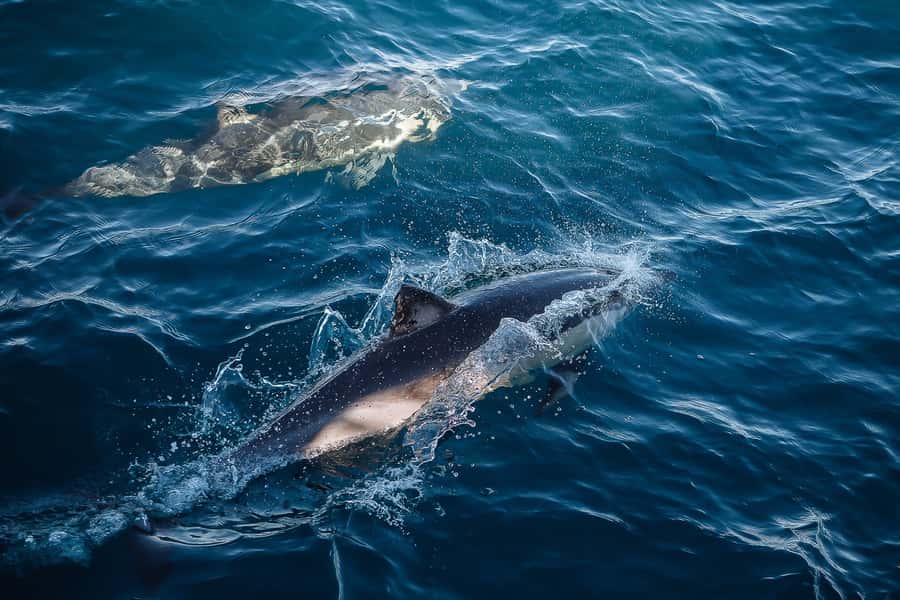
The commentary also covers more than whales, though you may want more detail about seabirds and other marine life. Keep your eyes open for dolphins, seals, fairy penguins, albatross, minke whales, southern right whales, and, less commonly, orcas. These sightings are possibilities, not promises, but they add interest when the whales remain underwater.
More Whale Watching and Wildlife Cruises in Sydney:
- Juneau Wildlife Whale Watching
★ 5.0 · 7,379 reviews - Juneau Wildlife Whale Watching & Mendenhall Glacier
★ 5.0 · 6,236 reviews - Victoria Whale and Wildlife Cruise
★ 5.0 · 1,729 reviews - Húsavík: Original Big Whale Safari & Puffins by Speedboat
★ 4.7 · 1,221 reviews
What the 150 minutes feels like
The stated duration is 150 minutes, or two and a half hours. That is long enough to reach the open water, search properly, and spend time with a whale pod if the conditions cooperate.
The actual rhythm is not nonstop action. Expect periods of scanning, waiting, and moving to a new area. Then the mood changes quickly when someone spots a blow. Everyone looks in the same direction, cameras come out, and the boat settles into a quieter pattern as people watch for the next surface.
That stop-start rhythm is normal for whale watching. If you need constant entertainment, this may feel slow. If you enjoy nature and can accept uncertainty, the waiting makes the sudden appearance of a whale much more powerful.
The boat returns to Circular Quay Wharf 6 at the end. Having the same departure and arrival point is convenient, especially if you have dinner plans, a museum visit, or another booking afterward. Still, I would avoid scheduling something tight. Sea conditions and wildlife searches can affect how relaxed the return feels.
Indoor comfort, outdoor viewing, and cold weather
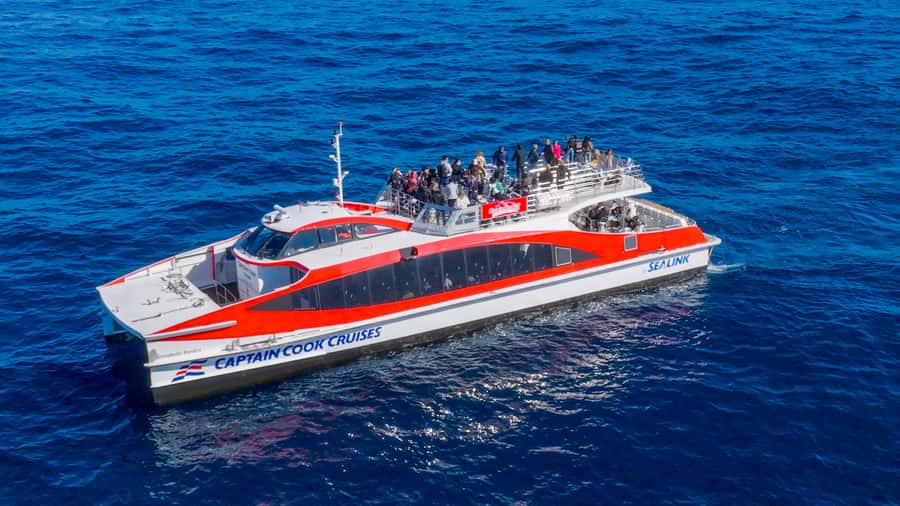
The all-weather lounge gives you a place to warm up, sit down, and take a break from wind and spray. That is especially valuable during the May to August part of the season, when offshore air can feel much colder than the temperature at Circular Quay.
Outdoor viewing remains important. You have a better chance of hearing announcements clearly, spotting movement across the water, and getting an unobstructed look without a window reflection. The practical answer is to move between the two areas rather than choosing one for the entire cruise.
Wear warm, practical clothing. A waterproof outer layer is sensible, and a scarf or hat can make the difference between enjoying the final hour and counting the minutes. Smoking is not permitted onboard.
Food and drinks are not included, but you can buy snacks and drinks on the boat. Because the ride may be rough, keep your food simple and light. This is not the moment for a large meal or adventurous stomach.
Is $67 good value for Sydney?
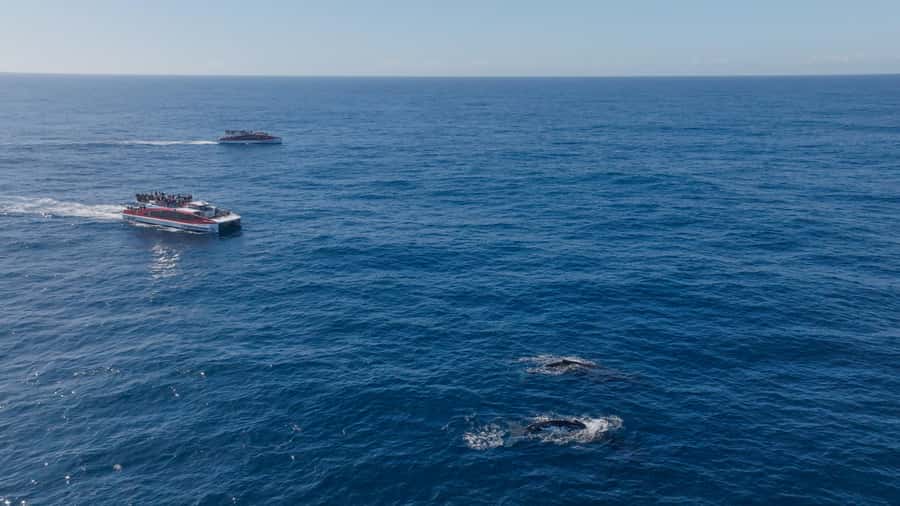
At $67 per person, this sits in a reasonable range for a two-and-a-half-hour wildlife cruise from central Sydney. You are paying for the boat, the search time, the guide, the harbour views, and the chance to see large wild animals in open water.
The value improves if you see several whales, dolphins, or seals, but it does not disappear on a quieter day. The crew still takes you through the harbour entrance, provides commentary, and searches the migration route. The 95% whale-sighting promise also reduces some of the risk, though the replacement cruise only helps if you have time to use it.
I especially like that the experience combines two types of sightseeing. You begin with major Sydney landmarks, then leave the city behind for marine wildlife. You do not need a separate harbour cruise to get those opening views.
The price is less attractive if you dislike boats, suffer badly from motion sickness, or have only one free hour in Sydney. In that case, the whale guarantee cannot compensate for the basic problem: you need to spend 150 minutes at sea.
Who will enjoy this cruise most?
I would recommend it to you if you want a nature experience that fits into a Sydney sightseeing day. It suits couples, families with older children, solo visitors, and anyone who would rather watch wildlife than spend another morning indoors.
It is not recommended for children aged three and under. The combination of open water, cold air, waiting, and boat movement can be hard on very young children.
You should also think honestly about motion sickness. If you have never been on open ocean before, do not assume a calm harbour boat ride will feel the same. Prepare properly, choose a seat with access to fresh air, and keep your schedule afterward flexible.
This is a good choice for photographers, but keep your expectations realistic. A whale can surface on the opposite side, disappear before you frame it, or appear too close for a full-body photograph. Watch first, photograph second. The experience is better when you are not looking only at a screen.
Booking, cancellations, and useful planning details
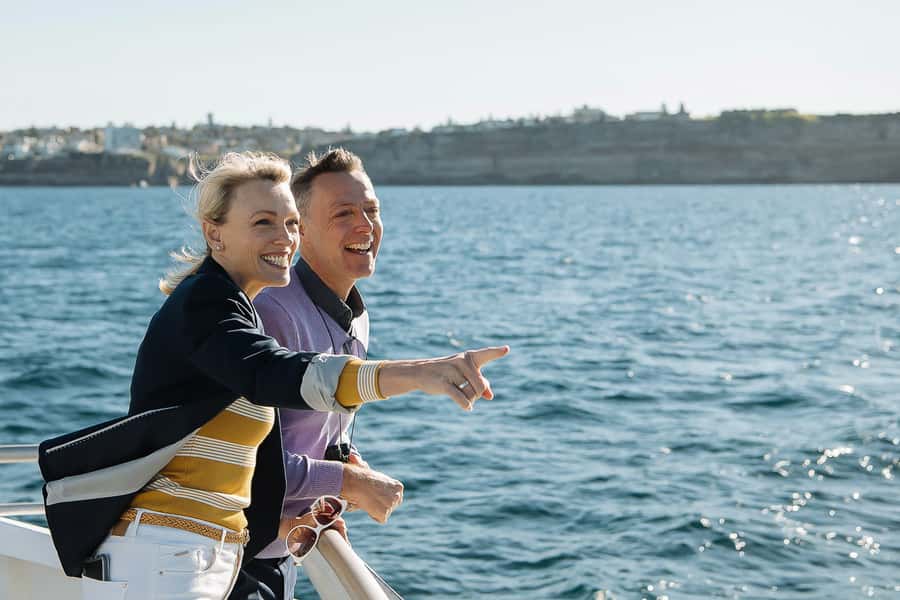
You can cancel up to 24 hours before departure for a full refund. A reserve-now, pay-later option is also available, which helps if your Sydney plans are not fully fixed.
The cruise operates subject to weather and other operational requirements. Check the forecast, but remember that a mild day in the city can still mean colder, rougher conditions offshore.
The tour is conducted in English. If you want the commentary, stay where the speakers are easy to hear. If your main aim is whale watching, move outside when activity begins and keep scanning the water rather than waiting for the guide to point at every sighting.
Should you book the Sydney whale-watching cruise?
Yes, if whales are high on your Sydney wish list and you can handle a moving boat. The strongest reasons to book are the 150-minute search time, central Circular Quay departure, lively commentary, and a practical second-chance policy if no whale appears.
Go prepared for cold air, strong waves, and periods when nothing happens. Take motion-sickness medicine before departure if you need it, eat lightly, arrive 30 minutes early, and bring more clothing than you think you need.
I would skip it only if you are very prone to seasickness, have a tight schedule, or need guaranteed close-up wildlife. For everyone else, this offers a fine balance of city views and genuine marine wildlife, with the chance to see humpbacks doing something no timetable can arrange.
FAQ
Where does the whale-watching cruise leave from?
It leaves from the ticket office at Circular Quay Wharf 6 in Sydney, New South Wales.
How long does the cruise last?
The cruise lasts 150 minutes, or two and a half hours.
What months are best for whale watching on this cruise?
The cruise looks for migrating whales from May through November.
Are whale sightings guaranteed?
Whale sightings are listed as 95% guaranteed, but the animals are wild and sightings cannot be fully guaranteed. If you do not see a whale, you can take another cruise in the same season for free, on standby and subject to availability.
What happens if I do not see a whale?
You may take a second cruise during the same season at no charge. You must confirm it 24 hours in advance, and the replacement trip depends on available space.
Can I see animals other than whales?
You might see dolphins, seals, fairy penguins, albatross, southern right whales, orcas, and minke whales. These sightings are not guaranteed.
Should I worry about seasickness?
Yes, because this is an open-water cruise and sea motion can be strong. Eat lightly, consider taking motion-sickness medicine before departure, dress warmly, look toward the horizon, and use the outdoor area if that helps you.
Are food and drinks included?
No. Snacks and drinks are available to purchase onboard.
How early should I arrive?
You should arrive at least 30 minutes before the scheduled departure time.
Is the cruise suitable for very young children?
It is not recommended for children aged three years and younger.
What language is the tour conducted in?
The live commentary and tour are in English.
Can I cancel my booking?
Yes. You can cancel up to 24 hours before departure for a full refund.
More Whale Watching Cruises in Sydney
- Sydney Whale Watching Cruise with Breakfast or Lunch
★ 4.4 · 340 reviews - Sydney: Scenic Whale Watching Cruise – Whales Guaranteed
★ 4.6 · 318 reviews - Sydney Whale Watching Cruise from Circular Quay
★ 4.5 · 207 reviews - Sydney Whale Watching – 2.5hr Discovery Cruise
★ 4.0 · 120 reviews
Just added around Sydney
- Whales of Sydney Sea Safari★ 5.0 · 2 reviews
- Whale Watching Sailing Experience in Sydney★ 5.0 · 28 reviews
- Whale Watching Sydney★ 3.5 · 17 reviews
- Sydney Harbour Tall Ship Whale & Sail – Whale Watching Cruise★ 5.0 · 5 reviews
- Whale Watching on Speed Boat with canopy from Sydney Harbour★ 5.0 · 14 reviews
- Whale Watching & Hop On Hop Off Sydney Harbour Explorer Cruise★ 4.0 · 2 reviews
- Sydney Whale Watching Cruise from Circular Quay★ 4.5 · 207 reviews
- Sydney Whale Watching on Small RIB★ 5.0 · 14 reviews
Sydney Whale Watching Tours, compared.

Sydney Whale-Watching Cruise Including Lunch or Breakfast
Read our review →
Sydney: Discovery Whale Watching Tour by Catamaran
Read our review →
Sydney Whale Watching Cruise with Breakfast or Lunch
Read our review →
Sydney: Scenic Whale Watching Cruise – Whales Guaranteed
Read our review →