
REVIEW · WHALE AND DOLPHIN WATCHING TOURS IN PORTUGAL
Horta: University Startup Whale and Dolphin RIB Boat Trip
Whales are only half the story here. From Horta, this three-hour RIB excursion combines fast open-water travel with university-backed marine research, giving you a better sense of what you are seeing and why it matters. I especially like the presence of a marine researcher on board and the careful use of land-based whale spotters to help locate animals at sea.
I also like the chance to see much more than whales: dolphins, sea turtles, seabirds, flying fish, sharks, squid, octopus, and sunfish can all appear. The main drawback is simple: this is a small, fast boat on the Atlantic, so rough water can make the ride wet and uncomfortable, especially for anyone with back trouble.
The trip costs about $101 per person and lasts three hours. That is not a bargain-basement boat ride, but the marine biology guidance, waterproof clothing, research connection, and small-group feel give it solid value for anyone who wants more than a quick wildlife outing.
Key points to know before booking
- University marine researcher on board: You receive current information about cetaceans and marine ecology while the animals are being observed.
- Three-hour RIB ride from Horta: The boat carries up to 16 people and reaches open water quickly, but the ride can be bumpy.
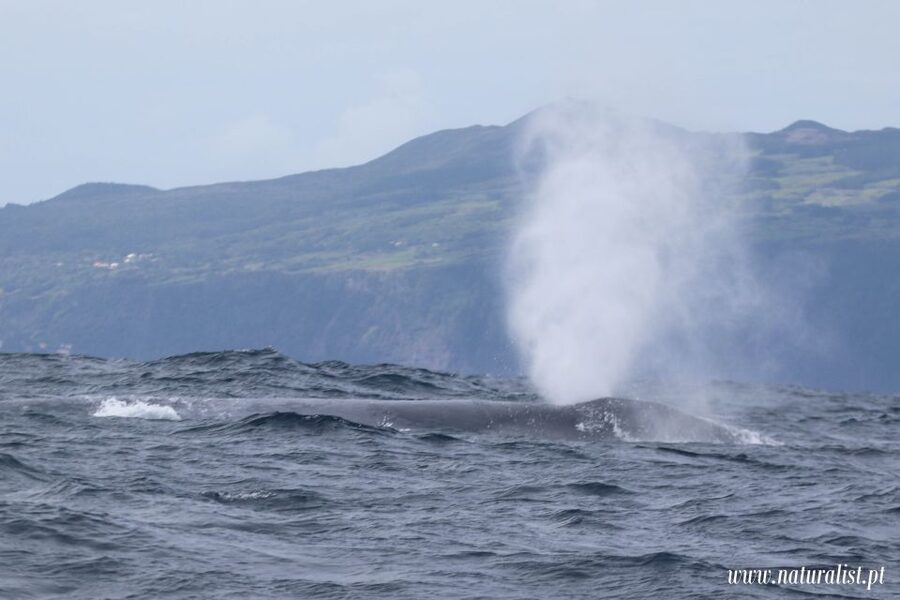
- Sperm whales are present year-round: Blue and fin whales are most associated with spring, while sei, Bryde’s, humpback, and several dolphin species may appear at different times.
- Land-based whale spotters guide the search: The team checks for animals from Faial and Pico before sending the boat out.
- Wildlife can extend beyond whales: Turtles, tuna, shearwaters, terns, flying fish, sharks, sunfish, squid, and octopus are all possible sightings.
- Weather controls the schedule: Departures can be moved or cancelled when conditions are poor, with a full refund if the trip is cancelled.
Starting at Horta Marina with a short safety briefing
Your meeting point is Naturalist, Science and Tourism, Whale Watching, at the marina in Horta. Arrive 15 minutes early, at 8:45 for the 9:00 morning departure or 1:45 for the 2:00 afternoon trip. Hotel pickup is not provided, so allow time to reach the marina on your own.
The first formal step is a safety briefing of about 10 minutes. This matters more on a RIB than it does on a large sightseeing boat. You will be moving across open Atlantic water in a semi-rigid craft, so the crew needs to explain seating, movement, clothing, and basic safety before departure.
The boat carries up to 16 passengers. Actual groups can be smaller. One October departure had 11 tourists and two marine biologists, a size that allowed the group to spread out without making the boat feel crowded.
You receive waterproof trousers and a jacket. This is useful equipment, not a decorative extra. The ride can throw spray over the bow, and the sea may be rough even when conditions look pleasant from shore. Bring shoes that can get wet or dry quickly. Food and drinks are not included, so have anything you need before boarding.
More Whale and Dolphin Watching Tours in Portugal
- From Funchal: Ecological Catamaran Dolphin Whale Watching
★ 4.5 · 8,204 reviews - Funchal: Dolphin and Whale Watching Catamaran Cruise
★ 4.5 · 5,697 reviews - From Ponta Delgada: Whale and Dolphin Watching Trip
★ 4.7 · 4,109 reviews
Why the marine researcher changes the experience
The best feature here is the person on board who can explain the animals beyond simply naming them. Marine researchers and biologists connected with the University of Lisbon and the University of the Azores join the expeditions to collect data and share current information about marine life.
Names praised in the feedback include Anna and Cristiana. Anna was singled out for clear explanations, while Cristiana explained the whales and dolphins seen during one October trip. Another crew member photographed the animals, with selected images later provided at no extra cost on one departure.
That combination gives the outing a useful rhythm. You are not just waiting for a fin to appear. You learn how the crew identifies species, how whales behave at the surface, and why the boat keeps a certain distance. The skipper is expected to approach carefully and respect the animals, which is especially important when several boats may be searching the same waters.
The research link also gives the trip a purpose beyond sightseeing. Some of the money supports research, and data collected at sea can help improve understanding of the species using Azorean waters. For you, the practical benefit is better interpretation. You can watch an animal and understand more of what it is doing.
Searching the Atlantic with help from land-based spotters
Faial and nearby Pico have a long connection with whale watching. This company works with whale spotters on land who scan the water before and during departures. Their reports help the boat head toward areas where whales or dolphins have been detected.
That system improves your odds, but it cannot guarantee a sighting. Wild animals do not follow a timetable, and one trip recorded no whales. The honest promise is a serious search, not a staged encounter.
The boat may reposition after waiting in one area. On one spring trip, the captain moved twice to place the RIB ahead of whales and reach a better viewing area. That kind of patience is a good sign, although it also means the quality of the outing depends on animal behavior, sea conditions, and the crew’s ability to find them.
Most trips see two or three cetacean species. A strong outing can produce several kinds of whales, large dolphin groups, and seabirds feeding in the same area. One September departure included sperm, sei, and humpback whales, hundreds of dolphins, and thousands of birds. Another produced three types of whales, dolphins, tuna, and shearwaters.
The whale and dolphin species you might see
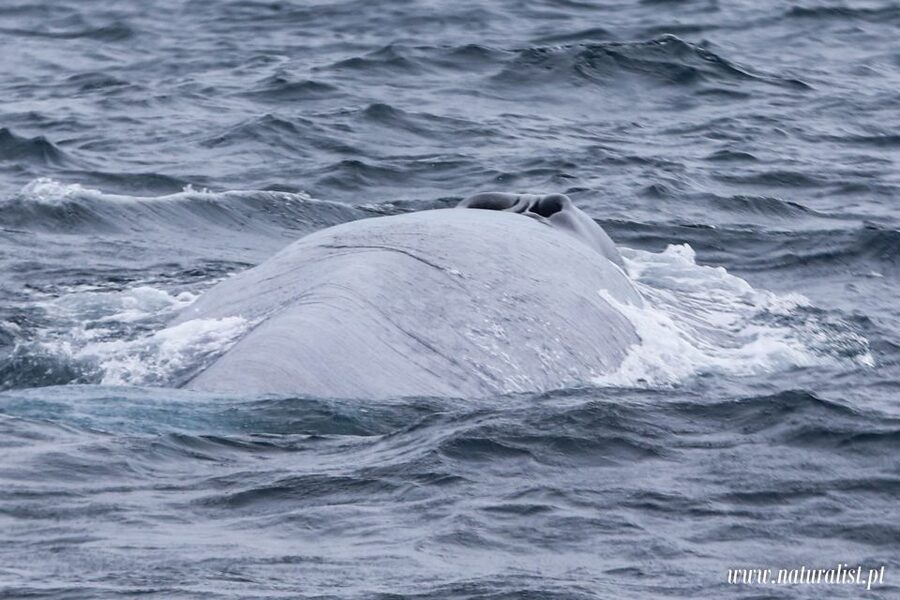
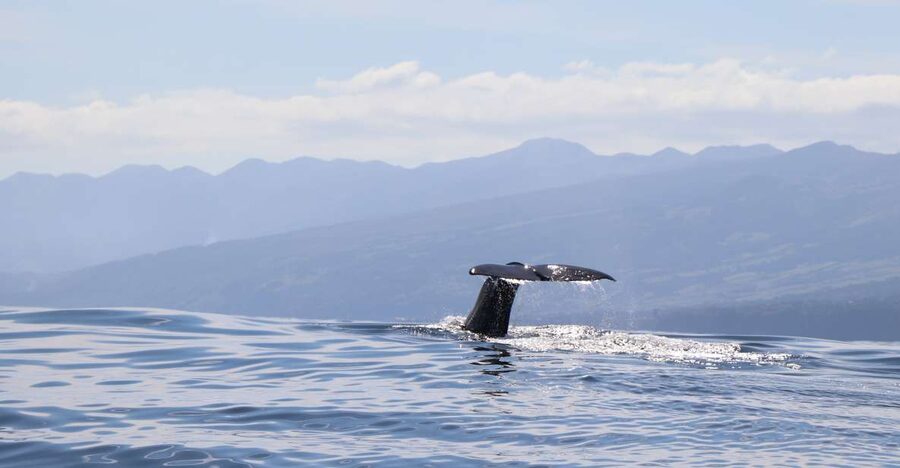
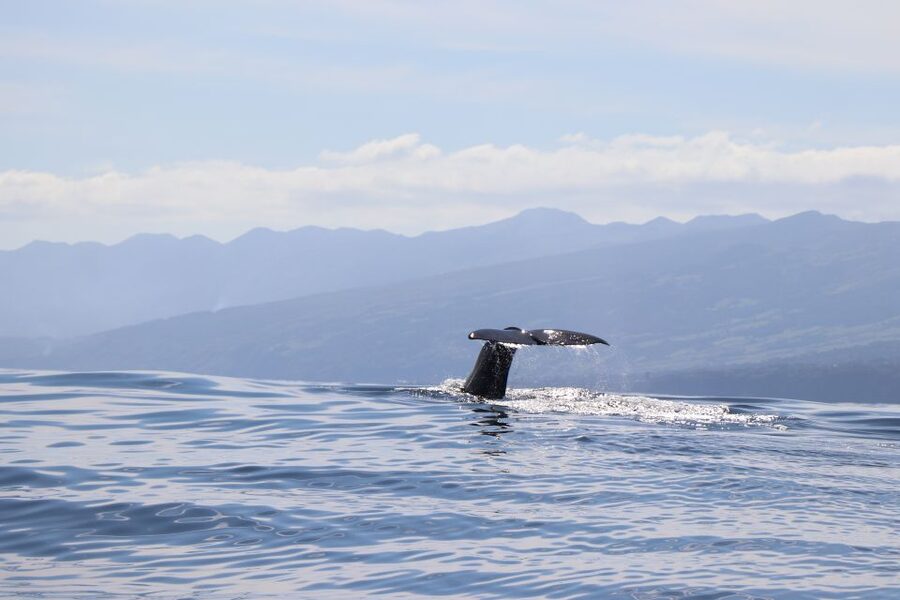
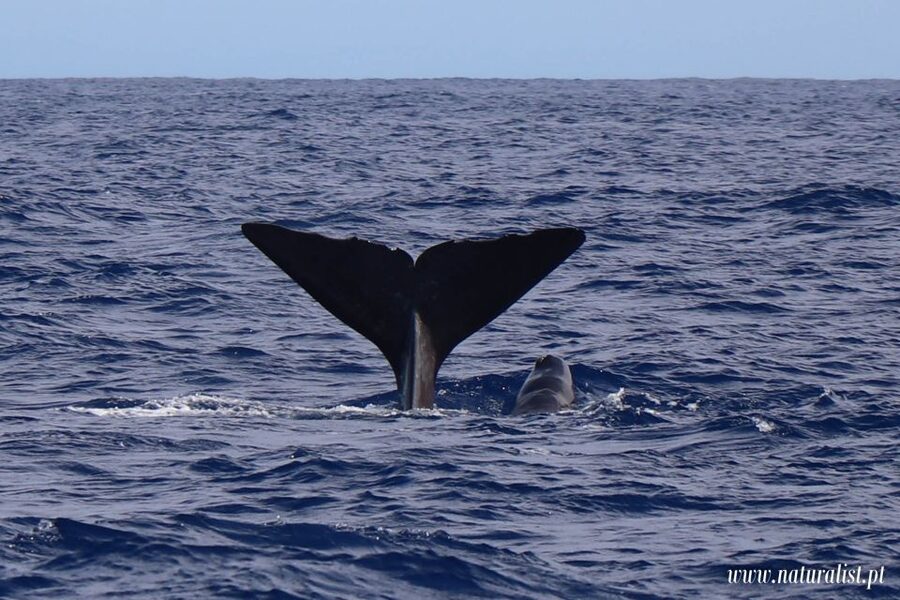
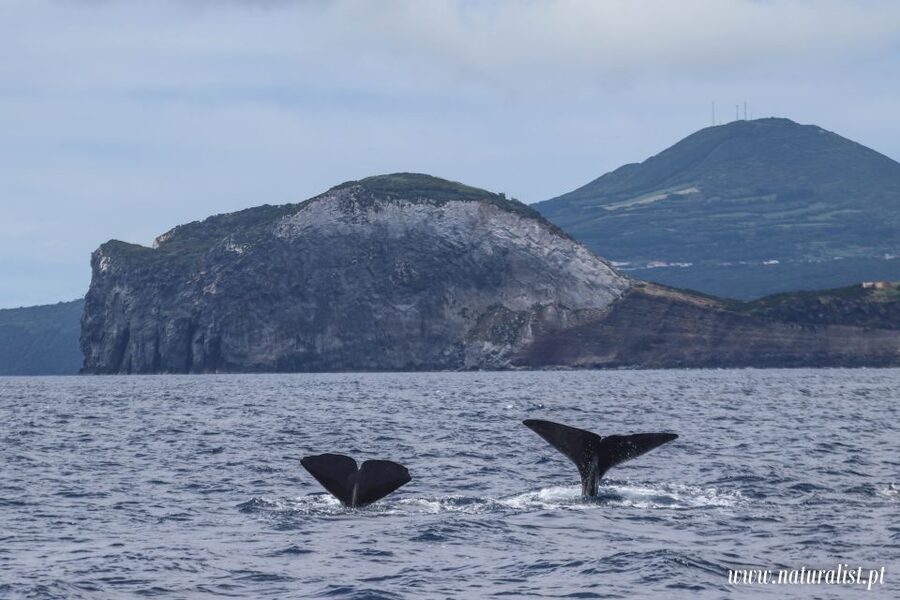
Sperm whales are the most dependable large whale in the region because they live in Azorean waters throughout the year. Seeing one surface, breathe, and then disappear can be brief, so listen carefully to the guide and keep your eyes moving across the water.
Blue and fin whales are linked mainly with spring. These are among the largest animals on Earth, but the tour does not promise them. Sei whales can also appear in summer, and Bryde’s whales have been seen on autumn and summer outings. Humpback whales are migratory and may pass through during seasonal movements.
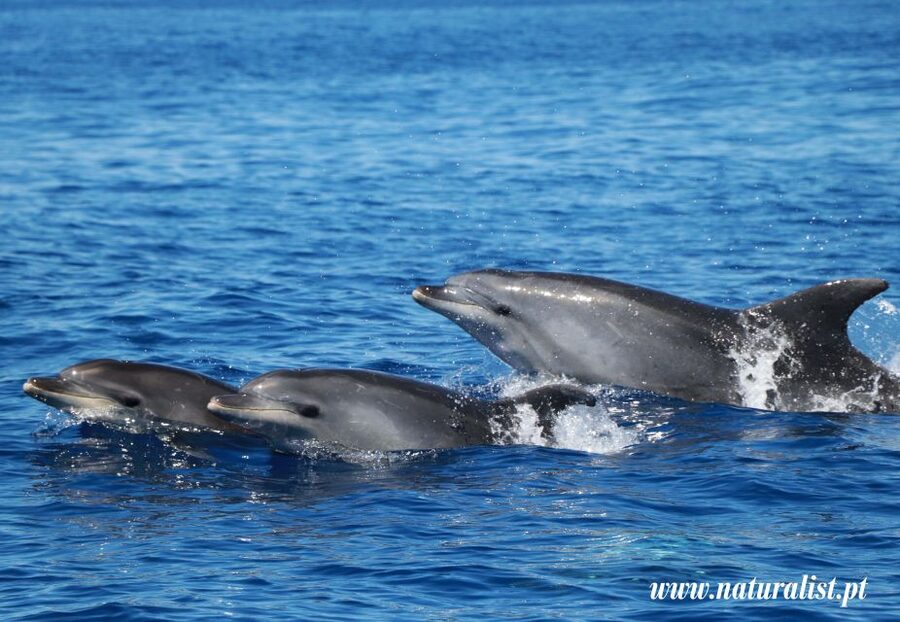
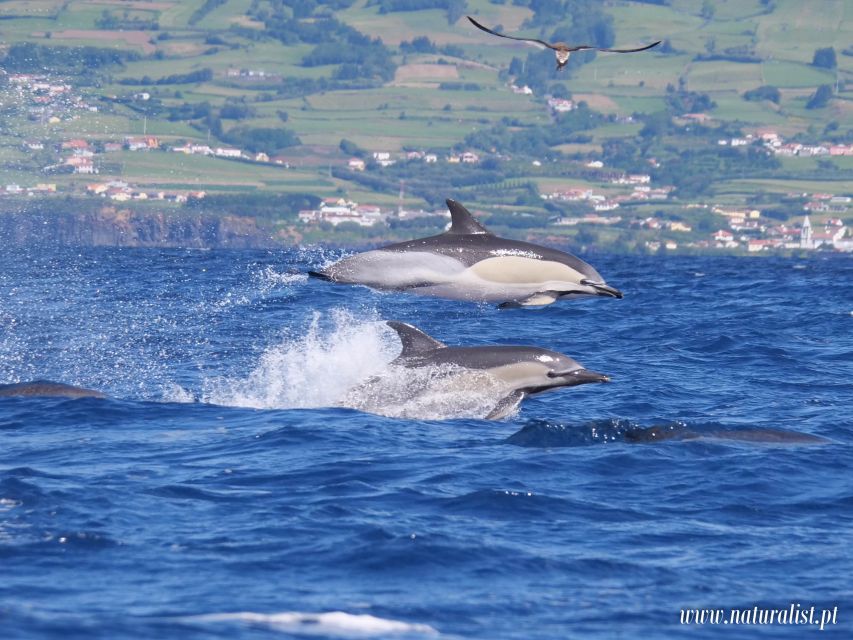
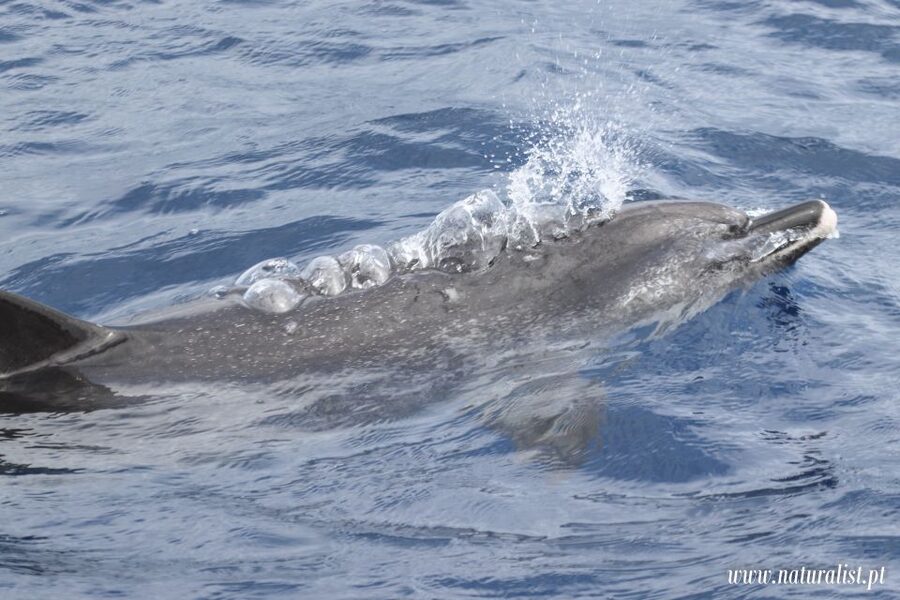
The Azores region has more than 25 cetacean species. Resident bottlenose, Risso’s, and common dolphins may be seen, along with migratory species. Dolphin encounters can be especially active. One trip produced dozens of dolphins close to the boat, while another included a very large group moving and feeding near several whale species.
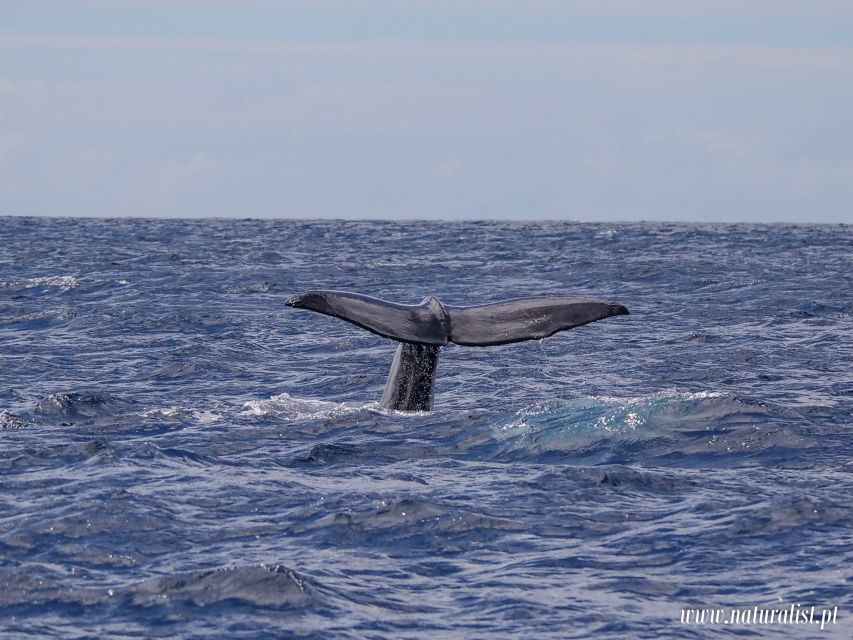
Dolphins often provide the most immediate action because they may travel near the RIB and move through the waves. Whales tend to reward patience. A sperm whale may surface only long enough for a few breaths before showing its tail and heading below.
You should keep your camera ready, but do not spend the whole trip looking at a screen. The crew may point out an animal that appears only for seconds. If photographs are taken by the guide, ask how and when they will be shared, since complimentary photos were provided on some departures.
More Zodiac and RIB Whale Watching in Portugal:
- Funchal: Whale and Dolphin Watching Speed Boat Tour
★ 4.6 · 526 reviews - Pico Island: Azores Whale & Dolphin Watching on Zodiac Boat
★ 4.8 · 408 reviews - From Calheta: Whale and Dolphin Watching RIB Boat Tour
★ 4.9 · 298 reviews - Funchal: RIB Whale Watching Cruise and Optional Dolphin Swim
★ 4.6 · 273 reviews
Turtles, birds, and smaller signs of life
Whale watching is the headline, but the Azorean sea supports a much wider range of animals. Loggerhead and green turtles live in the region, while leatherback and Kemp’s ridley turtles may also occur. Two loggerhead turtles appeared during one trip, adding a memorable surprise to the whale search.
You might also see flying fish breaking from the water, tuna moving through feeding areas, or sunfish resting near the surface. Squid and octopus are possible, as are hammerhead and blue sharks. These sightings are not guaranteed, but they show why the excursion is better understood as a marine wildlife trip rather than a whale-only outing.
Birdwatching adds another layer. Cory’s, great, and Manx shearwaters can pass over the water, along with common and roseate terns. When dolphins and whales feed together, seabirds may gather over the same patch of ocean. That can turn a quiet wait into a busy natural event.
If you enjoy identifying wildlife, bring binoculars only if they are compact and secure. On a moving RIB, loose items are easy to lose or damage. A phone in a waterproof pouch is more practical than a large camera unless you already know how to protect it from spray.
What the RIB ride feels like in real conditions
A semi-rigid inflatable boat gives you a close-to-the-water view and gets out of the marina quickly. That is part of the fun. One passenger compared the high-speed ride to an amusement-park attraction, though that comparison should also warn you that the journey is active rather than gentle.
The front seats generally take the most spray and movement. Waterproof outer layers are supplied, but wear water-resistant footwear and dress in layers. Even when the weather is fine, wind on the water can make the return trip feel cool.
Rough conditions can affect your enjoyment. One April outing was described as turbulent, even though the whale sightings made the discomfort worthwhile. If you are prone to motion sickness, ask the operator in advance what conditions are expected and consider your usual response to small boats.
The activity is not suitable for children under five, pregnant women, people with serious back problems, or anyone recovering from recent surgery. Those restrictions are sensible for a fast RIB on open sea. The company can reschedule when weather prevents a safe departure, and a full refund is available when the operator cancels.
Is $101 a fair price for three hours?
At about $101 per person, this is a mid-to-high priced wildlife outing. The cost makes more sense when you count what is included: a three-hour expedition, safety insurance, waterproof clothing, a briefing, a marine researcher, and guidance about the animals.
You are also paying for a smaller boat and a crew that uses land-based spotters rather than simply driving offshore and hoping for the best. The research connection adds value if you care about conservation or want proper explanations instead of a quick list of species.
The price is harder to justify if you only want a guaranteed whale sighting. No responsible wild-animal tour can promise one, and at least one outing returned without whales. You may still see dolphins, seabirds, turtles, or other marine life, but the possibility of a quiet day remains part of the deal.
Free cancellation up to 24 hours before departure and the option to reserve now and pay later make planning easier. Still, keep flexibility in your schedule. Weather can change the departure date, and the operator may shift arrangements between Faial and Pico when needed.
Who will enjoy this trip most?
I would choose this tour if you want three things at once: a fast small-boat ride, serious wildlife searching, and useful scientific context. It suits adults, older children over five, photographers, birdwatchers, and anyone curious about marine conservation.
It is also a good choice if you value careful animal watching. The crew is described as maintaining distance, moving the boat with care, and prioritizing the wellbeing of people and wildlife. That approach may feel slower than a chase, but it is the right tradeoff for a responsible encounter.
I would think twice if you dislike open-water motion, have back problems, are pregnant, or need a calm sightseeing boat. The RIB is part of the appeal, but it is also the main physical drawback.
The tour is offered in English and Portuguese. The wider expedition information also lists Spanish, while French must be requested in advance and depends on availability. Confirm your preferred language when booking, especially if clear interpretation is important to you.
My booking advice
Book this trip if the idea of seeing wild whales with a marine researcher sounds better than a guaranteed photo opportunity. The strongest days can be spectacular, with sperm whales, migratory whales, close dolphins, turtles, and huge feeding flocks all appearing within one outing.
Go with realistic expectations. The sea may be rough, the boat may get wet, and whales may not show. But the careful crew, research connection, land-based spotting system, and variety of possible wildlife make this one of Horta’s stronger choices for an informed ocean experience.
FAQ
Where does the whale-watching trip begin?
It begins at Naturalist, Science and Tourism, Whale Watching, in Horta Marina. You should arrive 15 minutes before departure.
What time do the tours leave?
Morning tours leave at 9:00, with an 8:45 arrival time. Afternoon tours leave at 2:00, with an arrival time of 1:45.
How long does the boat trip last?
The expedition takes about three hours.
How many people can ride in the boat?
The semi-rigid RIB boat carries up to 16 passengers. Some departures may have fewer people.
What languages are available?
The activity specifically lists English and Portuguese. Spanish tours are also described, and French must be requested in advance according to availability.
Is a marine biologist included?
Yes. A marine researcher or biologist from the University of Lisbon and the Azores is on board to collect data and explain the marine life.
What animals might I see?
Possible sightings include sperm, blue, fin, humpback, sei, and Bryde’s whales; bottlenose, Risso’s, common, and other dolphins; loggerhead and green turtles; seabirds; tuna; sharks; sunfish; flying fish; squid; and octopus.
Is the trip suitable for children and pregnant women?
Children under five cannot join. The activity is also not suitable for pregnant women, people with back problems, or people with recent surgeries.
What happens if the weather is bad?
Trips depend on weather conditions and may be rescheduled. If the operator cancels the trip, a full refund is available. You can also cancel up to 24 hours before departure for a full refund.
Just added around Portugal
- Madeira : Whales and Dolphins wooden boat excursion★ 4.1 · 247 reviews
- Madeira: Whale and Dolphin Watching Tour★ 4.6 · 174 reviews
- From Machico: Madeira Whale and Dolphin Watching Boat Tour★ 4.8 · 225 reviews
- Terceira Island: Whale & Dolphin Watching | Best Wildlife Tour★ 4.0 · 24 reviews
- Observation of Dolphins and Whales with Marine Biologist in Arrábida★ 5.0 · 224 reviews
- Sesimbra: Arrábida Dolphin and Whale Watching tour with biologist★ 5.0 · 248 reviews
- Full Day Sete Cidades with Whale Watching at Mosteiros★ 5.0 · 10 reviews
- Whale Watching Activity in North Coast★ 4.5 · 49 reviews
Whale and Dolphin Watching Tours in Portugal, compared.
From Funchal: Ecological Catamaran Dolphin Whale Watching
Read our review →
Funchal: Dolphin and Whale Watching Catamaran Cruise
Read our review →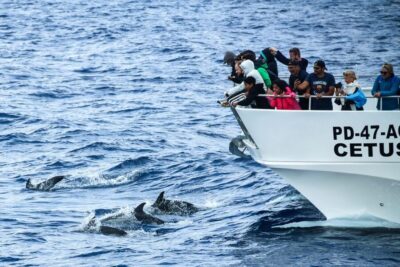
From Ponta Delgada: Whale and Dolphin Watching Trip
Read our review →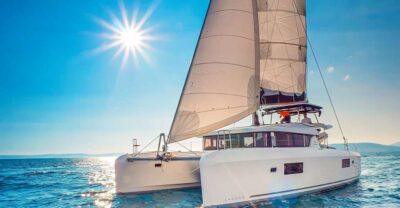
Funchal Bay: Dolphin & Whale Watch Luxury Catamaran Cruise
Read our review →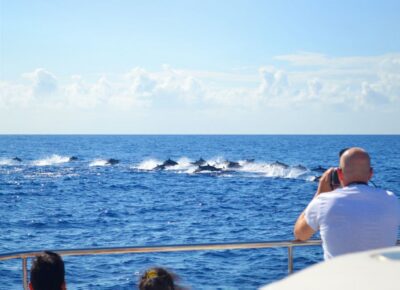
All Inclusive Whale and Dolphin Watching Luxury Tour
Read our review →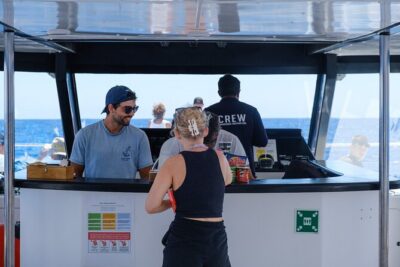
Madeira Dolphin and Whale Watching on a Ecological Catamaran
Read our review →
Funchal: Dolphin and Whale Watching by Luxury Catamaran
Read our review →
Funchal: Dolphin and Whale Watching Sunset Sailing Tour
Read our review →Browse the lists this tour appears in