
REVIEW · NAHA WHALE WATCHING TOURS
From Naha: Whale Watching with Pickup and English Guide
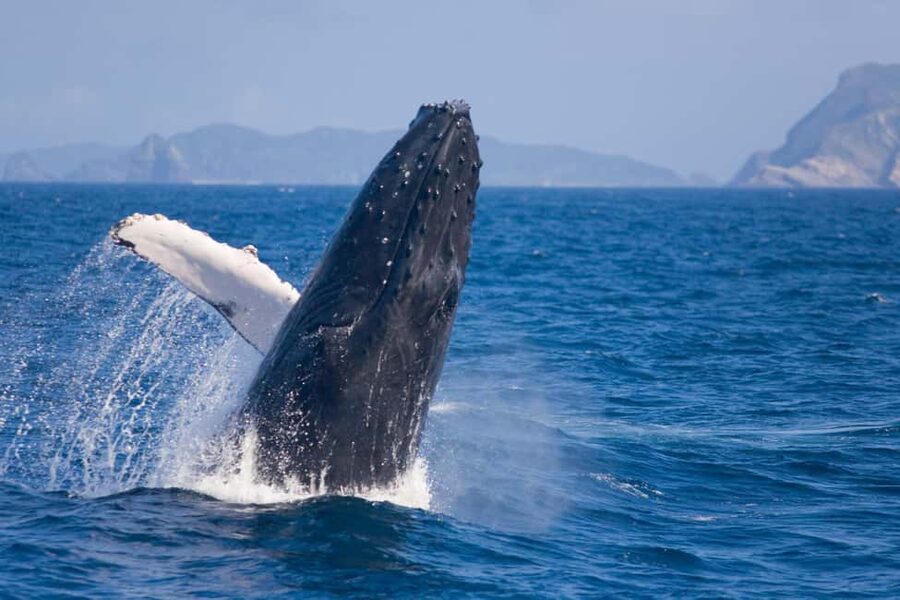
Whales make Okinawa feel wonderfully wild. This $30 boat trip offers a thrilling chance to see humpbacks in the warm waters near the Kerama Islands, and I like the choice of hotel pickup or a simple port meeting. I also like the free whale photos and the full refund policy offered during the stated February 1 to March 15, 2026 guarantee period.
The main caution is that the English commentary may be brief. Most detailed information comes through a QR-code audio guide, and the boat can feel crowded when demand is high. Still, for three hours at sea and the possibility of seeing a humpback breach nearby, this is a strong-value outing if you accept the uncertainty of wildlife watching.
Key points before you book
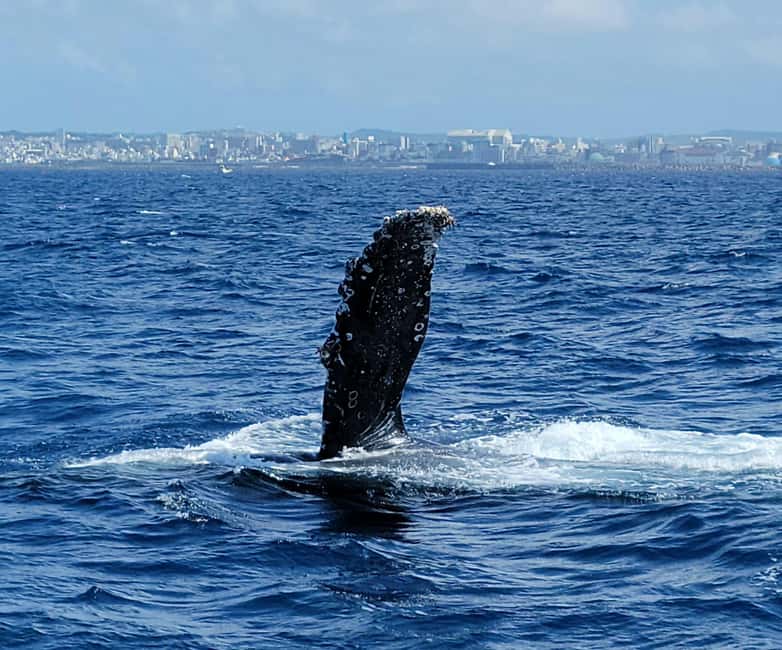
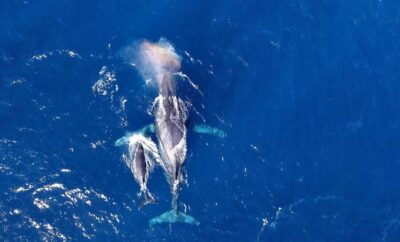
- Humpbacks visit Okinawa in winter: The whales come to the Kerama Islands to mate and give birth before continuing across the Pacific.
- Two departure times: Morning boats leave around 9:00, with return near noon. Afternoon boats leave around 13:45 and usually return around 16:45.
- Pickup is available in Naha: Choose from listed hotels and central stops, but book pickup by 3:00 PM Japanese time the day before.
- The whale-viewing limit is one hour: This follows local rules designed to reduce pressure on the animals.
- Detailed facts come by smartphone: The digital guide supports English, Spanish, French, Japanese, Cantonese, Mandarin, Simplified Chinese, and Korean.
- The sighting guarantee has strict dates: The advertised full refund or free re-boarding applies from February 1 through March 15, 2026 only.
Why Okinawa is a good place for whale watching
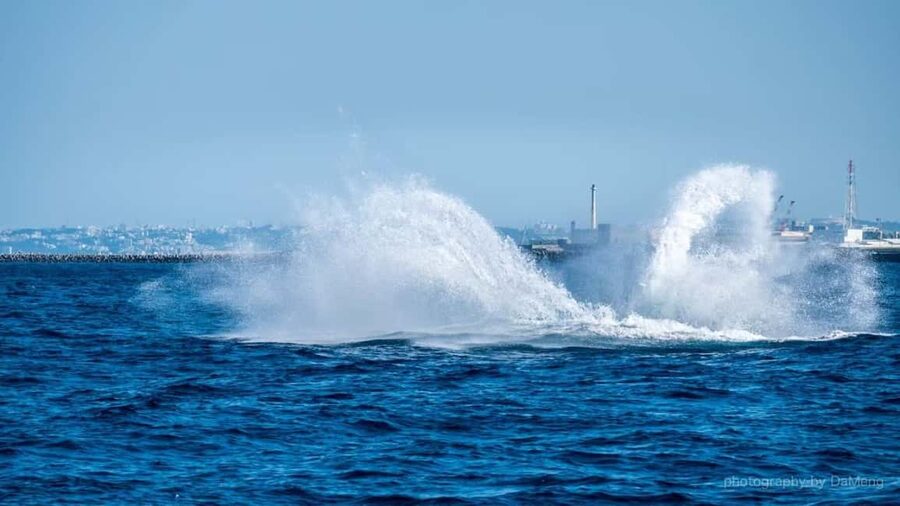
From January through March, humpback whales gather around the Kerama Islands, a group of islands west of Okinawa’s main island. The waters are warm compared with the northern Pacific, making them suitable for mating and giving birth.
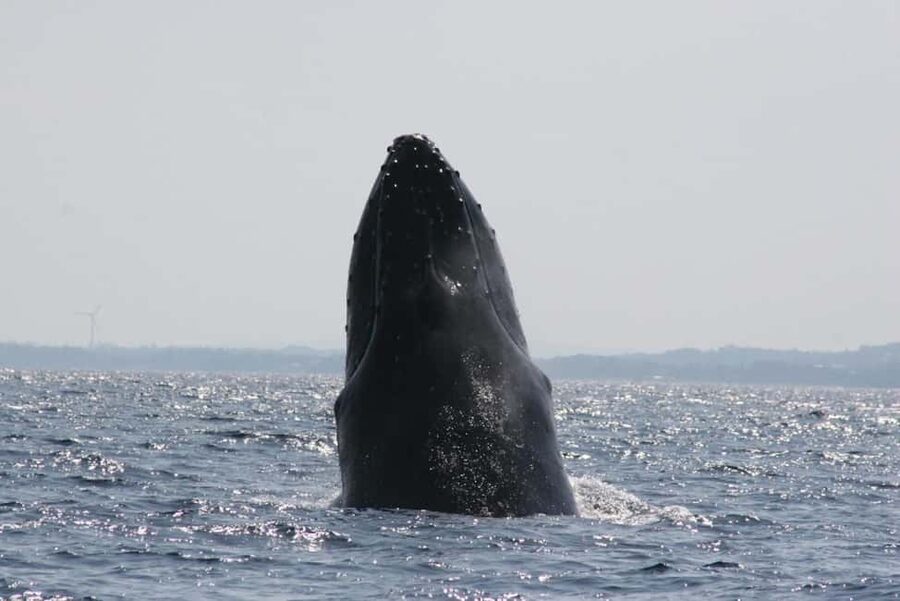
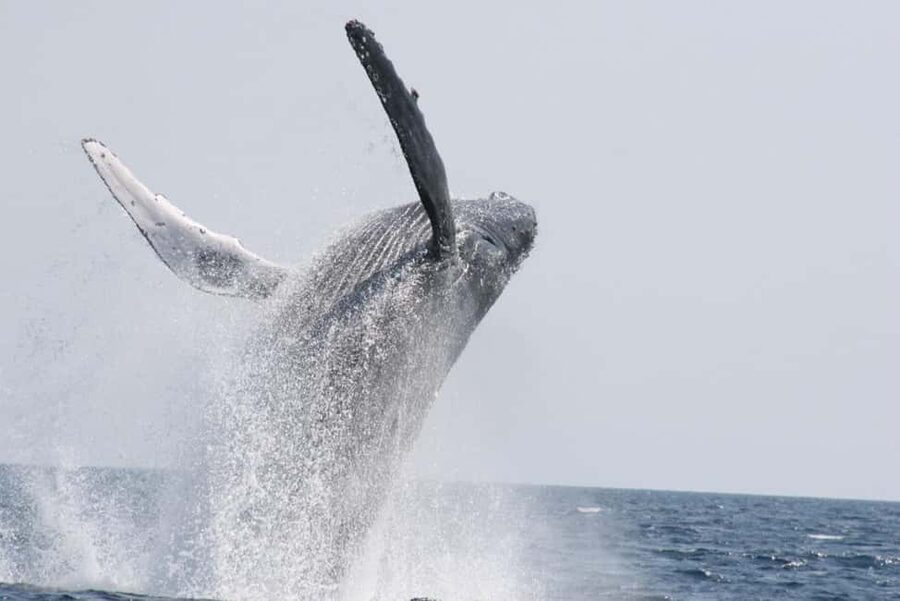
That seasonal movement gives this trip a clear purpose. You are not simply taking a scenic cruise and hoping something large appears. You are going out during a known part of the whales’ yearly cycle, when the chance of seeing blows, tails, breaches, and splashes is at its best.
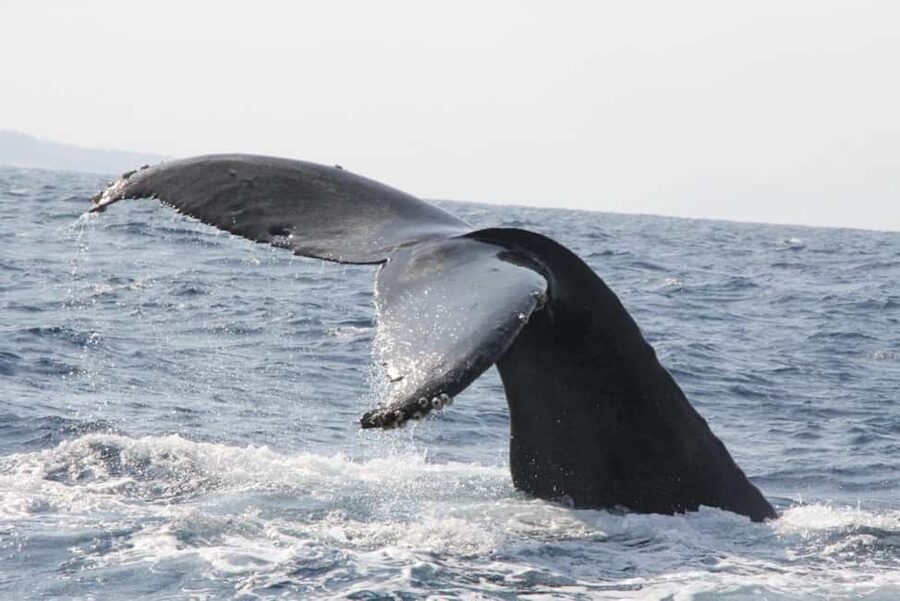
Still, these are wild animals. The crew may search for the full three hours, and the boat can return without a sighting. Even the definition of a completed tour is important: if a whale’s blow is seen from a distance, or anyone on board spots a whale, the tour counts as complete.
That rule may surprise you. A distant blow is not the same as a close breach, so you should book this with realistic expectations. The trip is a chance to see whales, not a guarantee of a perfect photograph or a dramatic tail slap.
More Guided Trips in the world:
- Húsavík: Whale Watching Tour with Guide
★ 4.6 · 2,761 reviews - Reykjavik: Whale Watching Tour with Expert Guide
★ 4.3 · 2,422 reviews - Whale Watching Tour with Professional Guide from Reykjavik
★ 4.5 · 744 reviews
Meeting at Miegusuku Port or taking the Naha pickup
The main meeting point is the waiting room at Naha Miegusuku Port. Look for staff wearing blue Cerulean Blue shirts. Check-in begins at the stated activity time, and you will sign a consent form before boarding.
The boat is scheduled to leave at about 9:00 in the morning or 13:45 in the afternoon. The ride lasts around three hours, although you may return earlier if whales are found quickly.
If you prefer not to arrange your own transport, pickup is offered from several Naha locations. These include T Galleria in Omoromachi, Saion Square, Tenbusu, Hotel Collective, the Okinawa Prefectural Assembly, Hotel Torifito Naha Asahibashi, Pacific Hotel Okinawa, DoubleTree by Hilton Hotel Naha, Okinawa NaHaNa Hotel & Spa, Prince Smart Inn Naha, Hotel Aqua Citta Naha, and Hotel Peace Island Naha.
Pickup times are early. Morning collection begins around 7:45, depending on the stop, and afternoon pickup begins around 12:30. Tenbusu and Hotel Collective pickup are not available on Sundays because parts of the road become pedestrian-only.
You must request pickup no later than 3:00 PM Japanese time on the day before the trip. Late bookings still need to meet at the port, even if you selected a hotel pickup option. The exact pickup time is sent by WhatsApp or email the day before, so provide a phone number with the country code and check your messages.
This system is useful, but it leaves room for confusion. One booking had a timing problem, so I would confirm the departure and pickup details as soon as the operator sends them. Do not rely only on the time shown on a booking voucher.
What the three-hour boat trip is like
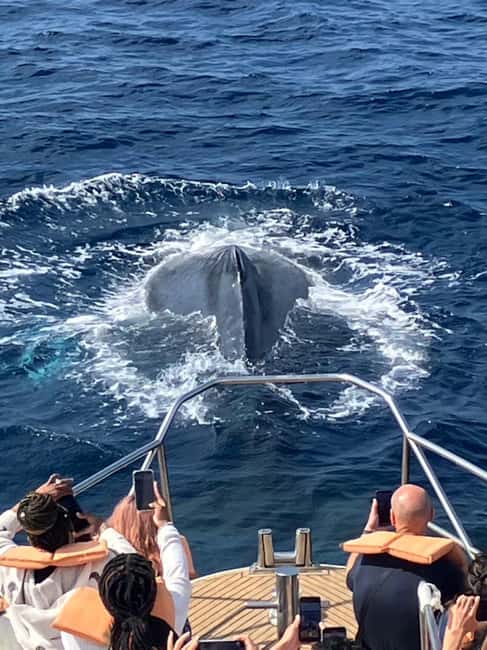
After check-in, you board a whale-watching boat with life jackets required throughout the trip. The crew searches the surrounding waters, watching for a blow or other signs of humpback activity.
Once whales are located, observation is limited to a maximum of one hour. That may sound short, but it is part of Okinawa’s whale-watching agreement. Boats are expected to keep encounters respectful and avoid placing constant pressure on the animals.
The remaining time is used to reach the whales and return to port. If the captain finds whales soon, you may come back before the full three-hour period ends. If sightings take longer, the search continues until the scheduled return time.
The strongest part of the outing is the sudden change in attention when a whale appears. Everyone watches the water, waiting for the next blow. A humpback may surface, slap its tail, splash, or breach. The whales can appear only briefly, so keep your camera ready, but do not spend the whole trip staring at a screen.
Free digital whale photos are included after the tour. That is a helpful extra because photographing a moving whale from a boat is not easy, especially when the sighting lasts only seconds.
English support and the smartphone guide
The crew speaks English and Japanese, and traditional Chinese support is listed as an available live-guide language. The more detailed natural-history material comes through a QR-code guide on your phone.
The digital guide supports English, Spanish, French, Japanese, Cantonese, Mandarin, Simplified Chinese, and Korean. It covers whale behavior, migration, and conservation, giving you something useful to follow while the boat is searching.
Bring your own smartphone. Wi-Fi, earphones, and a separate audio-guide device are not included. If you want to listen clearly, carry earphones and make sure your phone is charged before leaving your hotel.
You should also understand the difference between language support and a full spoken lecture. The crew can assist in English and Japanese, but the live explanations may be limited. Some people will appreciate reading or listening at their own pace. If you want a naturalist-style talk from the captain every few minutes, this may feel light on information.
The veteran captain remains an important part of the outing because the crew handles the search and boat operation. Just do not assume that the English guide means every whale fact will be explained aloud.
A few more whale watching trips around the world worth a look
- Tenerife: Eco-Yacht Whale and Dolphin Watching and Swimming
★ 4.7 · 15,619 reviews - Los Cristianos Respectful No-Chase Whale and Dolphin Safari
★ 4.6 · 12,782 reviews - Reykjavík: Whale Watching and Marine Life Cruise
★ 4.6 · 9,838 reviews - From Funchal: Ecological Catamaran Dolphin Whale Watching
★ 4.5 · 8,204 reviews
Crowding, comfort, and safety on board
The boat has been described as a little crowded on busy departures. That matters during whale watching because everyone wants a clear view, and movement around the boat can become awkward when a whale surfaces.
You will need to wear a life jacket at all times. The crew requires it, even while the boat is moving calmly. One comment raised concerns about uneven safety habits among crew members, including footwear and life-jacket use. That does not change the official requirement for passengers, but it is a fair reason to pay attention to instructions and keep your own jacket properly fastened.
Bring a jacket even on a warm Okinawan day. Conditions at sea can feel cooler and windier than in central Naha. Sunglasses, sunscreen, a towel, and drinks are also recommended.
Motion sickness is the biggest practical concern. The tour does not include motion-sickness medicine, so bring your own prevention if you are sensitive to boat movement. Pregnant people, people with a cold or illness, intoxicated people, and anyone hungover may be refused boarding without a refund. Alcohol and drugs are not allowed, and swimming is prohibited.
Infants may also be refused in extreme sea conditions for safety reasons. These rules are strict, but they make sense for a small boat operating in open water.
The price: good value, with one major condition
At $30 per person, this is inexpensive for a three-hour boat outing that includes the boat fare, insurance, life jacket, whale-watching fee, English assistance, optional Naha transportation, and digital whale photos.
The value is especially good if you are already interested in marine wildlife. You are paying for the boat, crew, search time, and chance to see an animal that cannot be scheduled like a museum visit. A successful sighting can become one of the memorable parts of an Okinawa trip.
The price feels less secure if you are visiting during a period without the whale guarantee. Outside February 1 through March 15, 2026, no refund or re-boarding is offered when no whales are seen. The trip is also considered complete if someone spots a whale at a distance or sees only a blow.
There is a date inconsistency in the supplied conditions: one notice refers to a 2025 guarantee period, while the current offer specifies February 1 through March 15, 2026. Before paying, I would confirm the exact guarantee dates for your booking in writing.
The operator may cancel because of poor sea conditions or too few participants. You should be told the day before and offered a refund or a chance to reschedule. That is different from a no-sighting result, which normally does not qualify for compensation outside the guarantee dates.
Which pickup point makes the most sense
For the easiest morning, choose the closest listed stop to your hotel rather than crossing Naha before sunrise. T Galleria and Saion Square are useful central meeting points, while the hotel stops save you from finding the port on your own.
If you are staying near Kokusai Street, Hotel Collective, Tenbusu, or Saion Square may be convenient. Guests near the harbor may find it simpler to go directly to Miegusuku Port and avoid a pickup vehicle making several stops.
Pickup adds convenience, but it also creates a second schedule to monitor. You must be ready at the exact time sent the day before, and the vehicle may need to collect other people before reaching the port. If punctuality matters, meeting at the port gives you more control.
The port waiting room is the key landmark. Allow time to find it, complete check-in, and sign the consent form. Do not arrive at the boat itself expecting to board without checking in.
What I would bring for a better outing
Pack lightly, but cover the essentials:
- Sunglasses and sunscreen for glare off the water
- A jacket for wind and cooler conditions
- Drinks and a towel
- Motion-sickness prevention
- A charged smartphone
- Earphones for the digital guide
- A camera that is easy to operate quickly
Avoid alcohol before the trip. You cannot swim, and life jackets remain on throughout the outing.
I would also keep expectations modest about photographs. The free photos supplied afterward may be better than what you capture yourself, particularly if a whale surfaces far from the boat or appears for only a few seconds.
Who should book this experience
This trip suits you if you want an affordable chance to see wild humpbacks and can handle an uncertain result. It works well for visitors with a free morning or afternoon in Naha, families with older children who can follow boat-safety rules, and anyone who enjoys wildlife more than a tightly scripted attraction.
It is less suitable if you need guaranteed sightings, dislike boat movement, are pregnant, or want a long spoken lecture in English. The digital guide does much of the educational work, and the live commentary may not satisfy someone looking for detailed interpretation from the crew.
The trip also rewards patience. A whale may not appear during the first hour, and the most dramatic moment may last only a few seconds. Keep watching the water, listen for instructions, and remember that respectful whale watching means the boat does not linger endlessly beside the animals.
Should you book the Naha whale-watching trip?
I would book it if the price matters, your schedule has room for uncertainty, and you are visiting during the February 1 to March 15, 2026 guarantee period. The chance to see a humpback in Okinawa’s winter waters, plus free photos and optional pickup, gives the outing solid value.
Book with caution outside the guarantee period. You may spend three hours at sea and return without a refund, even if the crew conducts the search properly. Confirm your pickup time, bring motion-sickness protection, and treat the English support as practical assistance rather than a full live lecture.
For a low-cost wildlife outing, this is an appealing choice. Just remember that the whale is in charge of the schedule.
FAQ
How long does the whale-watching tour last?
The activity lasts about three hours. Morning departures leave around 9:00 and usually return near 12:00. Afternoon departures leave around 13:45 and usually return near 16:45, though the boat may return earlier if whales are found quickly.
Where does the tour meet?
Check-in takes place inside the Naha Miegusuku Port waiting room. Staff wear blue Cerulean Blue shirts. Pickup is available from listed hotels and central Naha locations if it is booked by 3:00 PM Japanese time the day before.
Is whale watching guaranteed?
No. Whales are wild animals, and a sighting cannot normally be guaranteed. From February 1 through March 15, 2026, the stated policy offers a full refund or free re-boarding if no whales are seen. Confirm the dates before booking because another supplied notice refers to a different year.
What languages are available?
Staff assistance is available in English and Japanese, and traditional Chinese is listed among the live-guide languages. A smartphone audio guide provides information in English, Spanish, French, Japanese, Cantonese, Mandarin, Simplified Chinese, and Korean.
What should I bring?
Bring sunglasses, sunscreen, a jacket, drinks, a towel, and motion-sickness prevention. You should also bring a charged smartphone and earphones if you plan to use the digital guide.
Can I cancel the booking?
You can cancel up to 24 hours in advance for a full refund. The operator may also cancel because of poor sea conditions or too few participants, in which case you will be informed and offered a refund or rescheduling.
Just added around the world
- Newport Beach: Year-Round Whale Watching Cruise★ 4.2 · 151 reviews
- Juneau: Mendenhall Glacier and Whale Watching Tour★ 4.6 · 98 reviews
- Wilsons Promontory: Whale Spotting Cruise with Lunch★ 4.9 · 20 reviews
- Wismar: Electric Boat Tour past Whale Island with Poel Stop★ 4.3 · 91 reviews
- Madeira : Whales and Dolphins wooden boat excursion★ 4.1 · 247 reviews
- From Punta Canta: Whale Watching Cruise with Cayo Levantado★ 3.9 · 7 reviews
- Oahu: Waikiki Eco-Friendly Morning Whale Watching Cruise★ 4.4 · 119 reviews
- Whale Watching Tour with Transfers★ 3.6 · 4 reviews
Naha Whale Watching Tours, compared.
Naha, Okinawa: Kerama Islands Half-Day Whale Watching Tour
Read our review →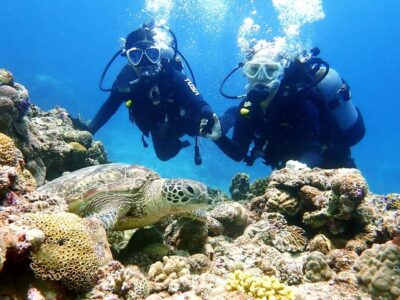
Naha:Kerama Island Experience Dive/Snorkeling/Whale Watching
Read our review →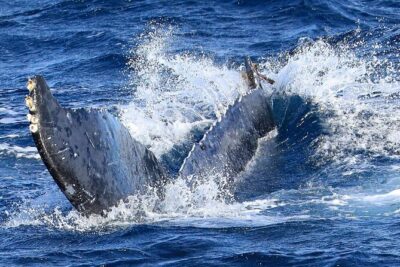
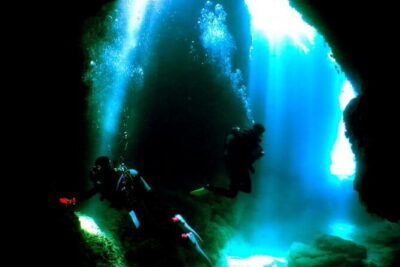
Okinawa:Kerama Islands experience Diving/Snorkeling/WhaleWatching
Read our review →
Naha: “Orca” Spotting Glass Bottom Boat & Sam’s Famous Steak
Read our review →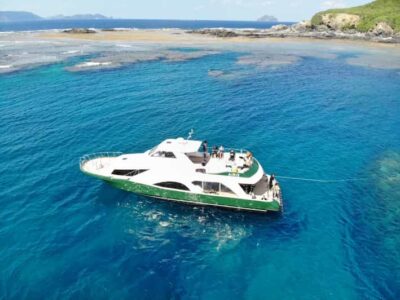
Naha:Kerama Islands 2 Fun Dive/Whale watching Limited time
Read our review →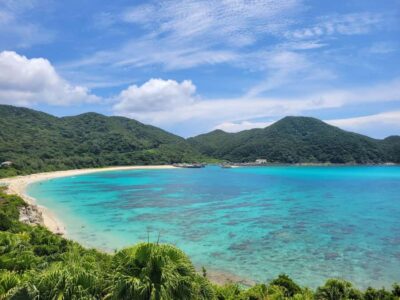
From Naha : Kerama, Tokashiki Island and Whale Watching Tour
Read our review →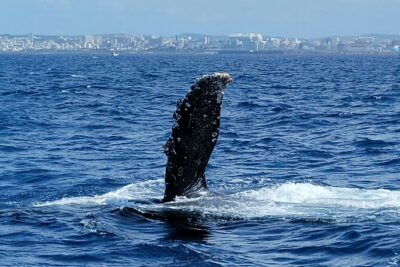
Browse the lists this tour appears in