
REVIEW · TENERIFE WHALE WATCHING TOURS
Whale Watching and Marine Science Tour
Whales, dolphins, and a working hydrophone: excellent. This Tenerife boat trip combines wildlife watching with real marine science, and I like the small group of just 10 people. I also like that a marine biologist leads the outing, so you are not simply pointed toward a fin and given a species name.
The main consideration is simple: wild animals set the schedule. Sightings are never guaranteed, and the boat has no restroom or snacks. At $90.70 per person, this is not the cheapest way to get on the water, but the science tools, close guide contact, and conservation focus give it more purpose than a standard sightseeing cruise.
The trip lasts about two and a half hours and leaves from Marina del Sur in Las Galletas. It is a good fit for families with older children, curious adults, and anyone who would rather learn how marine research works than spend a few hours on a crowded party boat.
Key points to know before you book
- Only 10 people per boat: You get room to ask questions and a much better chance of hearing the guide.
- A hydrophone brings the ocean to life: You may listen to pilot whale communication beneath the boat.
- Wildlife sightings can be varied: Pilot whales and bottlenose dolphins are common highlights, with dolphins, turtles, flying fish, rays, and other species possible.
- Rasca adds a scenic coastal stop: The route passes the Rasca lighthouse and volcanic formations in the protected Malpaís de Rasca area.
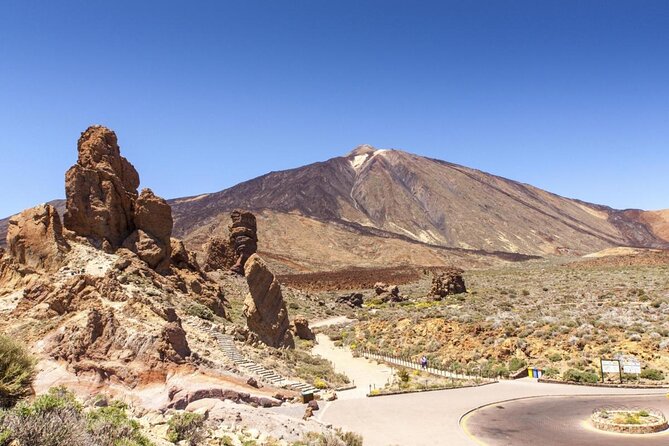
- Teide may appear offshore: On a clear day, Mount Teide provides a memorable backdrop from the sea.
- Book early if your dates are fixed: This experience is often reserved about 22 days ahead.
Setting out from Las Galletas
You meet at Biosean Whale Watching and Marine Science at Marina del Sur, Pantalán 4, in Las Galletas. The tour returns to this same point, which makes planning easier if you are staying in the south of Tenerife or arranging a short taxi ride from elsewhere.
The marina is near public transportation. Your confirmation arrives when you book, so check the meeting details carefully and allow enough time to find Pantalán 4. The tour is offered in English, and bottled water is included.
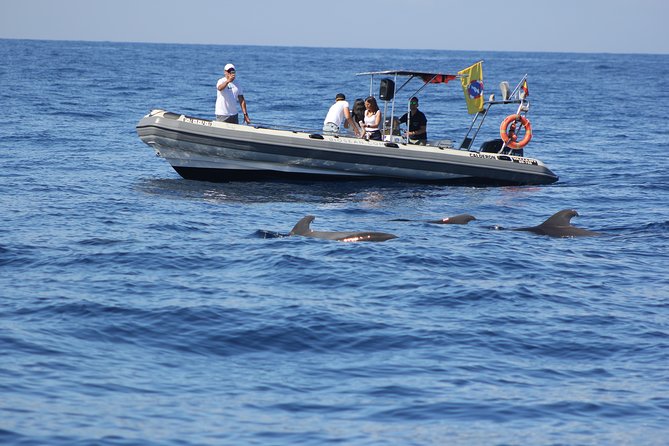
The small boat format matters here. With a maximum of 10 people, you are less likely to feel lost behind a crowd or miss a question because the guide is busy with a large group. The setting also suits children old enough to listen, watch quietly, and follow instructions around wildlife.
There is no restroom onboard. You should take care of that before departure. Snacks are not included either, so eat beforehand or bring anything permitted for your own needs. Bottled water is supplied, and several past outings also included fresh drinks, but the listed inclusion is bottled water, so I would not count on a full beverage service.
A few more whale watching trips around Tenerife worth a look
- Tenerife: Eco-Yacht Whale and Dolphin Watching and Swimming
★ 4.7 · 15,619 reviews - Los Cristianos Respectful No-Chase Whale and Dolphin Safari
★ 4.6 · 12,782 reviews - Costa Adeje: Whale & Dolphin Eco-Cruise with Snacks & Drinks
★ 4.6 · 5,096 reviews
Watching whales and dolphins responsibly
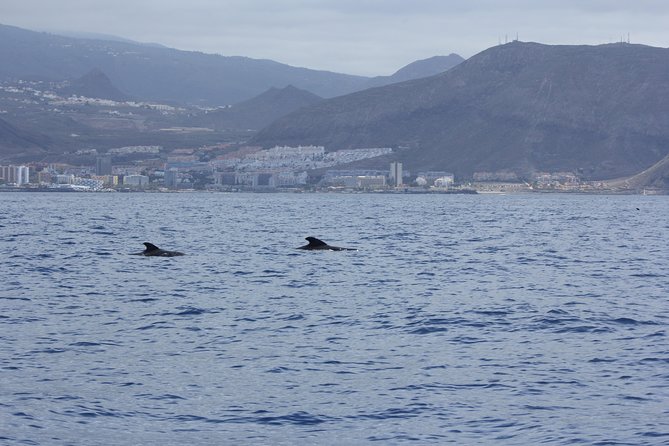
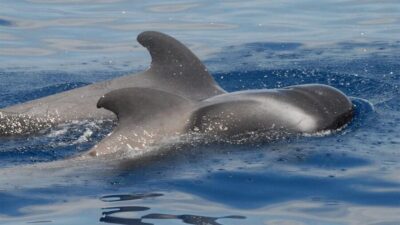
The heart of the trip is the search for marine mammals in the waters off Tenerife. Pilot whales and bottlenose dolphins are the main stars, and past sightings have also included Atlantic dolphins, loggerhead turtles, flying fish, hammerhead sharks, and rays near the harbor.
That variety is part of the appeal, but it is important to keep expectations sensible. You are going into a wild environment, not an aquarium. The crew can search suitable areas and explain what you are seeing, but no ethical operator can promise a particular animal on a particular morning.
The guide’s approach is one of the strongest parts of the experience. Instead of treating whales and dolphins as props for a photo, the crew explains their behavior and gives them space. Pilot whales have been seen close to the boat, but the emphasis is on respectful observation rather than chasing animals for a dramatic approach.
The timing may affect the feel of the outing. An early slot is a smart choice if you want a calm start to the day and the best chance of having the full morning ahead of you. It cannot guarantee sightings, but early departures are often useful for anyone hoping to avoid a rushed afternoon schedule.
You may see families of pilot whales, including older animals that have lived in the area for decades. That detail gives the encounter more meaning. You are not simply ticking a whale species off a list. You are looking at animals with long lives and established social groups.
Hearing the ocean with a hydrophone
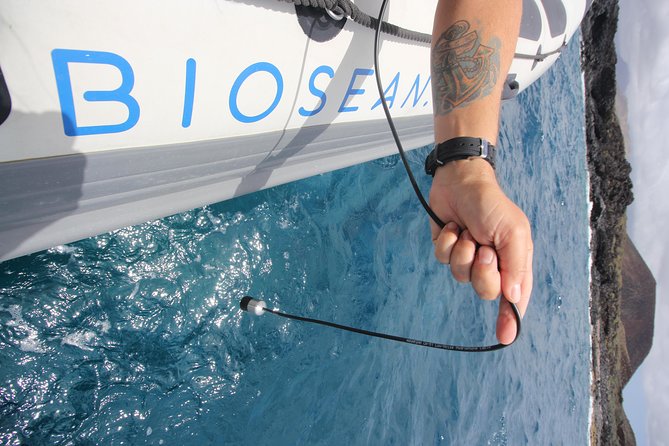
The hydrophone is the feature that turns this from ordinary whale watching into a marine science outing. A hydrophone is an underwater microphone, and the crew uses it to let you hear sounds below the surface.
Pilot whales communicate through clicks and other sounds. Listening to their calls while watching the animals nearby connects the visible and invisible parts of the experience. You may see a group at the surface, then hear activity beneath the boat and begin to think about the pod as a social community rather than a collection of fins.
The tour also uses a sound recorder and other science tools. This gives the guide a practical way to explain how researchers study marine life. You get hands-on contact with the equipment rather than a lecture delivered from a distance.
That balance works especially well for older children. They can ask questions, listen for sounds, and see how evidence is gathered. Adults who already enjoy whale watching should also appreciate the extra layer. The point is not to overload you with facts, but to help you understand the animals you are seeing.
The small group improves this part of the trip. With 10 people or fewer, you should have a fair chance to ask about sounds, behavior, identification, and conservation. Guides named in past outings include Raoul, Misa, and Nico, and the guide team has also worked with young people in marine science internships.
Rasca lighthouse and the Malpaís de Rasca coast
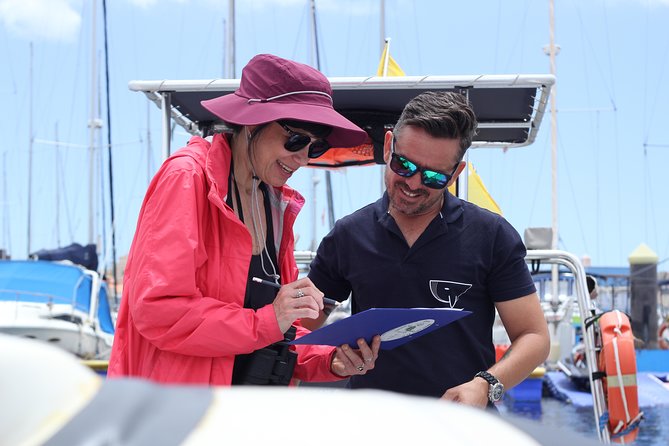
The boat passes Tenerife’s southernmost point near the Rasca lighthouse. This section gives the trip a strong sense of place, even if the whales are shy that day.
The nearby Malpaís de Rasca is a protected area with striking volcanic formations. From the water, you get a different view of Tenerife’s southern coast than you would from a road or walking path. The volcanic rock helps explain the island’s origins, while the open sea shows how much of Tenerife’s natural character lies offshore.
This is not a long land-based stop. You should think of it as part of the boat route, not as time to get off and explore the lighthouse. Its value is scenic and environmental: you see a protected coastal zone while learning how the shore and ocean fit together.
On clear days, Mount Teide may also be visible. The volcano can rise behind the coast as a dramatic reference point, though cloud cover is common enough that you should treat the view as a bonus. Tenerife weather can change quickly, and a cloudy day does not mean the marine portion will be poor.
Same water, a different way to meet them:
- Los Gigantes: Dolphin & Whale Watching Cruise with Swim Stop
★ 4.7 · 4,539 reviews - Costa Adeje: Whale Watching Catamaran Tour with Drinks
★ 4.7 · 3,653 reviews - Tenerife: Whale & Dolphin Watching Cruise with Swim Stop
★ 4.7 · 3,227 reviews - Los Cristianos: Viking Cruise Whales & Dolphins Watching
★ 4.6 · 3,132 reviews
What the science focus adds
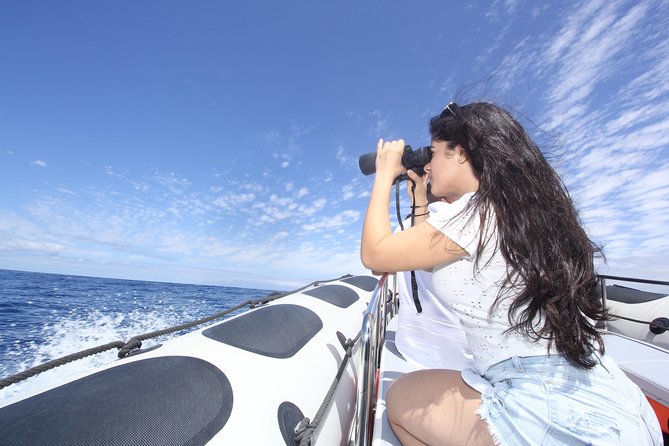
The conservation angle gives the tour a clear purpose. You are paying for a small, guided experience that supports marine education and respectful wildlife watching, not just a boat ride with a chance of a photograph.
The crew may explain local animal populations, whale communication, and the importance of reducing disturbance. One outing even included picking up marine rubbish, and another involved helping an ailing loggerhead turtle. Those events cannot be promised, but they show the sort of real-world situations that can arise when marine scientists spend time at sea.
You might also hear about individual whales that return to the area. That kind of local knowledge changes how you look at the water. Instead of asking only how many animals will I see, you begin asking what they are doing, how they communicate, and how they use this part of the Atlantic.
This also makes the tour a better match for people who value responsible tourism. The crew’s respect for wildlife is not an extra speech added at the end. It shapes how the boat approaches the animals and how the guides talk about them.
Is $90.70 a fair price?
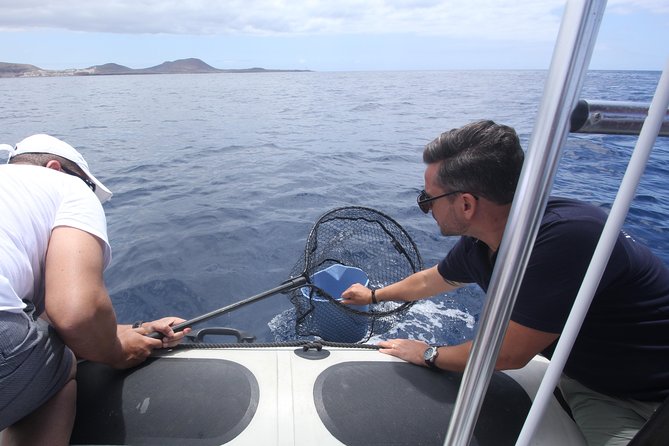
At $90.70 per person, this costs more than a basic large-boat whale watching cruise. The comparison is not quite fair, though. You are paying for a maximum group of 10, a marine biologist guide, bottled water, equipment such as a hydrophone and sound recorder, and a two-and-a-half-hour experience.
The price makes the most sense if you care about interpretation and personal attention. With a large group, the boat may be cheaper, but your questions and view of the action can be harder to manage. Here, the guide can spend more time explaining animal behavior and showing you how marine sounds are recorded.
I would call it good value for serious whale watchers, families with older children, and anyone who wants an educational outing. It is less compelling for someone who only wants a quick scenic cruise or a guaranteed close-up photograph. Nature may provide a spectacular morning, but the price cannot buy certainty.
The conservation purpose also matters. Your money supports an organization focused on whale watching and marine science, which adds value if you prefer tourism that contributes to education and field work.
Practical tips for a better morning
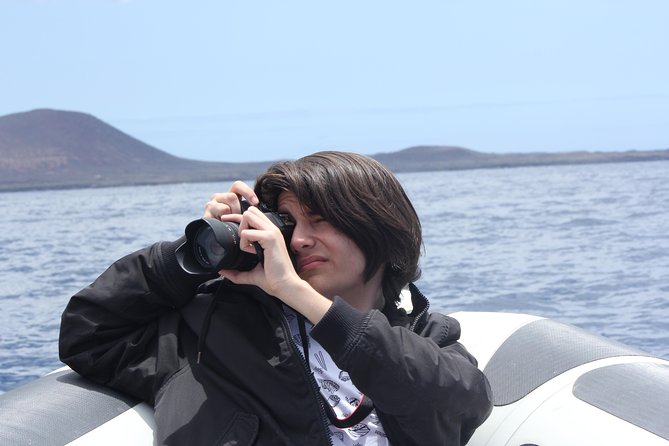
Book ahead if you have limited time in Tenerife. This outing is often reserved around 22 days before departure, and the 10-person limit naturally keeps capacity low.
Choose an early time if the schedule allows. The morning slot has been especially well regarded for making the most of the day, and you may prefer to finish the boat trip before planning lunch or another southern Tenerife activity.
Wear clothing suited to changing conditions at sea, although the supplied information does not specify a dress code. Bring any personal snacks you need, since food is not included, and use the restroom before boarding.
Keep your expectations focused on the experience rather than a checklist. Pilot whales and dolphins are frequent highlights in the recorded outings, but a good trip also includes learning to recognize behavior, listening through the hydrophone, and seeing the coast from offshore.
The activity requires good weather and a minimum number of participants. If poor weather or low enrollment cancels it, you can choose another date or experience, or receive a full refund. You can cancel for a full refund up to 24 hours before the start time. Changes or cancellations inside that window are not accepted, so keep the local cut-off time in mind.
Who should book this Tenerife tour?
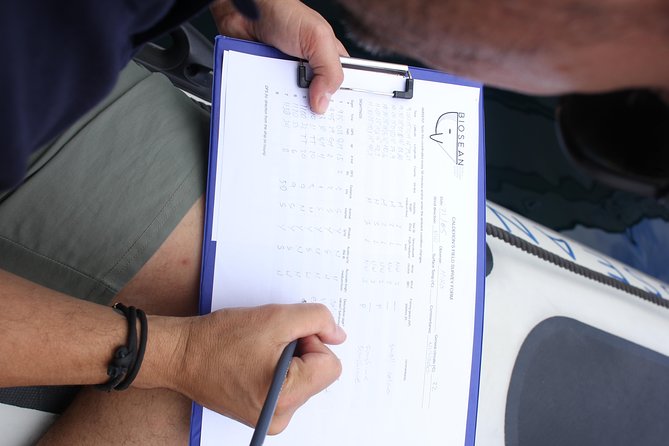
I would choose this outing if you like wildlife, science, and small groups. It works particularly well for families with older children because the equipment and live explanations give young minds something to do beyond scanning the horizon.
It also suits experienced whale watchers who want more than a generic cruise. The chance to hear pilot whales through an underwater microphone and discuss sightings with a marine biologist adds real substance.
I would hesitate only if you need guaranteed wildlife, onboard facilities, or a low-cost boat trip. There is no restroom, snacks are not included, and rough or unproductive conditions are always possible at sea.
Final call: should you book it?
Book this whale watching and marine science tour if the learning matters as much as the sightings. The 10-person limit, hydrophone, marine biologist guide, and respectful approach make it a thoughtful choice in Tenerife’s crowded excursion market.
Skip it if your main goal is a guaranteed animal encounter or the cheapest possible ride. For everyone else, especially families with older children and keen wildlife watchers, the mix of whales, dolphins, volcanic coast, Teide views, and real marine science makes the $90.70 fare worthwhile.
FAQ
Where does the whale watching tour start?
It starts at Biosean Whale Watching and Marine Science, Marina del Sur, Pantalán 4, 38631 Las Galletas, Santa Cruz de Tenerife, Spain.
Where does the tour finish?
The activity ends back at the meeting point in Marina del Sur.
How long does the experience last?
The tour lasts approximately 2 hours and 30 minutes.
How many people can join the tour?
The maximum group size is 10 people.
Is a restroom available on the boat?
No. There is no restroom onboard, so plan to use one before departure.
What happens if the weather is poor?
The tour requires good weather. If it is canceled because of poor conditions, you can choose a different date or receive a full refund.
Just added around Tenerife
- Tenerife Whale Watching and Snorkeling Yacht Trip★ 4.5 · 162 reviews
- Whale watching and snorkelling in the whale sanctuary★ 5.0 · 14 reviews
- Whale & Dolphin Watching With Mustcat Virgin Coast Trip On a Large Catamaran★ 4.0 · 3 reviews
- Whales and Dolphins excursion on a Luxury Yacht in Canary Islands★ 5.0 · 93 reviews
- Whale and Dolphin Watching EcoAdventure in Tenerife★ 5.0 · 78 reviews
- Whale & Dolphin Watching in Tenerife (Puerto Colon) On a Large Catamaran★ 4.0 · 12 reviews
- Whale & Dolphin Watching Boat Trip in Tenerife On a Sailing Boat (3 Hr)★ 3.5 · 10 reviews
- Whale Safari to Los Gigantes with pickup from North★ 4.0 · 9 reviews
Tenerife Whale Watching Tours, compared.
Tenerife: Eco-Yacht Whale and Dolphin Watching and Swimming
Read our review →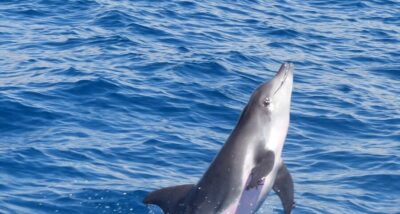
Los Cristianos Respectful No-Chase Whale and Dolphin Safari
Read our review →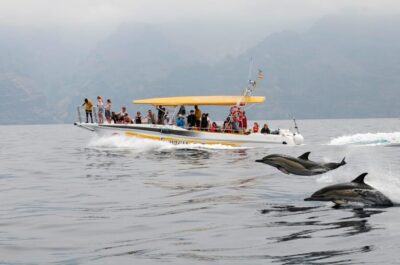
Costa Adeje: Whale & Dolphin Eco-Cruise with Snacks & Drinks
Read our review →Los Gigantes: Dolphin & Whale Watching Cruise with Swim Stop
Read our review →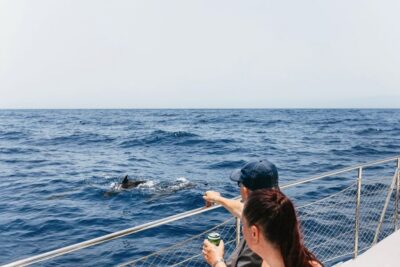
Costa Adeje: Whale Watching Catamaran Tour with Drinks
Read our review →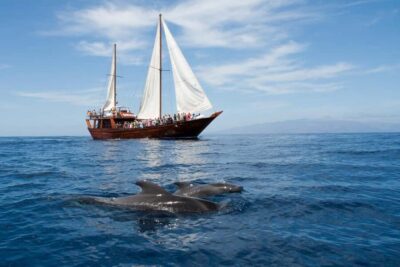
Tenerife: Whale & Dolphin Watching Cruise with Swim Stop
Read our review →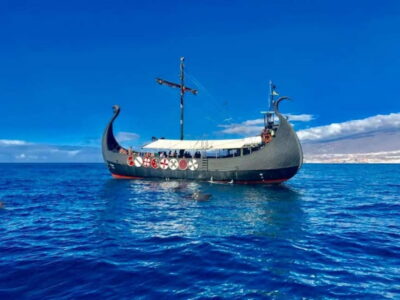
Los Cristianos: Viking Cruise Whales & Dolphins Watching
Read our review →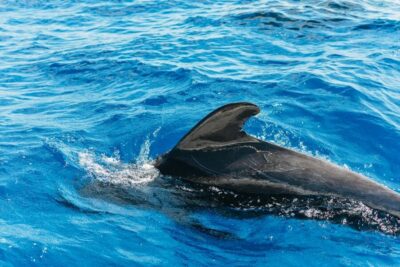
Tenerife: Whale & Dolphin Watching with Drinks and Snacks
Read our review →Browse the lists this tour appears in