
REVIEW · MAUI WHALE WATCHING TOURS
Whale Watching Maui: 2-Hour Small Group Raft Tour from Lahaina
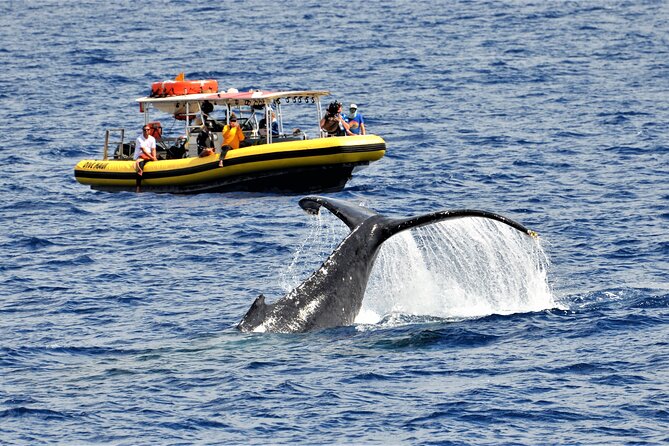
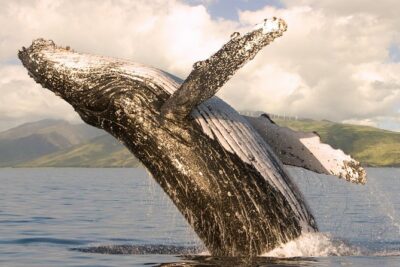
Whales turn Maui’s winter waters into a living theater. This two-hour raft trip from Lahaina takes you into the Maui Nui whale sanctuary, where humpback whales come to mate and give birth. I like the small-group raft, which gives you broad ocean views without the packed feel of a large boat. I also like the onboard hydrophone, which lets you hear whale songs through speakers while the naturalist explains what you are seeing.
The $80.60 price is fair if you value close water-level views, a small party, and an attentive crew. The main caution is simple: whales are wild animals. The company guarantees that you will see whales or receive another trip, but it cannot promise breaching, close approaches, or dramatic action on every outing.
The crew earns much of the praise here. Captains Will and Joe, along with naturalists Renee and Brian, are repeatedly singled out for clear explanations, quick movement between whale sightings, and an easygoing manner. Still, this is a raft, not a large sightseeing boat, so anyone prone to motion sickness or uncomfortable on open water should think carefully before booking.
What Makes This Raft Trip Worth Considering
- Maui’s winter whale sanctuary: The tour heads into the Maui Nui waters used by humpback whales for mating and birthing.
- A maximum of 20 people: Smaller parties make it easier to see in several directions and ask questions.
- Whale songs on board: A hydrophone and speakers let you listen to sounds beneath the surface.
- A whale sighting guarantee: If you do not see whales, you can take another trip at no charge.
- Water-level viewing: The custom inflatable raft puts you close to the surface, giving a different perspective than a large vessel.
- Practical comforts: Filtered water, paper cups, reef-safe sunscreen, and rain ponchos on wet days are included.
Leaving Lahaina for the Maui Nui Sanctuary
You meet at Dive Maui and Hawaiian Rafting Adventures at 1223 Front Street in Lahaina. The activity ends at the same location, which keeps the plan simple if you are arranging other activities before or after the boat ride.
The outing lasts about two hours. That is long enough to search a useful area without taking up an entire morning or afternoon. You should still treat the timing as approximate because the captain may spend extra attention with a productive group of whales or move to another area when sightings change.
The company runs this trip during Maui’s winter whale season, when humpbacks gather in the warm waters around the island. This is not a zoo-style presentation. You are scanning the sea for blows, tails, bodies, and movement, then waiting to see what the whales choose to do next. That uncertainty is part of the experience, but it also means you should not book solely in hopes of seeing a breach.
The raft’s open design gives you 360-degree views. On a large boat, people can cluster along one side and block one another when a whale surfaces. Here, the smaller layout makes it easier to turn, look across the water, and follow a sighting. One outing had only eight people aboard, showing that the actual party can be much smaller than the stated limit of 20.
More Small-Group Whale Watching in Maui:
- SMALL GROUP Whale Watch | Cabo San Lucas | Biologist | FREE Pics
★ 5.0 · 1,106 reviews - Whale and Dolphin Small Group Sailing from Tenerife South
★ 5.0 · 342 reviews - Small-Group Half-Day Whale-Watching Tour in Puerto Vallarta
★ 5.0 · 334 reviews
Why the Small Raft Changes the View
The strongest reason to choose this trip is the size of the boat. A small raft sits low on the water, so a whale’s back or blow can feel more immediate. You are not looking down from a high deck through rows of other people.
I like the practical benefit more than the promise of getting closer. Hawaiian whale-watching boats must follow wildlife-protection rules, and a small vessel does not give the captain permission to approach beyond those limits. The whales control the distance. A smaller craft may position itself well and move efficiently, but it cannot force a close encounter.
That distinction matters. One customer felt the raft provided no better whale distance than larger, cheaper boats on a quiet outing. That is a fair warning. You pay extra for a smaller party, more open sightlines, and a more personal setting, not for guaranteed proximity.
The raft can also feel more exposed to wind and waves than a big boat. The available information does not specify seating, restrooms, or shelter, so I would plan for an open-air trip and dress accordingly. Rain ponchos are provided on rainy days, and reef-safe sunscreen is included, but bring any personal motion-sickness remedy you normally use.
Searching for Humpbacks During the Two Hours
Once you reach the whale sanctuary, the experience becomes a group effort. The captain watches the water and handles the raft while the naturalist helps you understand whale behavior. You may spend time scanning the horizon, then suddenly shift your attention when someone spots a blow or a tail.
The best outings described here included mothers with calves and escort males. A calf may surface near its mother, practice movement, or show early breaching behavior. Escort males can compete for access to a female, creating a more active scene than a single whale quietly resting at the surface.
Captains Will and Joe receive repeated praise for finding active whales and positioning the raft thoughtfully. Naturalists Renee and Brian are praised for answering questions and explaining what was happening rather than simply pointing toward the water. That combination matters. A whale sighting can be brief, and a good naturalist helps you understand the few seconds you get.
The trip is not built around a fixed series of stops. The main focus is the sanctuary itself, and the captain adjusts the route according to whale activity and conditions. You might see one group for a while, then move to another area. On one particularly strong outing, the raft saw more than a dozen whales, including mothers, calves, and males competing for a mate. That is a wonderful result, but it should be treated as a lucky day rather than a standard promise.
Listening to Whale Songs With the Hydrophone
The hydrophone is one of the most distinctive features. The crew lowers the listening device into the water and sends the sounds through speakers on the raft. Instead of only watching for a surface appearance, you get a sense of what is happening below the boat.
Whale song gives the trip a quieter, more thoughtful side. You may be scanning for a blow while listening to sounds you cannot see. This is especially valuable on a slower outing, when the audio adds another way to connect with the animals.
A hydrophone does not guarantee that you will hear constant singing. Whale behavior changes, and the crew must decide when and where to use the equipment. Still, it gives the naturalist another useful teaching tool and makes this more than a simple ride in search of photographs.
Bring your camera, but do not let it take over. Breaches and tail slaps happen quickly, and trying to capture every moment can make you miss the next one. I would keep your camera ready, then spend some time simply watching the water.
More Two-Hour Trips in Maui:
- 2 Hour Prime Time Maui Whale Watching
★ 5.0 · 107 reviews - 2 Hour Afternoon Lahaina Whale Watch
★ 5.0 · 79 reviews - 2 hour Lahaina Sunrise Whale Watch
★ 5.0 · 50 reviews - 2-Hour Ma’alaea Humpback Whale Watching Cruise for up to 6 Guests
★ 5.0 · 19 reviews
The Crew Makes the Biggest Difference
The strongest part of this experience is the human side. The names Will, Joe, Renee, and Brian appear repeatedly in praise, with special attention given to their friendliness, whale knowledge, and willingness to answer questions.
Renee is described as especially enthusiastic and well informed. Brian is praised for giving useful explanations and welcoming questions. The captains are credited with moving efficiently toward active whale groups while keeping the raft at a suitable distance.
That balance is important. You want a captain who can find whales, but you also want a naturalist who remembers that the trip is educational. The best accounts describe both: an energetic search and clear explanations about mothers, calves, escorts, and whale behavior.
The crew also appears to handle weather changes responsibly. Some outings were rescheduled because of wind, waves, or rain, with the company contacting people promptly. One canceled trip received praise even though the customer was disappointed. That is the right attitude for a wildlife trip: safety comes before forcing a departure.
Price, Value, and the Whale Sighting Guarantee
At $80.60 per person, this is not the cheapest way to watch whales around Maui. The price makes the most sense for you if you care about a maximum group size of 20, a low raft profile, 360-degree views, a naturalist, and whale songs through a hydrophone.
You are also paying for a two-hour outing and a whale sighting guarantee. If you do not see whales, the company offers another trip for free. That reduces some of the risk, though it may not help if you are leaving Maui soon or cannot fit another trip into your schedule.
The guarantee is not a promise of a spectacular show. It covers seeing whales, not seeing a mother and calf under the raft or watching a baby breach. The company cannot control weather or animal behavior, and Hawaiian wildlife rules apply to every operator.
Compared with a large boat costing $30 or $40 less, the added value is personal space and the possibility of a more attentive experience. If your only goal is to see a whale at the lowest possible price, a larger boat may be enough. If you want a quieter party and a better chance to ask questions, the extra cost is easier to justify.
Filtered water and paper cups are provided to reduce plastic waste. Reef-safe sunscreen is also included. Alcohol is not part of the package, though you may bring your own in a non-glass container. I would keep the trip focused on the whales rather than treating it as a party cruise.
Weather, Comfort, and Who Should Book
This is a family-friendly activity, but children must be at least three years old. Service animals are allowed, and most people can participate. Pregnant people may not join the tour, and the operator lists no children under age three.
The open raft suits people who want an active, direct look at the sea. It may not suit you if you want a dry cabin, a broad indoor viewing area, or a very steady ride. The available details do not provide a specific accessibility description beyond allowing service animals, so ask the operator before booking if you need a particular boarding arrangement.
Weather is a real part of the decision. The tour requires good conditions, and poor weather can lead to a new date or a full refund. That policy protects the crew and the people on board, but it can disrupt a tightly planned Maui schedule.
For the best chance of fitting in another outing, book early in your stay. This activity is commonly reserved about 26 days ahead, which suggests that popular winter departures can fill well before the date. If the trip is canceled, having spare time later in your visit gives you more options.
You can cancel for a full refund up to 24 hours before the start time. Cancellations or changes within 24 hours are not refunded. The cut-off follows local Maui time.
Who Will Enjoy This Most
I would choose this trip if you want a small party, an open view, and a crew that explains what you are seeing. It is particularly well suited to families with older children, couples, and anyone who has already taken a standard whale trip and wants a more personal format.
It is also a good fit if hearing whale song matters to you. The hydrophone adds something that a basic sightseeing ride may not offer, especially when whales are visible but not highly active at the surface.
I would think twice if your main goal is the lowest price, guaranteed close distance, or a dramatic breach. One quiet day can feel expensive, and the small raft does not exempt the captain from wildlife rules. You should also reconsider if you are uncomfortable on an open boat or cannot tolerate wind and wave movement.
Should You Book This Lahaina Whale Tour?
Book it if you value the small group, the low water-level viewpoint, and a crew that combines whale watching with useful explanations. The repeated praise for Will, Joe, Renee, and Brian suggests that the guides are a major part of the value, not an afterthought.
I would book early in the whale season and leave room in your schedule in case weather changes the departure. Go in expecting real wildlife watching, not a staged performance. If you accept that the whales set the terms, this raft offers a strong two-hour introduction to Maui’s winter humpbacks.
FAQ
Where does the whale-watching tour start?
The tour starts at Dive Maui and Hawaiian Rafting Adventures, 1223 Front Street, Lahaina, Hawaii 96761. It ends back at the same meeting point.
How long does the whale-watching trip last?
The trip lasts approximately two hours.
How many people can join the raft?
The maximum group size is 20 people. Some departures may be much smaller, with one outing carrying only eight people.
What happens if no whales are seen?
The company guarantees whale sightings. If you do not see whales, you can take another trip for free.
Is the tour suitable for young children?
Children must be at least three years old. Most travelers can participate, and service animals are allowed. Pregnant people may not join the activity.
What is included in the price?
The tour includes filtered water, paper cups, a hydrophone with speakers, a marine naturalist, and reef-safe sunscreen. Rain ponchos are provided on rainy days. Alcoholic drinks are not included, though you may bring your own without using glass.
Just added around Maui
- Whale Watch Sail Ma’alaea★ 4.9 · 27 reviews
- Deluxe Whale Watching Sail on Maui★ 5.0 · 53 reviews
- 2.5 Hour Whale Escape Tour★ 5.0 · 44 reviews
- Whalewatch Deluxe Tour from Ma’alaea Harbor★ 4.5 · 37 reviews
- Whale Watch and Scenic Tour from Kayak★ 4.5 · 16 reviews
- Whale Watching Experience★ 5.0 · 142 reviews
- From Ma’alaea Harbor, Maui: Whale Watch Cruise Aboard Malolo★ 4.0 · 9 reviews
- VIP Premiere Whale Watch Kaanapali Beach MAX 12 PASSENGERS★ 5.0 · 78 reviews
Maui Whale Watching Tours, compared.
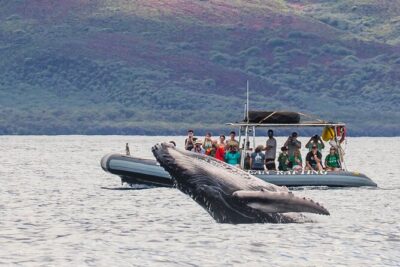
Maui Eco-Raft Tour: Eye-Level Whale or Dolphin Watching – Lahaina
Read our review →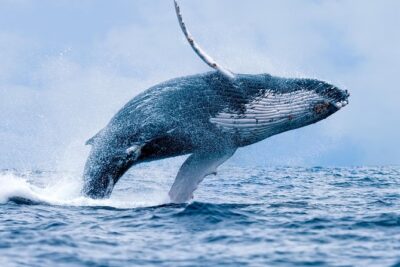
From Maalaea: Whale Watching Tour Aboard the Quicksilver
Read our review →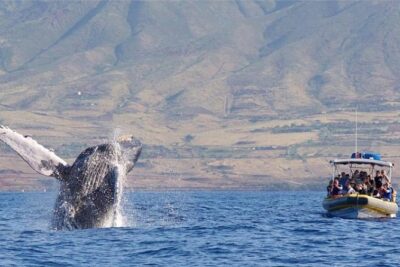
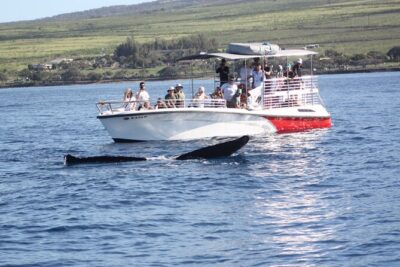
WHALES GUARANTEED Maui Whale Watching Makai Adventures
Read our review →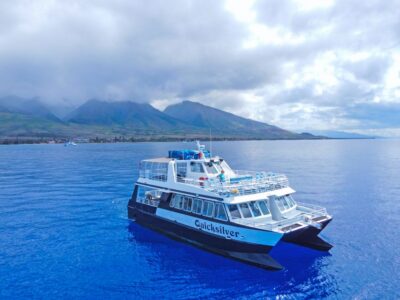
Ma’alaea Harbor: Whale Watching Tour Aboard Power Catamaran
Read our review →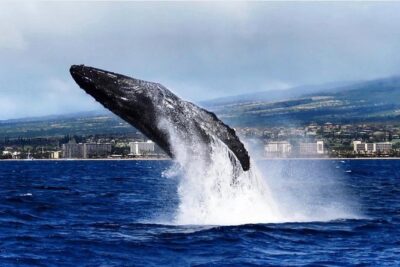
Maui: Whale Watching Cruise with Open Bar from Ka’anapali Beach
Read our review →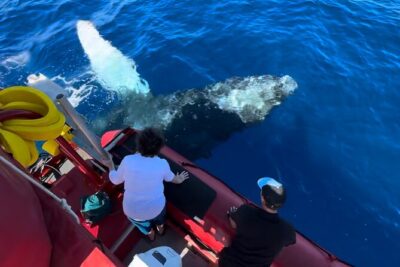
Browse the lists this tour appears in