
REVIEW · BIG ISLAND WHALE WATCHING TOURS
Seasonal Small-Group Humpback Whale Watching in Kona
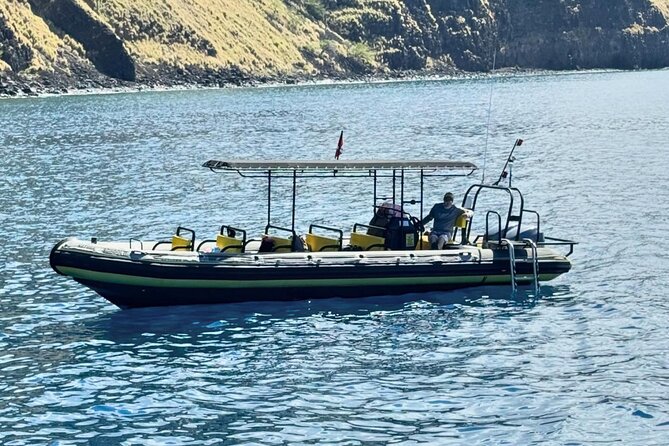
Whales may be the main event, but the small boat matters. This Kona outing takes you offshore during humpback season, from January 5 through March 31, with no more than 10 people aboard. I like the intimate size and the chance to watch whales breach, slap their tails, and gather near the boat without the feel of a crowded sightseeing vessel.
I also like the useful mix of naturalist talk and simple comforts: an English-speaking guide, bottled water, Hawaiian juices, ginger ale, potato chips, and cookies. The main consideration is timing and nature’s cooperation. The tour starts at 1:30 p.m., requires at least four people to operate, and whale sightings can never be promised, even during migration season.
Five things to know before you book
- Humpback season runs January 5 through March 31: This is a limited seasonal trip, not a year-round whale watch.
- The boat holds a maximum of 10 people: That small capacity gives you more room to follow the action and hear the guide.
- The trip lasts about 2 hours and 30 minutes: You leave from Honokohau Marina and return to the same slip.
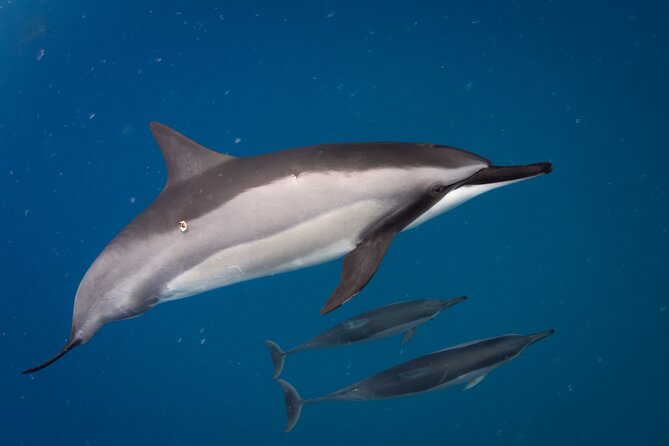
- Dolphins may appear before the whale search begins: One outing had dolphins join the boat soon after leaving the harbor.
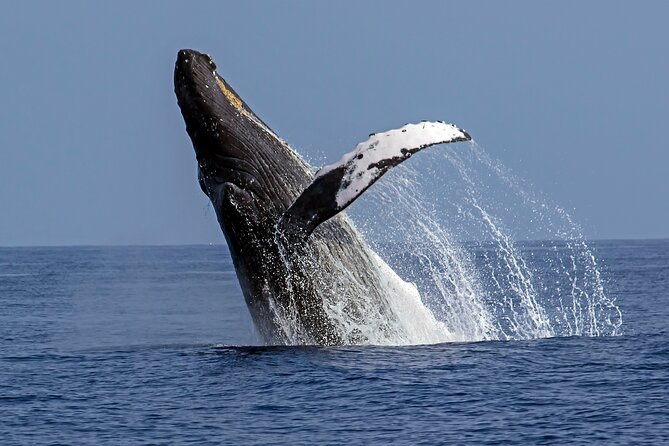
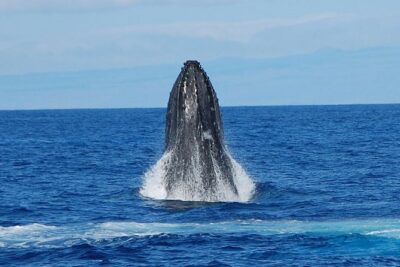
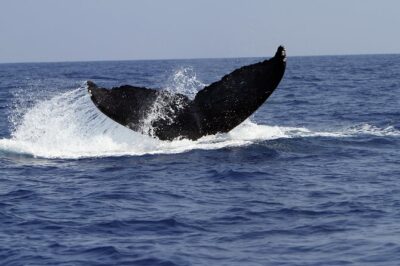
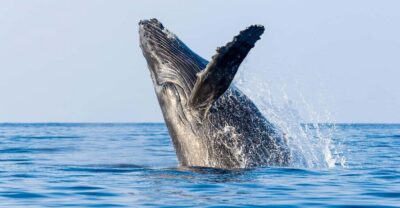
- The whale behavior can be wonderfully close and active: Breaching, tail-slapping, and extended time near the group are all possible.
- The price is $130.25 per person: The value is strongest if you care about a small group and direct time on the water.
Why Kona’s winter whale season matters
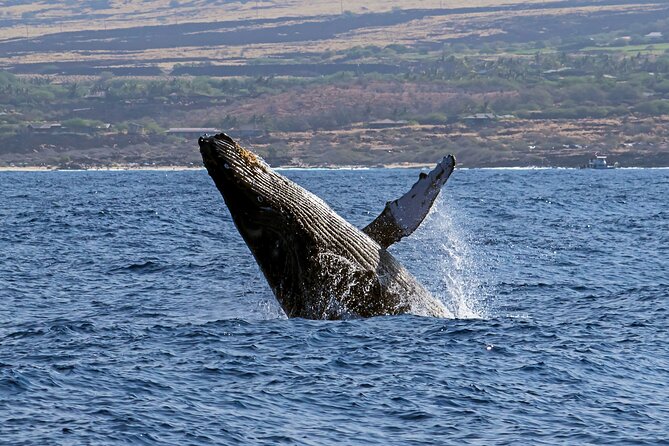
Pacific humpback whales make their annual migration into Hawaiian waters during winter. The timing of this tour, January through March, places you inside the stated seasonal window for watching them around the Big Island.
That timing gives you a real chance at memorable behavior, but it does not turn the ocean into a scheduled wildlife show. A whale may surface once and vanish. Another might remain nearby, rise repeatedly, or show its tail. The appeal comes from seeing natural behavior as it happens, not from checking off a guaranteed list of sightings.
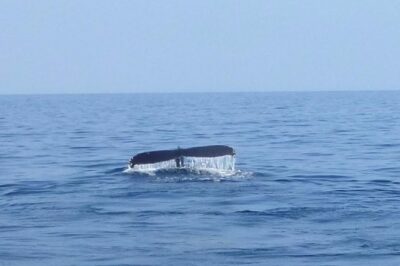
The tour description focuses on breaches, tail-slaps, and whale communication. Those details matter because they help you understand what you are watching. A breach is dramatic, but a quiet surface appearance or a tail disappearing beneath the water can also tell you where the animal is moving.
You will also learn about humpback behavior and migration patterns from the English-speaking guide. That explanation adds value to the ride. Without it, you might simply point at a whale and wait for the next appearance. With it, you have a better sense of why the animals gather in Hawaiian waters and how their actions fit into the larger migration.
More Humpback Whale Tours in Big Island:
- Humpback Whale and Dolphin Watch in Kona
★ 4.5 · 62 reviews - Kailua Kona: Humpback Whale Watching Adventure Cruise
★ 4.5 · 33 reviews - Royal Humpback Whale Exploration
★ 5.0 · 9 reviews
Meeting the boat at Honokohau Marina
Your starting point is Hawaii Marine Life Charters at Honokohau Marina, Slip G-8, on Kealakehe Parkway in Kailua-Kona. The activity begins at 1:30 p.m. and ends back at the same meeting point.
This arrangement is easy to understand and useful for planning. You are not dropped at a different harbor, and you do not need to arrange a separate return ride from the water. The marina is also near public transportation, according to the tour information, though you should still allow enough time to find Slip G-8 before departure.
Because this is a small boat with a maximum of 10 people, arriving prepared is sensible. The supplied information does not specify a separate check-in deadline, parking details, or exact boat design, so you should confirm any special transport needs when booking. The important fixed point is the 1:30 p.m. start.
The trip lasts about two and a half hours. That is long enough to get beyond the immediate harbor area, spend time looking for whales, and return without giving up an entire day of your Kona plans. I would keep the rest of the afternoon flexible rather than scheduling something that begins immediately after the boat returns.
What the first part of the ride can bring
The early portion of the trip is not simply dead time before the whales appear. You may encounter other marine life soon after leaving the harbor. On one outing, dolphins joined the boat shortly after departure, giving the group an unexpected start to the afternoon.
That possibility helps explain why wildlife trips are worth treating as more than a single-species hunt. Dolphins may appear, or they may not. The same is true of whales. A good outing depends on staying alert and appreciating what comes into view.
The guide and crew are part of this first stage. The available feedback describes them as friendly and funny, as well as well informed about the animals. That combination matters on a small boat. A guide who can explain what you are seeing while keeping the mood relaxed makes a long stretch of watching easier.
The wording in the tour details says the boat heads into the heart of the humpback migration. In practical terms, you should expect a search on open water rather than a fixed stop at a viewing platform. The boat may adjust its position as the crew looks for surfacing whales and responds to activity nearby.
Watching whales from a 10-person boat
The maximum of 10 people is one of the strongest reasons to consider this trip. A smaller group usually means less competition for sightlines and a better chance of hearing the guide without straining. It also creates a more personal setting for a wildlife encounter.
That does not mean every person will have a perfect view at every moment. Whales can surface on any side, and the person facing the wrong direction may miss a brief appearance. Still, a 10-person limit is much more intimate than a large sightseeing boat, and it suits you if you prefer a quieter, more focused outing.
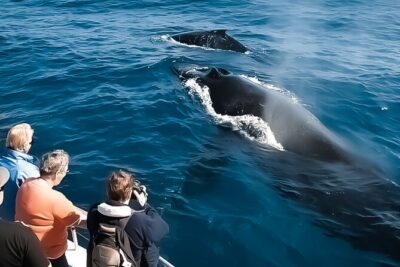
The main sights described are humpbacks breaching, slapping their tails, and spending time near the boat. A breach is the grand spectacle, with the whale launching partway or fully out of the water. Tail-slapping is another unmistakable display. Yet you should not measure the trip only by the biggest possible jump.
A whale that remains near the group for some time can be just as rewarding. Staying with the animals gives you repeated chances to see their movements and listen to the guide’s explanation. One particularly strong outing had whales remain around the group for an extended period and put on an active display.
That is the kind of encounter that justifies the price. You are not only hoping for one distant splash. You may get time to watch the same animals behave naturally in the water, with the boat and crew helping you follow the action.
More Small-Group Whale Watching in Big Island:
- Small Group Whale Watching in Kona Hawaii
★ 5.0 · 5 reviews - SMALL GROUP Whale Watch | Cabo San Lucas | Biologist | FREE Pics
★ 5.0 · 1,106 reviews - Whale Watching Maui: 2-Hour Small Group Raft Tour from Lahaina
★ 5.0 · 661 reviews - Whale and Dolphin Small Group Sailing from Tenerife South
★ 5.0 · 342 reviews
The guide’s role in making sense of the show
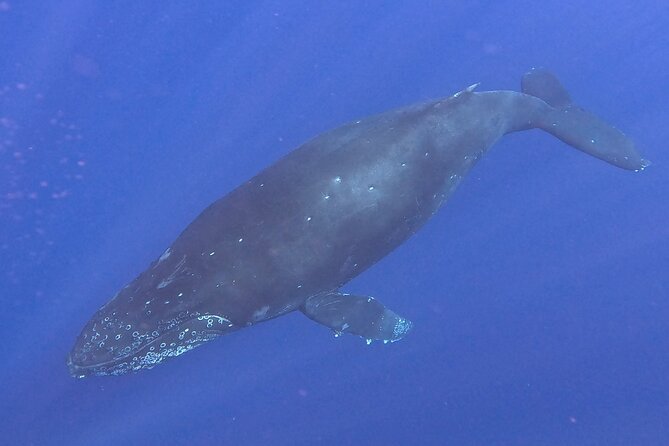
The guide provides an English-language explanation of humpback behavior and migration patterns. This is more important than it may first sound. Whales surface quickly, and without context, the experience can become a series of excited guesses about what you just saw.
A guide can help connect individual actions to the larger story of the migration. The provided information does not give a guide’s name, so I would not expect a particular named naturalist when booking. What is clear is that the crew brings a friendly, humorous approach along with information about the animals.
That tone suits a small boat. The outing is not presented as a formal lecture, and it is not only a quiet ride with no explanation. You get a social, informative experience that leaves room for the natural spectacle to take over when a whale surfaces.
The guide also adds value during slower moments. Wildlife watching includes pauses. A whale may be below the surface, or the boat may need to wait and scan. Those pauses are easier to enjoy when you understand the animals’ patterns and know what signs to watch for.
Food, drinks, and what you should bring
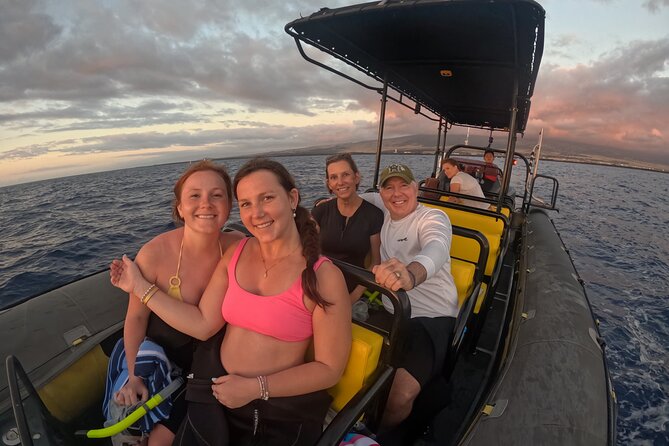
Included refreshments are bottled water, Hawaiian juices, ginger ale, potato chips, and cookies. This is enough to make a two-and-a-half-hour afternoon ride more comfortable, but it is not lunch.
Alcoholic beverages are not included, and lunch is not included. Plan to eat before or after the excursion if you need a full meal. The 1:30 p.m. departure makes this especially worth noting, since you may be heading out during the middle of the day.
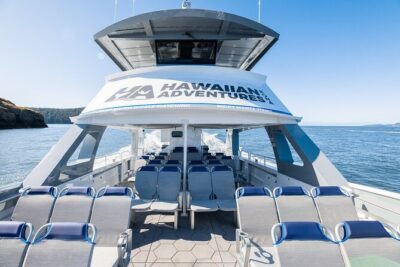
The information does not list special equipment or clothing requirements. Since this is an open-water boat outing, I would dress for changing conditions and bring any personal items you need for comfort. The supplied details do not promise a covered seating area, a specific boat layout, or special protection from sun and spray, so avoid assuming the vessel will feel like a sheltered cabin.
You should also consider the simple reality of a moving boat. If you are prone to discomfort on the water, ask the operator about suitable preparation before departure. That is practical advice rather than a claim about this particular boat, whose design is not specified.
Is $130.25 a fair price?
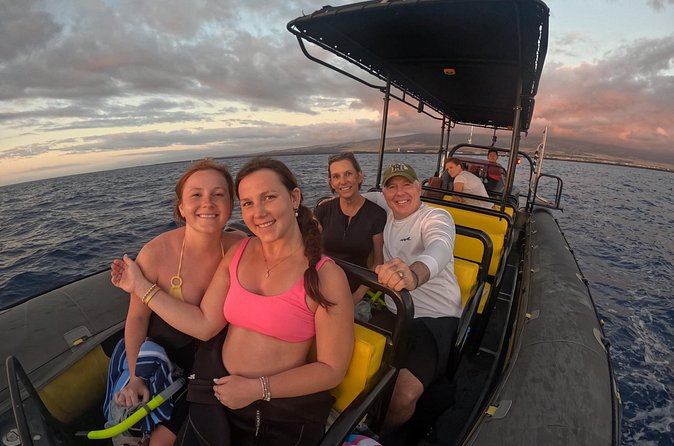
At $130.25 per person, this is not the cheapest way to spend an afternoon in Kona. The price becomes easier to justify if you place a high value on the small group, the 2.5-hour duration, and the chance to spend meaningful time with a guide rather than simply riding past wildlife in a large crowd.
The maximum of 10 people is the key value point. You are paying for access to a focused outing with fewer people competing for space and attention. You are also paying for the crew’s experience in searching for whales and explaining their behavior.
The price still carries the normal uncertainty of a wildlife excursion. It cannot guarantee breaching whales, dolphins, or even a particular number of sightings. If you need a fixed attraction with a predictable result, this may feel expensive. If you understand that nature sets the schedule, the small boat and extended time on the water make the cost more reasonable.
The included snacks and drinks are useful but should not drive your decision. They cover basic comfort, not a meal. I would book this for the whale-watching format, the group size, and the guide, then regard the refreshments as a welcome extra.
Weather, minimum numbers, and flexible planning
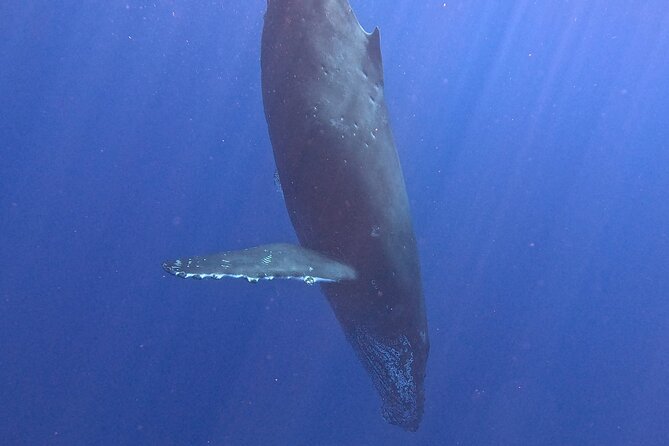
This experience requires good weather. If poor conditions force a cancellation, you are offered a different date or a full refund. The trip also requires a minimum of four people, and if that minimum is not met, you are offered another date or experience, or a full refund.
The minimum is worth noting because small boats can be affected by low demand. The tour information says this does not usually happen, but it remains possible. If this whale watch is one of the main reasons for your Kona visit, do not schedule it on the final possible afternoon of your stay.
A little flexibility helps. Booking about 18 days ahead is the average pattern for this experience, which suggests you should not wait until the last minute if your dates are fixed. That is especially true because the whale season is limited to January 5 through March 31.
Free cancellation is available up to 24 hours before the start time for a full refund. Changes or cancellations made less than 24 hours before departure are not accepted for a refund. The cut-off uses local time, so keep that in mind when changing plans.
Who will enjoy this Kona whale watch most
I would recommend this outing to you if you want a small-group wildlife trip rather than a large harbor cruise. Families may appreciate the friendly crew and the possibility of seeing dolphins along with whales. The five-star feedback includes a family outing where both dolphins and whales made the day memorable.
It also suits anyone who wants interpretation along with the views. The guide covers behavior and migration, so you get more than a simple search for a splash. The small capacity is helpful for people who prefer a less crowded setting.
This may not be the best choice if you need lunch included, want alcoholic drinks aboard, or require a guaranteed sighting. It may also be a poor fit if your schedule cannot tolerate a weather or minimum-number change.
The experience is available in English, and the information says most people can participate. No special accessibility details are provided, so you should ask the operator directly if you have mobility, seating, or boarding concerns.
My call on booking the trip
Book this Kona whale watch if you want a close, personal format during the January 5 through March 31 humpback season. The combination of a 10-person maximum, a 2.5-hour ride, an English-speaking guide, and the possibility of whales staying near the boat gives it real appeal.
The best reason to choose it is not the promise of a single spectacular breach. It is the chance to spend a solid afternoon on the water with a small group, learn how humpbacks behave, and watch whatever the ocean provides. Dolphins may greet you near the harbor, and whales may later put on the main show.
Skip it if you need certainty, a full meal, or a large covered vessel with extensive onboard amenities. For everyone else, $130.25 is a reasonable price for a focused wildlife outing, provided you book with flexible expectations and leave room for nature to have the final word.
FAQ
When does the humpback whale watch operate?
The seasonal whale watch operates from January 5 through March 31.
Where does the tour begin?
It begins at Hawaii Marine Life Charters, Honokohau Marina, Slip G-8, Kealakehe Parkway, Kailua-Kona, Hawaii 96740.
What time does the tour start?
The scheduled start time is 1:30 p.m.
How long does the experience last?
The outing lasts approximately 2 hours and 30 minutes and returns to the original meeting point.
How many people can join the boat?
The boat has a maximum capacity of 10 people. At least four people are required for the tour to operate.
What refreshments are included?
Bottled water, Hawaiian juices, ginger ale, potato chips, and cookies are included. Alcoholic beverages and lunch are not included.
What happens if weather cancels the trip?
If poor weather causes a cancellation, you will be offered a different date or a full refund.
Just added around Big Island
- Sunset Cruise with the Whales on our Sailing Catamaran★ 5.0 · 48 reviews
- Whale Watching on Big island★ 4.5 · 19 reviews
- Small Group Whale Watching in Kona Hawaii★ 5.0 · 5 reviews
- Sunset Cruise with the Whales on our Power Catamaran★ 5.0 · 2 reviews
- Wake Up With the Whales Cruise on Seasmoke★ 5.0 · 159 reviews
- Sunset Whale Watching Shared Activity★ 4.5 · 5 reviews
- Waikoloa Deluxe Whale Watch★ 4.5 · 124 reviews
- Whale Watching Tour – Big Island, Hawaii★ 5.0 · 148 reviews
Big Island Whale Watching Tours, compared.
Kailua-Kona: Whale Watching Cruise on the Big Island
Read our review →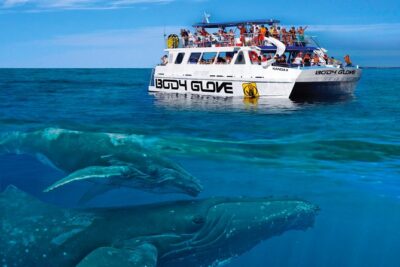
Browse the lists this tour appears in